Roof coverings
Which roof covering suits a holiday cabin?
In brief
First decide whether the cabin will be used only in summer or also in the colder months, as this determines many choices. Check the roof pitch, supporting structure, risk of water condensation and acoustics, not just the price per sheet. A lightweight covering does not exempt you from calculating snow and wind loads. Also decide whether to insulate the slopes or the ceiling above the rooms – these are different solutions. Closing the interior with wooden cladding alone will not retain heat; a layer arrangement suited to the building’s use is needed.
Does a seasonal holiday home need insulation?
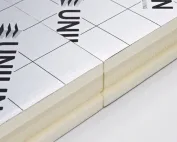
Even in a cabin used in summer, insulation can improve comfort under a heated roof slope. Its importance grows when overnight stays are planned in spring or autumn. It is worth deciding straight away whether the entire space under the roof will be heated. Insulating the slopes and insulating the ceiling above the rooms are different solutions.
It should not be assumed that closing the interior with wooden cladding alone will retain heat. A layer build-up matched to how the building is used is needed. Short stays and rapid heating of the interior can create large humidity fluctuations. These must be taken into account when selecting the layer controlling water vapour flow.
When is T18 or T35 sheet sufficient?
Trapezoidal steel sheet is a practical solution for a simple roof slope. T18 has lower profiles, while T35 has higher ribs and different structural possibilities. The number alone does not, however, determine load-bearing capacity. The steel thickness, support spacing and load values are important. With a small cabin, it must not automatically be assumed that the thinnest available sheet is sufficient.
The minimum pitch of the specific product must also be checked. Not every low trapezoidal profile can be used on a shallow roof. When planning sheet lengths, it is worth limiting transverse joints, provided transport and installation allow it. Edges, overlaps and flashings are executed in accordance with the selected system.
What speaks in favour of tile-effect metal roofing?
Tile-effect metal roofing can suit a cabin with a more traditional form well. The version cut to length is convenient on a simple roof slope. Modules make it easier to carry the material and to work on a more complex shape. The difference is worth assessing on the basis of a roof layout drawing and the access possibilities to the plot.
Before ordering, the roof slope angle must be matched to the requirement of the specific profile. It should not be lowered just because the roof is small. Water can still be blown under the overlaps, and snow can lie for a long time in a cool spot. The cost of the covering must include battens, underlay, ventilation and flashings.

When should you consider an insulated panel?
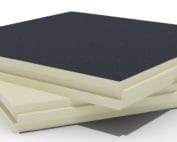
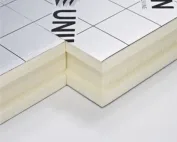
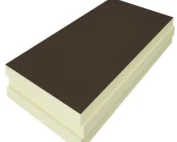
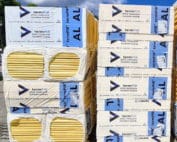
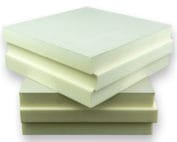
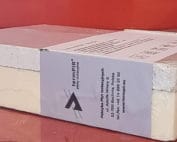
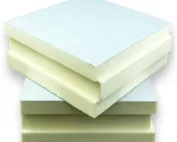
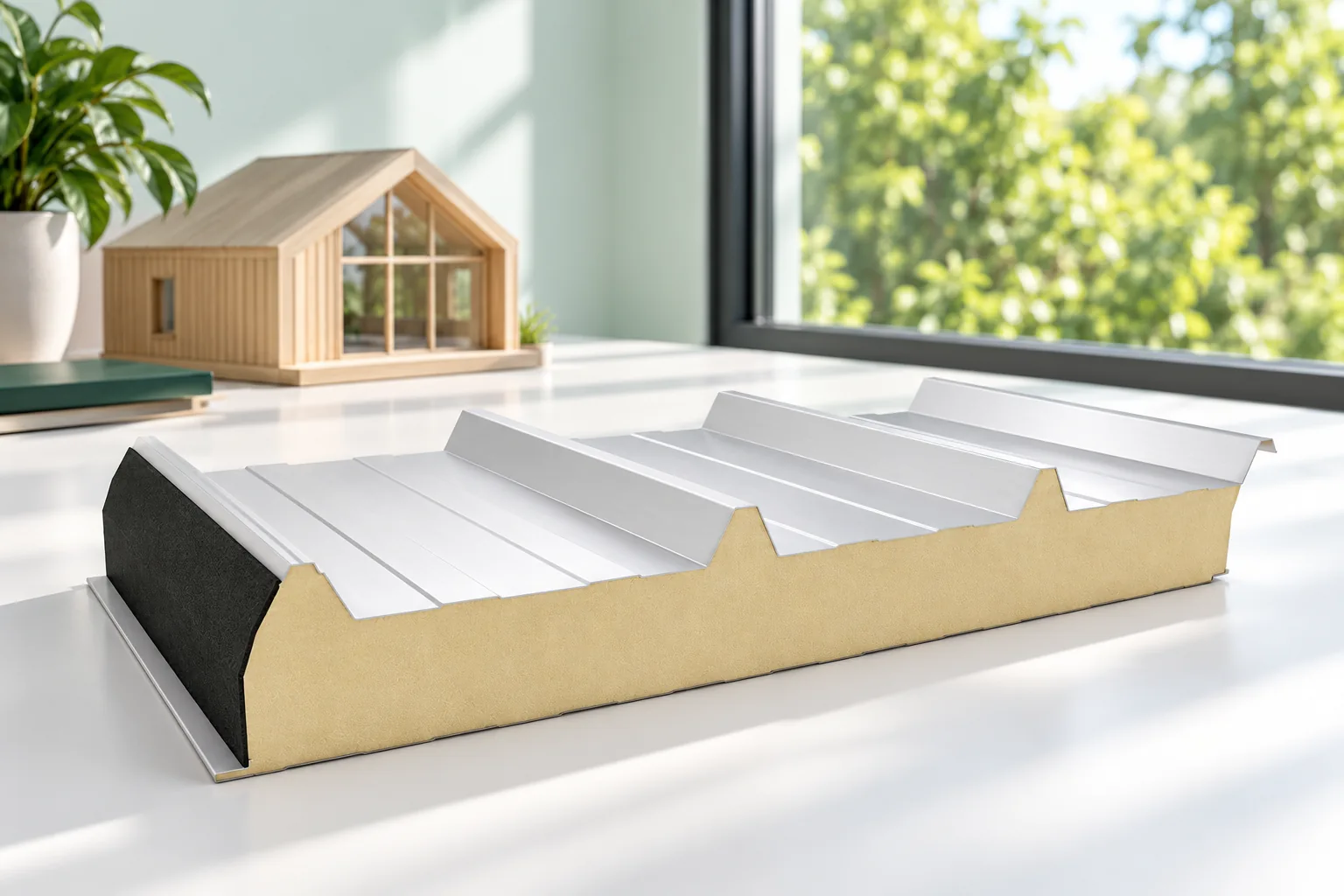
An insulated roof panel can combine the covering, insulation and underside finish. It is worth considering for a simple building where rapid closing-in of the interior matters. However, it requires supports spaced in accordance with the design. It is not a lightweight decorative panel that can be laid on any timber battens.
You need to decide whether the metal lining visible from inside suits the planned interior. Acoustics also matter. The presence of a PIR core alone does not guarantee quietness during rainfall. If bedrooms are located under the roof, it is worth considering a complete system with an additional ceiling and checking its performance and weight.
How can you avoid dripping from underneath the roof?
Droplets on the underside of the sheet metal do not always indicate a leak. They can form when moist air meets a cold surface. The risk depends on the conditions inside and the roof construction. Room ventilation, a suitable insulation build-up and sealed connections between the layers are needed.
An anti-condensation coating can temporarily retain some condensate, but it must have conditions in which to dry out. It does not replace thermal insulation or proper moisture drainage. In an enclosed holiday home with a kitchen and bathroom, it should not be the only idea for protecting the interior from water running off cold sheet metal.
How should noise and the plot’s location be taken into account?
Comfort depends on the entire assembly. A single sheet over an open terrace behaves differently from a roof with insulation and a separate ceiling. There is no single decibel figure that can be attributed to every tile-effect metal roofing sheet. If quietness is a priority, you need to ask for data relating to a comparable assembly.
On a plot with trees, access is needed for removing leaves from gutters and laps. Proximity to the coast or to a facility with aggressive emissions may influence the choice of coating. It is also worth considering who will inspect the roof after a long period without use. A seasonal holiday home may be without routine inspection for many months.
How can the cost of a finished roof be compared?
The comparison should include the covering, substrate, insulation, flashings, gutters and labour. A small roof area does not mean proportionally small transport and unloading costs. Sometimes shorter elements are easier to deliver along a forest track, although they require a different installation plan.
It is worth ordering one complete set after accurate measurement. For a holiday home with planned extension, it is sensible to keep documentation of the colour and profile. After some years, an identical shade may be difficult to obtain. A well-organised design for the junction between the new and old parts will then be more valuable than a small random stock of sheets.
7 branches. Materials closer to your project.