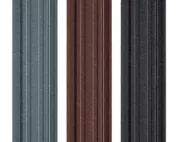
Metal pickets and fences
Different metal pickets at the front and sides: keeping the fence coherent
In brief
The fence facing the street acts as the home’s calling card. The sides of the property more often separate the garden, the service area and places for relaxation. These functions need not lead to an identical spacing of pickets. Metal fence pickets allow different arrangements while maintaining a common material. The condition is a conscious plan. An accidental change of colour or height halfway along a run usually looks worse than a clearly designed boundary between two zones. The front is worth assessing together with the pedestrian gate, the driveway gate and the façade. On the side section, the view from the terrace or access to the garden may be more important. At the rear of the property, ease of cleaning and access to the service area sometimes matter. Writing down these needs helps avoid a situation in which the entire fence responds to only one inspirational photo.

Define the task of each part of the fence
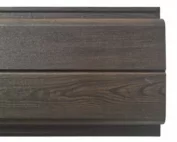
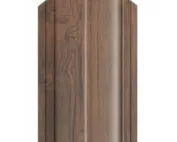
For each section, note the expected clearance and the side most often observed. Metal fence pickets have a front and a back. In some variants both surfaces are decoratively finished. In others they differ in appearance. This detail matters especially at a side boundary viewed mainly from the house. It should not become apparent only after the entire infill has been screwed on.
Find the common element of all sections
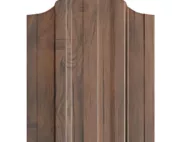
The clearest connection is the same profile and colour of picket. The spacing or height can then be varied where justified. Another unifying element is a consistent colour for the posts and crossbars. However, several changes do not need to be applied at once. If every side differs in profile, colour and topping, the whole loses its common character.
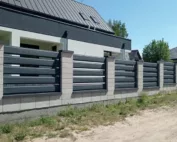
A simple rule works well: one basic material and clearly defined places for changes. Sheet metal pickets can form a denser section by the terrace and a looser one on the garden side. The transition is best marked by a post or a corner. Such a division is clear to the observer and simpler to describe in the order. It also does not require random mixing of lengths within one field. It is worth marking the transitions on the garden-side plan as well. From this perspective, the division should fit the paths, flower beds and rest areas that will remain on the property after the work is completed.
Determine what really changes the spacing
Smaller gaps increase the amount of material in a given bay. They also restrict the direct view through the fence. However, they do not guarantee full privacy. At an angle the effect may be different. Sheet metal pickets have a three-dimensional shape, and the observer changes position. It is worth checking a sample section before different spacings are assigned to the entire property.
The densification of the infill should be taken into account in the structure. It should not be assumed that every existing frame will accept any number of pickets. This applies in particular to two offset rows. Such an arrangement is a separate installation decision. It should be distinguished from sheet metal having the same colour on both sides. One feature concerns the arrangement of elements, the other the surface finish.

Match the height to the lie of the land
The side of the property may have a different slope than the front. Repeating one picket length will not always produce an even fence line. First, the way the bays are run must be chosen. A stepped arrangement or another solution consistent with the structure can be considered. The specific course is not determined without measuring the finished levels and assessing the areas at the gate.
A change in height is best shown on a simple drawing. Mark the top ends of the pickets and the bottom clearance. It is not worth assessing only the line visible from the street. On the garden side, too large a gap at the ground or an area exposed to being buried may arise. The pickets should remain isolated from the ground in accordance with the conditions of the material used.
Divide the order into clear groups
With different layouts, lengths and quantities are easily confused. Each section should have its own designation. The number of pickets, their length, end types and coating are assigned to it. It is worth adding a sketch indicating the decorative side. This way the fitter does not have to guess which elements go to the front and which to the rear boundary.
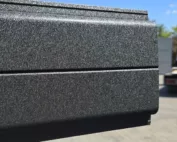
Even with the same colour, keep the data for the surface variant. Matt and gloss are not interchangeable. Different batches may also show slight differences in appearance, so the selection should be confirmed before installation. If the fence is built in stages, keeping a sample and specification will make later communication with the supplier easier. It is not, however, a promise of identical product availability in the future.
Compare the whole before making the final choice
Prepare a view of each side and one simplified site plan. Check whether the changes have a functional justification and a clear transition point. It is also worth assessing the cost of the entire layout. A different number of pickets is only one component. Different supports, accessories and installation time are added. Variants should therefore not be compared solely by the price of a single element.
Metal fence pickets offer the freedom to adapt the fence to the surroundings of the house. It is worth using this calmly. The front can be more representative, the side more screened, and the rear easier to maintain. A common profile, a well-chosen colour and clear transitions will unite these functions. The differences between sections then look like part of the design rather than the trace of successive random purchases.
7 branches. Materials closer to your project.