Roof and energy
Planning a photovoltaic roof on a wind-exposed site
In brief
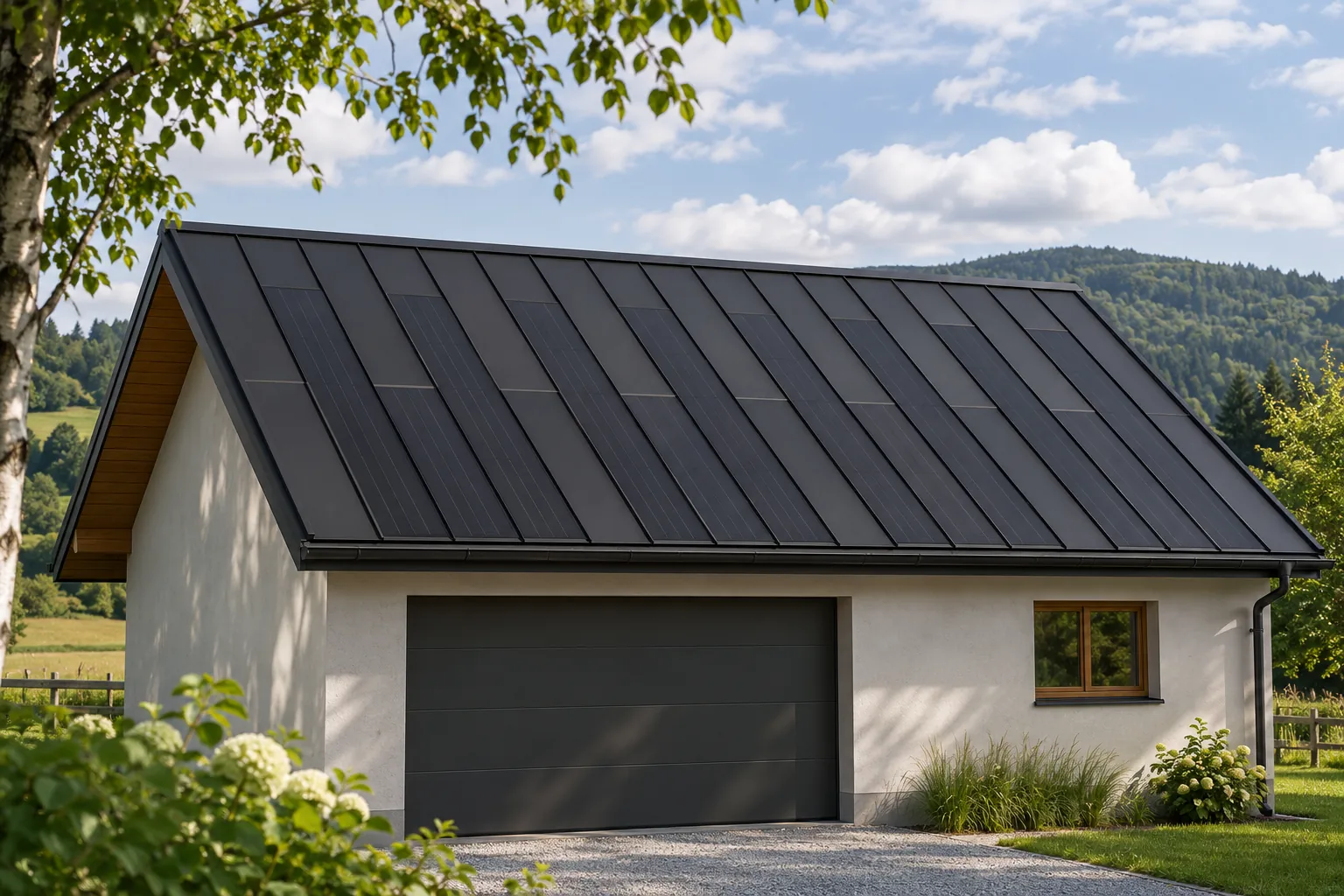
On an open plot, a photovoltaic roof must be assessed as part of the building structure. Local wind conditions, the shape of the building and the zones at the roof edges all matter. The absence of additional mounting above the covering can be beneficial for the appearance and layout of the roof, but it does not mean wind resistance without calculations. A proper BIPV system requires designed fixings, support and complete detailing of all junctions. A building surrounded by fields may be subject to different wind loads than one in dense development. Terrain shape, height and surroundings are important. The owner’s own impression that it is often windy here is not sufficient for selecting fixings. The assessment should follow established design rules and the location of the project.
Why does open space change the conditions?
The intended state of the plot must also be taken into account. Planned extensions or the removal of neighbouring buildings can change the conditions around the structure. The designer needs an actual description of the site, not a photograph of a similar house. Transferring a solution from another project without checking the assumptions can be risky.
Does the absence of mounting remove the wind problem?
In an integrated roof, the cells are part of the covering or its system assembly. They do not form a separate layer of modules above the finished roof slope. This allows a compact form to be achieved and avoids a visible mounting structure. However, it does not mean that wind stops acting on the roof surface and its connections.
The loads must pass through the fixings into the substrate and on into the building structure. A weak element in this chain can limit the whole. The assessment therefore does not concern only the active panel. Passive panels, flashings, corner zones and all elements ensuring continuity of fixing must also be checked.
Why do the edges require attention?
The actions on the roof need not be uniform. Zones at corners, eaves and the ridge may require particular solutions. The figures given in the product data sheet are not an automatic fixing layout design. Reading the permissible load requires knowledge of the test conditions and the method of fixing.
In practice, an installation drawing referring to the specific roof slope is needed. The contractor should know where the requirements change and which components may be used. It is not advisable to replace system parts with random substitutes. An apparent saving can worsen the predictability of the connections and the warranty conditions.
How should the substrate for a new roof be assessed?
A strong panel will not help if the substrate cannot hold its fixings. In an old building, the condition of battens, boards, panels or other supports specified in the design must be checked. The material, thickness, spacing and quality of connections to the structure are important. The fact that the substrate is covered does not make it suitable.
During renovation, some problems may only become apparent after the old covering has been removed. It is worth including a stage in the schedule for assessing the exposed structure. This allows the support to be improved before BIPV installation. Surprises should not, however, be resolved solely by increasing the number of random screws without agreement.
Do ventilation and flashings matter here?
Yes, because the roof is a complete system. Ventilation inlets and outlets must match the system and the weather conditions. Flashings should be properly fixed and formed. A loose element at the edge can cause problems even if the modules themselves perform correctly. That is why handover should not end with checking electricity generation.
It is worth inspecting particularly the penetrations, terminations and points where different materials meet. The design must not assume that all details can be resolved later on site. A tidy standing seam roof surface requires equally tidy edges. These often determine the quality of the final result.
In an open exposure zone, a clear inspection protocol for the roof edges is particularly useful. The owner should know which symptoms to report to the service team and how to document any observed changes.
What evidence should the investor receive?
Design assumptions, documentation of the components used and confirmation of installation in accordance with the specified layout are needed. Photographs of the fixings before covering and identification of the responsible installers will be useful. A declaration of resistance without stating the conditions does not provide the same information. The rules for inspection after exceptionally severe weather events must also be known.
A well-chosen BIPV roof can perform well in a demanding location if the structural and installation conditions are met. However, one should not promise insensitivity to every wind. The genuine advantage of the system lies in the ability to design the entire roof surface and its connections, not in omitting the load assessment.
Players in the photovoltaic roof market include Electrotile, SolRoof, Wienerberger Wevolt, Tesla, SunRoof, MDM NT (MyRoof), ML System, Solarstone, LUMA Solar and Terrán.
7 branches. Materials closer to your project.

- SEROCK — Dzierżenin 34 E
- BŁONIE — ul. Sochaczewska 138A
- RADOM — ul. Grobickiego 8
- ŁÓDŹ — Natolin 8
- OLSZTYN — Barczewo, ul. Prosta 9
- WROCŁAW — ul. Jerzmanowska 10C
- GORZÓW WLKP. — ul. Zielona 33/34