Fibre cement coverings
Building cleaning and disinfection with a fibre cement roof
In brief
Cleaning the building and cleaning the roof are two different tasks. Fibre cement sheets require a method matched to the material, the coating and the joints. Asbestos-free fibre cement is not resistant to every preparation simply because it contains no asbestos. On a farm, it is worth agreeing the hygiene rules before the new covering is handed over for use. The cleaning programme should state whether it covers the floor, the walls, the ceiling or the exposed underside of the roof. Each of these surfaces may be made of a different material. A solution that is effective on floor concrete does not have to be approved for a painted sheet. The way water is drained after the treatment is also important. If the roof is above insulation or a ceiling, the tightness of the internal layer must be checked.
Determine which surfaces come into contact with water
Cleaning water should not accidentally end up in a space that is not intended to be flooded. Cleaning should therefore be planned for the entire assembly. The condition of the visible surface alone does not describe what is happening behind it.
Choosing a preparation requires checking compatibility
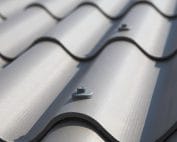
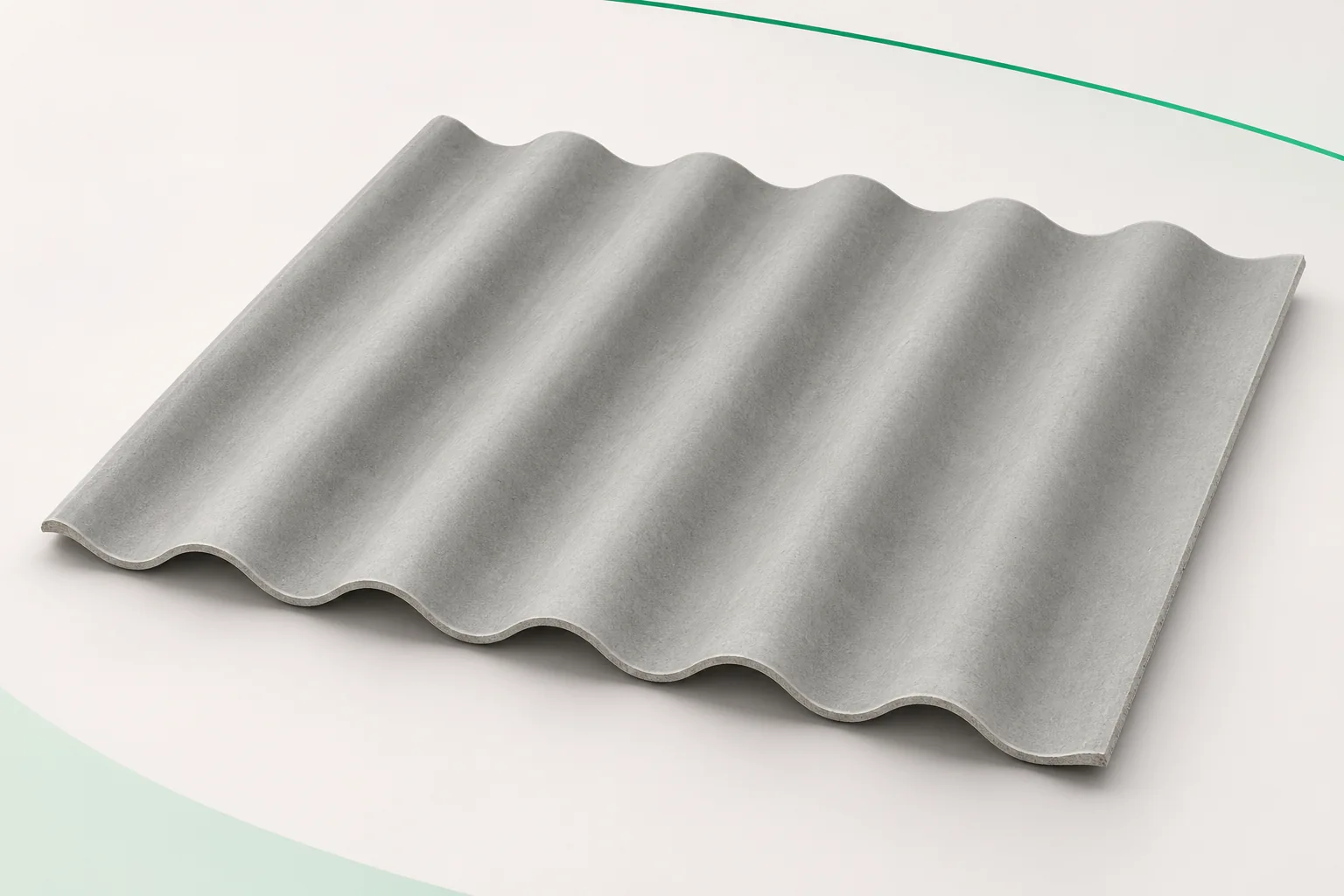
Corrugated fibre cement sheets have a cementitious base and may have a factory-applied colour coating. The reaction to an agent depends on its composition, concentration, temperature and contact time. Before use, the documentation for the material and for the preparation must be checked. A general description of an agent as safe for buildings is not sufficient.
The assessment is extended to seals, metal fasteners and flashings. The board may remain without visible changes while another connecting element is gradually damaged. Asbestos-free fibre cement is not the name of a complete system resistant to any chemistry. Every component of the roof has its own limitations.
Pressure changes the way water acts
Rain runs down from above in line with the roof slope. A jet directed from close range at a lap can force water in the opposite direction. Even a correctly made joint does not have to be designed for such a load. That is why the rules for cleaning a floor are not transferred to a roof without checking.
Fibre cement sheets can be damaged by an aggressive cleaning method. High pressure is discouraged in the instructions for some systems. The choice of method should be based on the documentation for the specific product. Where the recommendations are not clear, it is worth obtaining confirmation before starting work on a large area.
Deposits, moss and efflorescence are not the same thing
Soiling from processing, biological growth or white mineral efflorescence may appear on the surface. Each of these symptoms has a different cause. An attempt to remove everything with a single strong preparation can cause damage. First the type of change and its effect on the function of the covering must be identified.
White efflorescence may be associated with the movement of calcium compounds during dampening and drying. Moss more often requires attention where it impedes drainage or enters a lap. The mere presence of a colour change does not prove a leak. Fibre cement sheets are also assessed for cracks, fastenings and the path of water.
Protect the stock and the rooms in use
Cleaning the roof can mobilise contaminants that will run into the gutters or, if a detail is not watertight, get inside the building. Before the work begins, the way in which feed, equipment and areas in use are to be protected is determined. It should not be assumed that the preparation will remain only where it was applied.
Equally important is how the water is handled after washing. Its discharge should be appropriate to the agent used and the conditions of the property. It is worth checking that the drains are clear before and after the treatment. Accumulated sediment can restrict drainage, even when the roof surface itself has been cleaned.
The roof must be able to dry out
Washing introduces additional moisture into the building. After the work is completed, adequate air exchange and drying conditions are needed. Corrugated fibre cement sheets can buffer moisture, but not indefinitely. Closing up the property without controlling ventilation can increase the risk of condensation.
Drops after washing do not always mean damage caused by the preparation. It must be checked whether they result from water penetrating through a detail or from vapour condensing on a cold roof. Records of the time of treatment, the weather and the operation of ventilation help. Identifying the cause should precede any repair.
Access to the roof surface is a separate task
Work is not carried out by walking directly on the corrugations. This also applies to the areas above the supports and the screw lines. The reinforcing strips in some sheets do not replace a working platform. Suitable stands and safeguards adapted to the specific roof are needed for cleaning.
Asbestos-free fibre cement is still a brittle material under point loads. Skylights require particular attention and are not a means of access. It is worth considering methods that allow the necessary tasks to be carried out from a platform. Limiting unnecessary walking on the roof reduces the possibility of accidental damage.
Establish a fixed procedure instead of improvising
After selecting an approved method, it is advisable to record the preparation, the conditions of use and the area covered. The next team should have access to these arrangements. A change of product or application method requires a new assessment. It should not be assumed that a similar trade name means an identical composition and effect.
After cleaning, the joints, the coating and the drainage are checked. Photographs can help to compare the condition at the next servicing. It is also worth keeping notes on places that are difficult to dry in the documentation. In this way, the hygiene of the building supports the durability of the roof instead of becoming a source of recurring defects.
Before the first wash, record the surfaces and materials that the agent will come into contact with. Confirm that the method is suitable for the boards, coatings, fasteners and seals.
7 branches. Materials closer to your project.