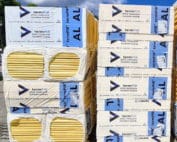
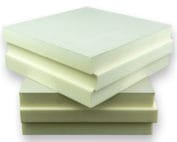
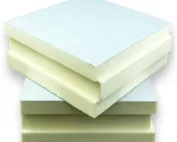
PIR insulation
PIR or mineral wool for a roof: what matters beyond thermal conductivity?
At a glance
The choice between PIR and mineral wool for a roof must be matched to the structure, the covering and the requirements of the whole assembly. Comparing thicknesses alone is not enough. PIR boards can make it easier to achieve high thermal resistance within a limited height. At the same time, each variant requires its own fire, moisture and installation solutions. Polyurethane insulation does not automatically deliver a specific percentage of heating savings. The difference concerns the chosen layer, and the building also loses energy through other paths. Windows, ventilation and services must be taken into account. The comparison should keep the same conditions of use. With a parapet or a pitched roof slope, a thinner layer can simplify some junctions. However, the thickness must be calculated for the specific lambda and a common thermal target.
Comparing thicknesses requires specific figures
Polyurethane boards should not be compared with any mineral wool without identifying its type. Include the other roof layers in the comparison as well. Saving on the insulation itself does not always mean the same reduction in the height of the entire cross-section.
Reaction to fire requires a separate assessment
The fire resistance of a roof assembly depends on all its components, not only on the insulation core. Mineral wool in the uncoated version often has reaction-to-fire class A1, but this must be confirmed for the specific product. PIR is not by definition non-combustible insulation – boards can have different classes and classifications assigned to a specific method of installation.
The roof classification applies to a specific set of materials and installation conditions. It must not be transferred to another assembly merely because the insulation has a similar thickness. The polyurethane foam in the board has its own fire reaction, and the building element may be subject to a separate assessment. When switching from mineral wool to PIR, the relevant scope of documents must be checked. A favourable R does not confirm that the required fire function of the roof is maintained.
Thermal insulation does not mean sound attenuation
The fibrous structure of mineral wool is sometimes used to absorb sound in suitable assemblies. Rigid PIR boards primarily serve a thermal insulation function. Benefits from a low lambda should not be transferred to acoustics. The result depends on the entire assembly, its mass, the connections and any resilient layers.
On a roof above a usable room, sounds from outside and from precipitation can also be important. The outcome is determined by the entire system, including the covering, facings and joints. Polyurethane insulation does not automatically produce the same effect as a build-up with mineral wool. If quietness is an important requirement, it must be assessed separately. It is not enough to add a general promise of sound insulation to the description of good thermal insulation.
Rigid boards and flexible infill are installed differently
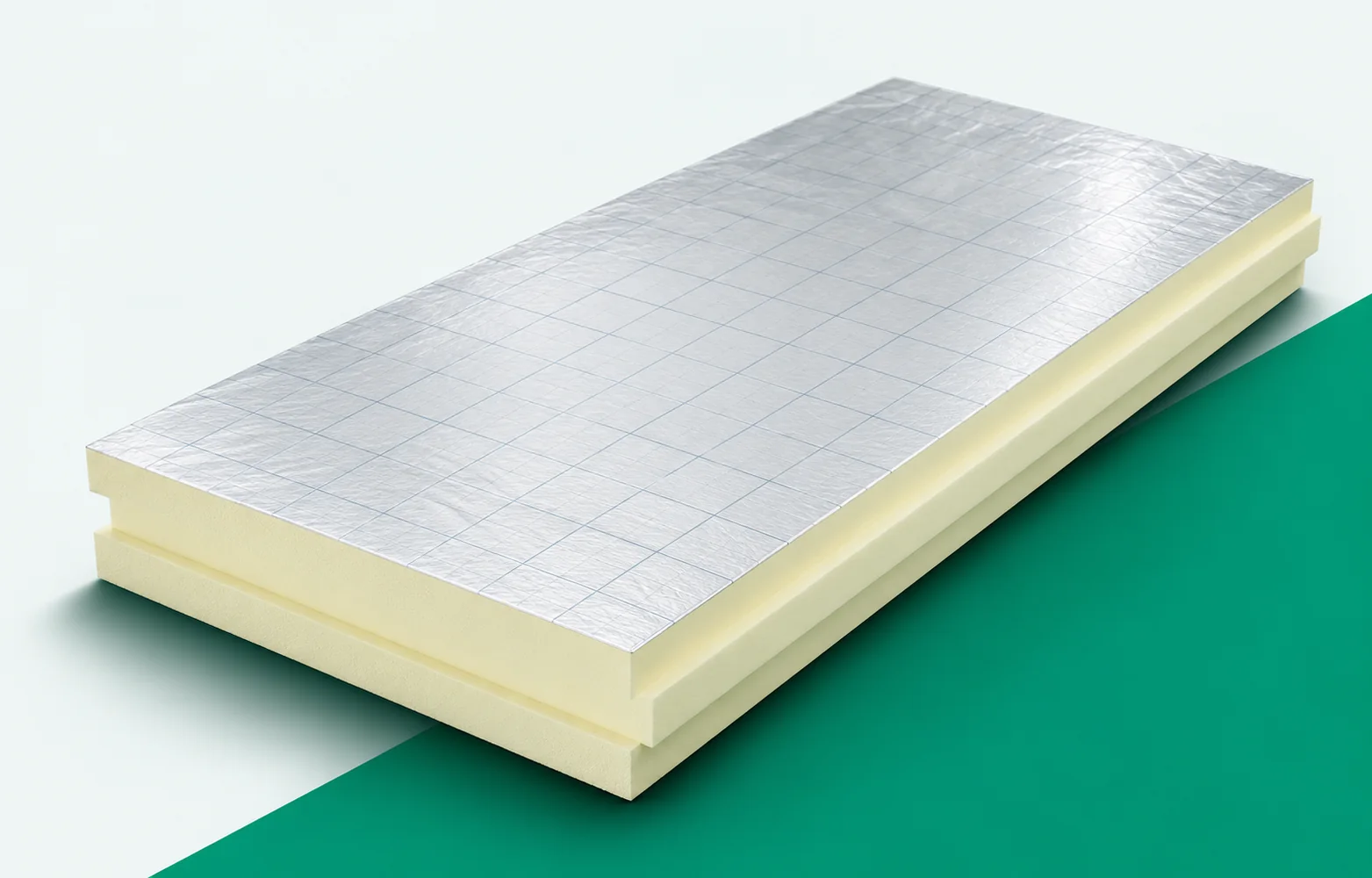
A gap in the thermal insulation and an air leak are not the same problem. The continuity of the thermal layer must be assessed separately from the airtightness of the entire system. Tapes and membranes should be compatible with the system. The milled groove on the edge of PIR does not replace all the functions of these joints.
Insulation above the rafters and infill between the structural members require different operations. A continuous layer can reduce the influence of the rafters, but it needs correct fixing and a solution for the perimeter. With fibrous material, it is important to fill the space precisely. Neither of these technologies relieves you of the need to check airtightness. It is worth comparing the actual way the roof is constructed instead of assuming identical labour for both variants.
Water vapour and moisture depend on the entire cross-section
The water vapour diffusion resistance of a single layer does not determine the moisture condition of the roof. Mineral wool usually offers low resistance, whereas a PIR board with a gas-tight facing can behave differently. Neither of these behaviours is a defect in itself – the vapour flow and the points of possible leakage must be traced through the entire cross-section.
The layer arrangement should protect the roof against unwanted moisture accumulation. The vapour permeability of mineral wool alone does not guarantee correct performance, and the PIR facing does not automatically seal all joints. Continuity of the relevant layers is needed at the chimney, window and service penetrations. In a renovation, the condition of the material left in the roof slope must also be assessed. Covering damp layers can make it harder to identify the cause of the problem later.
The choice can combine the advantages of different materials
It should not be assumed that the entire building will be insulated with a single material. PIR boards can solve a thickness constraint, while another layer can meet acoustic or fire requirements. However, such a combination must result from the design. Adding materials independently can change the moisture behaviour and the fixing.
Combining materials is sometimes justified when each layer has a specific task. PIR boards can improve thermal continuity outside the structure, while another material meets additional requirements. In that case, polyurethane insulation must be taken into account in the entire moisture-related and constructional cross-section. It should not be added arbitrarily to an existing roof. The design should specify the thicknesses, fixings and the way all the required functions are combined.
How to compare complete roof assemblies
A specific insulation and waterproofing arrangement was planned for the roof. Replacing a soft material with a rigid board changes the bearing and fixing conditions. All layers must be checked. Such a variant does not become correct merely because it has a similar calculated R.
End the roof comparison with two complete cross-sections. For each, record the thermal calculation, the relevant fire requirements and how the details are executed. If acoustics matter, include them in the same comparison. PIR boards may show a spatial advantage, but the choice is decided by the complete set of functions. This makes it possible to avoid a change that improves one number while leaving junctions unresolved or removing a necessary feature of the earlier system.
7 branches. Materials closer to your project.