PIR insulation
GK, SF and NuF: swissporPIR Alu edges in layered assemblies
At a glance
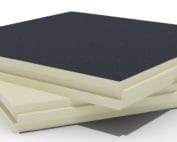
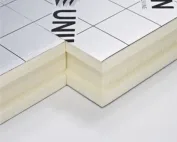
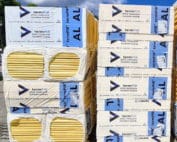
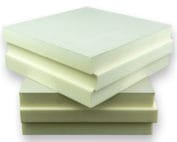
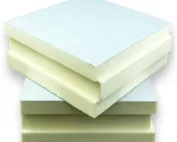
The edges of swissporPIR Alu come as FIT/GK — square, LAP/SF — rebated, and TAG/NuF — tongue and groove. The choice of profile concerns the fit of adjacent boards, not a change in the thermal conductivity of the PIR core. It must be tied to the single- or two-layer build-up, to cut pieces and to terminations at the parapet or reveal. The factory rebate does not replace a plan for offsetting joints, for support or for waterproofing. In this guide we show what cutting the profile off at the perimeter changes, how to recognise the actual covering area and why the availability of an edge type must be confirmed for the thickness being ordered. The general name of the polyurethane board does not identify these joints.
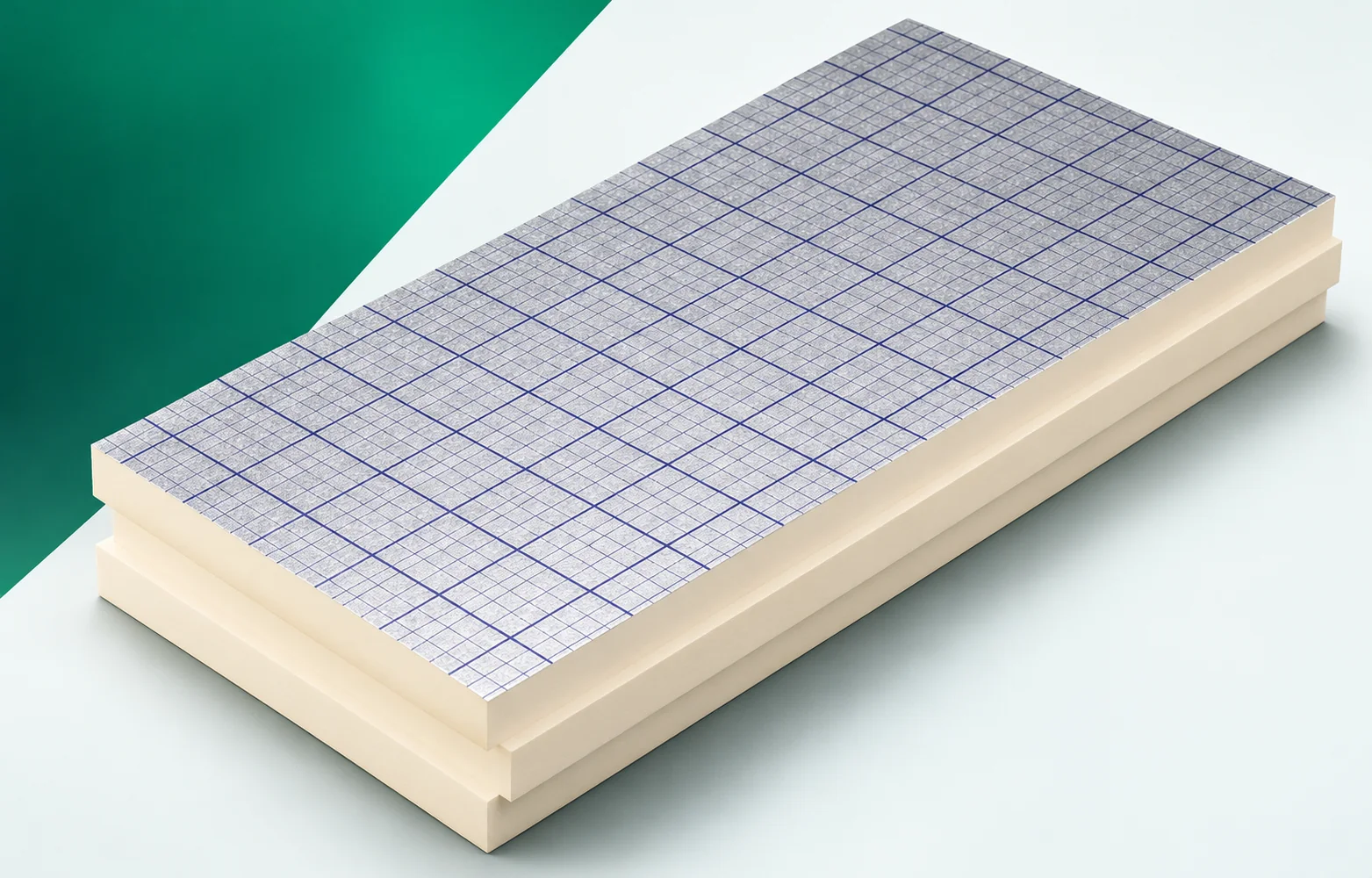
PIR boards with FIT, LAP or TAG edge
Add the actual cross-section of the swissporPIR Alu edge to its verbal description. However, similarly sounding names do not mean the same way of fitting the boards. The drawing should show the profile together with the adjacent layer and the termination at the perimeter.
Core conductivity and quality of the joint
The lambda of the swissporPIR Alu core is 0.022 W/(m·K) regardless of the edge name. The profile helps to create the joint between the boards; its benefit must be assessed through the continuity of the laid layer, not through a change in the material’s conductivity.
The rebated edge of swissporPIR Alu does not automatically improve the lambda value and does not eliminate the remaining thermal bridges. When comparing cross-sections, separate the properties of the board from the quality of its joints. Only a plan of the joints across the entire surface shows how the profile helps to maintain the continuity of the insulation.
Polyurethane insulation after cutting the edges
At a wall or a projecting part of the roof, a cut piece of swissporPIR Alu may lose its factory profile. In that case, draw the actual shape of the termination. Before assembly, check that the sides are clean and undamaged, and that no visible gap remains after fitting.
After cutting swissporPIR Alu at the wall, check the new edge, the width of the piece and its support. A loose tongue does not stabilise an arbitrary cut. The end must remain fitted without an open joint, including where the factory profile has been removed.
Mutual position of the layer joints
Lay two layers of swissporPIR Alu with offset joints. For a single roof layer, the manufacturer recommends an overlap or tongue-and-groove. Both solutions require their own planning of rows and edges.
On the plan for two layers of swissporPIR Alu, mark the joints and the function of the seals separately. Tape on the surface does not replace the missing core and does not form independent waterproofing. Offsetting the joints is intended to limit gaps through the thickness of the insulation while retaining the other safeguards.
The profile does not replace support
The tongue-and-groove of swissporPIR Alu connects the thermal insulation; it is not a structural interlock of a sandwich panel. Fitting the edges together does not confirm approval for any arbitrary span between supports.
An easy connection of adjacent swissporPIR Alu boards does not settle the question of support. Check the bearing of the complete elements and the load path into the structure. The geometry of the insulation joint should be assessed separately from the load-bearing capacity of the system.
Polyurethane insulation: the right profile in the order
When pricing different edges, check how the usable area and the waste at the edges are calculated. The quantity ordered results from the board layout, not only from the rectangular area on the plan. The cost of the complete system takes into account the availability of swissporPIR Alu rebated edges from 40 mm thickness according to the instructions.
Do not automatically attribute the edge available in thicker swissporPIR Alu boards to the 20 mm variant. Before pricing, confirm the actual combination of thickness and profile. The delivery designation, the covering area and the waste at the perimeter should all refer to the same variant.
A case worth considering
In a two-layer swissporPIR Alu system, the edge profile must correspond to the run of the joints. The overlap alone does not replace a plan for offsetting the joints. Also check the termination of both layers at the parapet or reveal and show them in a single detail. The system works as a whole only when the edges also fit together geometrically.
7 branches. Materials closer to your project.