Roofs and insulation
PIR or XPS for a flat roof: what does the position of the insulation tell you?
Key points in brief
PIR and XPS are not chosen for a flat roof on the basis of lambda alone. First you need to know where the insulation will sit relative to the water-retaining layer. A dry board under a membrane performs differently from a material above the waterproofing, under gravel or a terrace. The requirements, details and the point of comparing prices all depend on this arrangement. In a traditional roof the thermal insulation is usually below the waterproof layer. In an inverted roof the order is different: the insulation goes above the waterproofing and may come into contact with water. This distinction matters more than the flat shape of the roof as seen from the street.
Start with the roof cross-section
During refurbishment, the existing layers must be identified. New boards laid over an old, damp build-up can trap water inside. The condition of the substrate, drainage and the possibility of retaining some materials must be assessed. A dry surface on the old covering does not prove that its interior is dry.
PIR helps when layer height matters
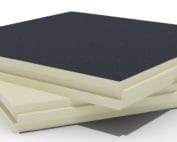
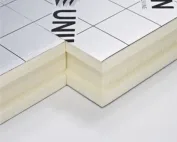
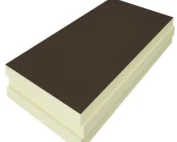
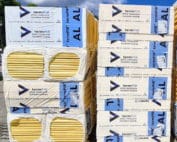
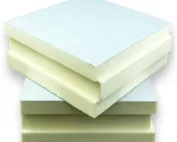
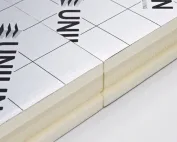
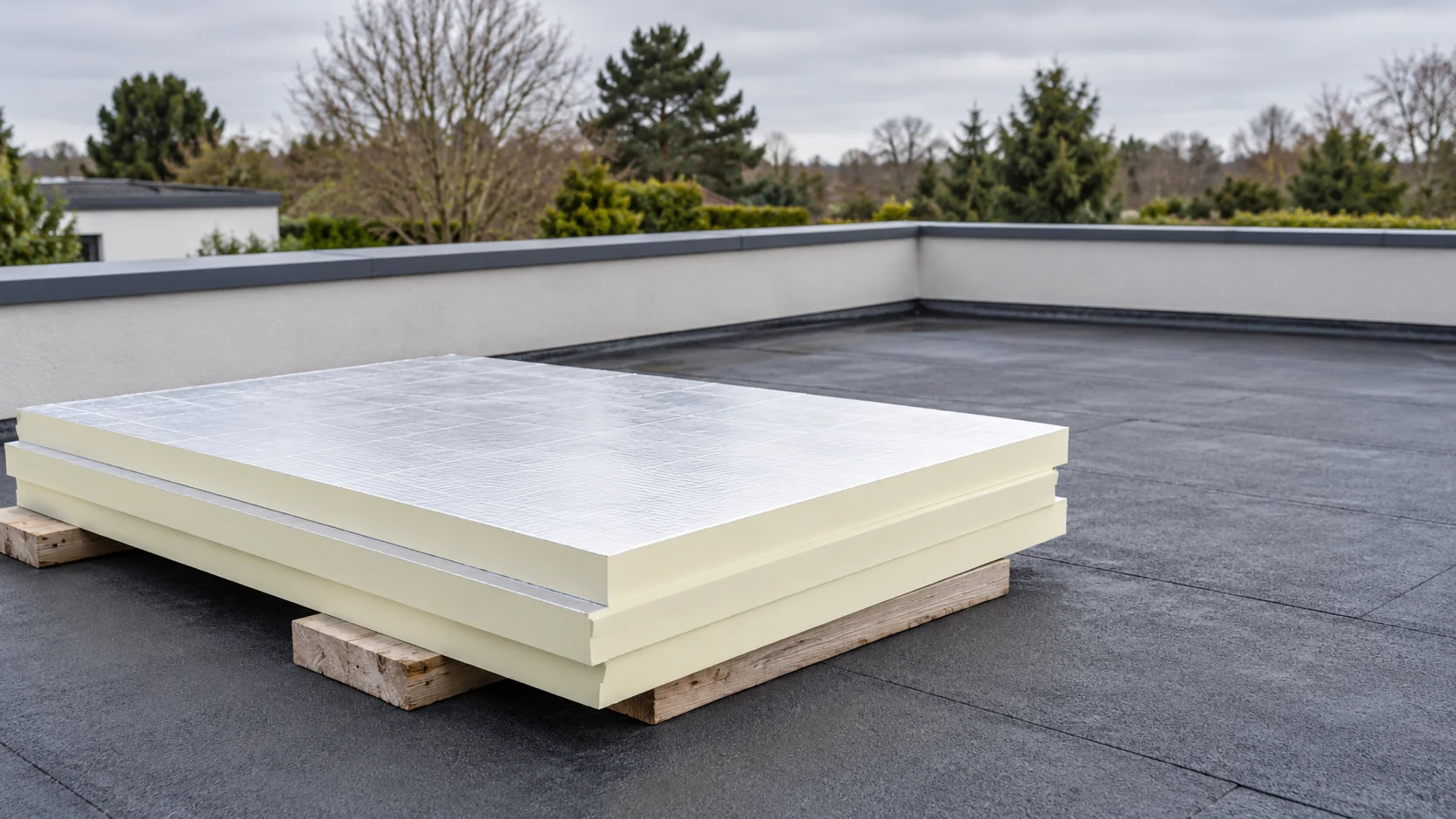
PIR boards with a suitable facing are used as insulation beneath a designed covering. A low lambda can make it easier to achieve the required resistance within a limited parapet, threshold or flashing height. Compatibility with the adhesive, membrane and method of fixing is important.
The film on the board should not be treated as a finished roof waterproofing. The insulation must be dry and protected in the intended manner. The type of facing is selected for the whole build-up, because bonded, mechanically fixed and different covering solutions can place different requirements.
XPS can be the right choice above the waterproofing
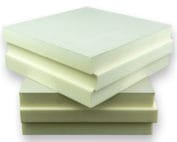
XPS grades intended for inverted roofs are selected with regard to contact with water and loads. Above them there may be separating layers, gravel, greenery or terrace surfacing, in accordance with the design. This does not mean that every XPS board is suitable for any such roof.
Water absorption, properties under long-term load, thickness and the requirements of the complete build-up are checked. In the thermal calculation, it may be necessary to account for the effect of water flowing within the roof. A simple comparison of the lambda of two dry samples does not describe all service conditions.
Compare similar resistance, but do not ignore the application
In the worked example, 120 mm of PIR at a lambda of 0.022 gives a resistance of approximately 5.45 m²K/W. The same resistance is achieved with 180 mm of XPS at the assumed lambda of 0.033. This compares the layers alone at the stated parameters, without corrections or other roof elements.
A 60 mm difference can matter at a terrace threshold. It does not, however, justify arbitrary substitution of material below or above the waterproofing. The intended use of the product and the correctness of the build-up must first be confirmed. Only then can the height saving be regarded as a real benefit.

Don’t turn laboratory strength into terrace load capacity
The compression value at 10% deformation describes the result of a specific test. A ten per cent deflection of the insulation in a completed roof would usually be undesirable. The figure should therefore not be converted directly into an allowable weight for a planter, terrace support or equipment.
An assessment is needed of the long-term loads, their distribution and the load-bearing capacity of the entire structure. A small equipment foot can create high local pressure. A load-distributing layer and the support details must be designed. A thicker insulation board alone does not solve this task.
Water needs a clear drainage path
A flat roof still requires designed falls and drainage. Outlets, overflows and heights at parapets must be coordinated. In a terrace build-up, the visible surface is not the only level at which water can move. All layers must work together.
Before adding insulation, check that the outlet will not be obscured or the usable height of the flashing reduced. Increasing thermal thickness at the expense of proper water drainage is a poor trade-off. Details around doors and penetrations require particular attention.
Choose a system that can be installed and later maintained
On a small roof over an office, access to outlets and the ability to repair the covering matter. On a terrace, removal of the surface and inspection of supports are also important. The cost should therefore be compared for the entire completed build-up, not for the insulation alone at a similar R.
It is worth recording the locations of equipment and the permitted service routes in the documentation. During works, the boards must be protected from the weather in accordance with the instructions. Wet material, accidental adhesive or a omitted separating layer can negate a correct thermal calculation prepared before the renovation.
Short answers
Can PIR be laid instead of XPS in an inverted roof?
Not without confirmation of approved use and redesigning the system. Material above the waterproofing works under different conditions than dry insulation beneath the covering.
Does higher-strength XPS solve the weight of a large planter?
Not on its own. Local pressure, long-term deformation, load-distributing layers and the roof structure must be checked. The figure from testing at 10% deformation is not enough.
7 branches. Materials closer to your project.