Costs and formalities
What determines the cost of installing metal roof sheets?
In brief
Start by establishing exactly what the contractor is pricing. The final cost is shaped not only by the rate per square metre but also by the roof’s shape, the preparation of the substrate and the number of details such as valleys or chimneys. Ask whether the quote covers just laying the sheets or a broader service including the battens, underlay and flashings. Clarify what surface area forms the basis for settlement – where there are many cuts, the metres of purchased sheeting may differ from the metres of finished covering. Request a clear indication of net or gross amounts and units.
What does the rate per metre mean?
A contractor may quote for laying the sheets alone or for a broader service. It must be established whether this includes the substructure, the underlay and the flashings. It is also important to know which area forms the basis for billing. Metres of purchased sheet metal do not always correspond to metres of finished covering, particularly where there are numerous cuts.
Ask for a clear statement of whether amounts are net or gross, and of the units used. Some work is billed by linear metre, other work per piece or as a whole. Two quotes with a similar rate per roof slope can therefore produce different totals. Without a breakdown of the scope, comparison is more guesswork than cost assessment.
How does the roof shape affect working time?
A simple roof slope requires fewer measurements, cuts and flashings than a roof with numerous changes of plane. At a roof valley, the substrate must be prepared, the valley gutter laid and the sheet edges adjusted. A chimney requires a separate detail on several sides. Such locations take time, although they do not significantly increase the covering area.
A tall building and difficult access also change the organisation of the works. Scaffolding, a lift or additional workstations may be needed. The quote should take account of the actual site conditions. A wide driveway and a place for unloading allow work to proceed differently from a tight space between neighbouring buildings.
Does the sheet format change the installation cost?
Long sheets can speed up the covering of a regular roof slope, but they require safe transport and handling. Small modules make work easier in complex geometry. There is no single rule according to which one format is always cheaper. The number of joints, cuts and the team’s capabilities on a specific site must be assessed.
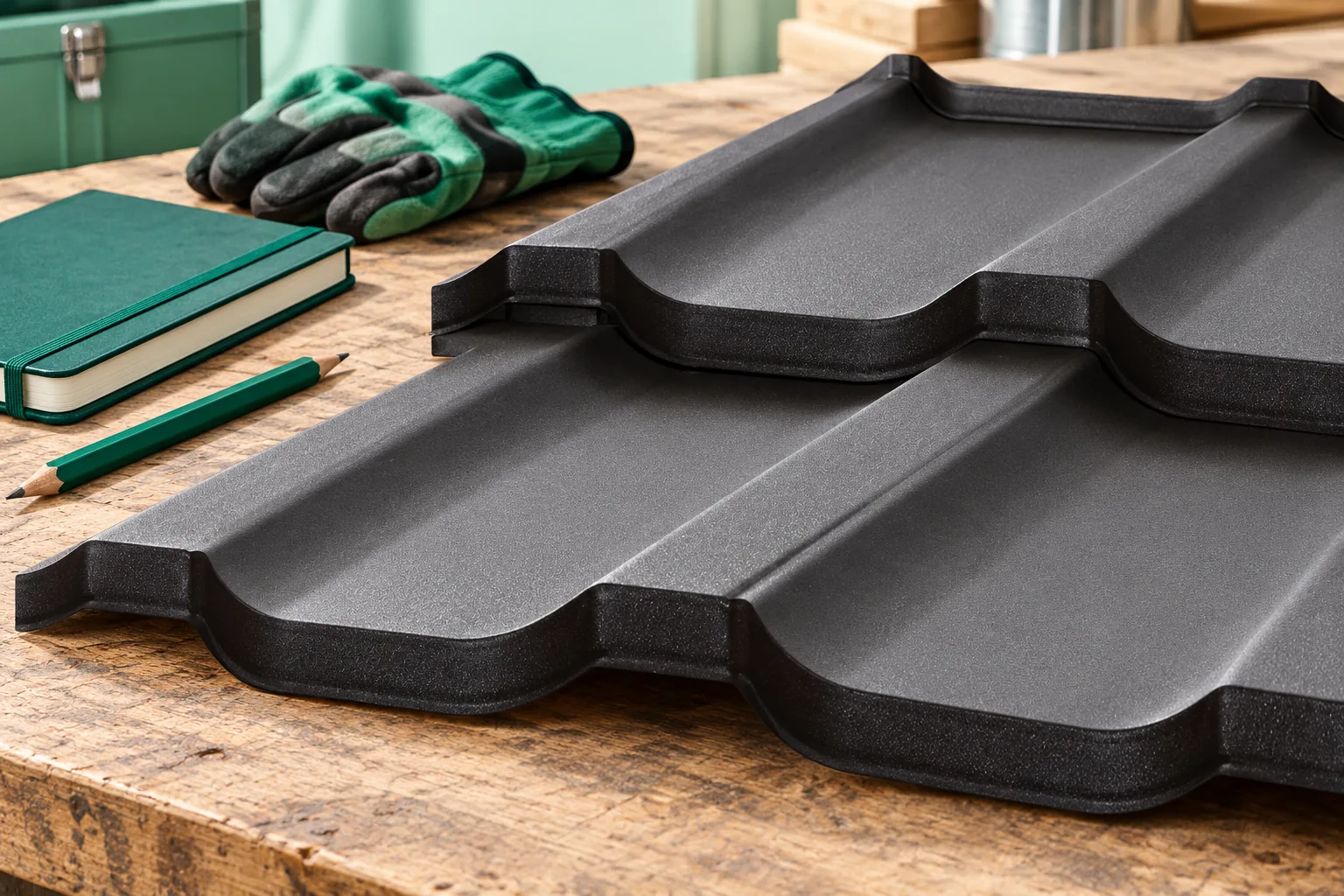
It is worth comparing the cost of material together with labour. A lower price per sheet may involve greater waste or more difficult installation. With a sandwich panel, a different method of lifting and fixing is added. The rate for tile-effect metal roofing should not be transferred to panel installation simply because both surfaces are metal.
What does preparing an old roof cost?
Dismantling reveals the condition of the battens, counter-battens and structure. Some elements may need replacing or repairing. Removal of waste and protection of the exposed building must also be included. The price for the new covering should not hide these items, as they are often the greatest source of uncertainty in a renovation.
It is worth establishing how additional work is approved. A photo of the damage, a description of the scope and an agreed price are more useful than general consent to “necessary corrections”. Not everything can be predicted before dismantling, but clear rules for decision-making and settlement can be agreed in advance.

How can you check the cost of flashings and accessories?
The schedule should include ridges, hips, valleys, eaves and flashings at walls. Gutters, roof access systems and snow guards should be listed separately. Material and installation may be billed separately. The length of flashings must be calculated from the design, not assumed as a fixed addition to the roof area.
With a non-standard detail, measurements and custom-made elements are added. Material compatibility with the covering is important. Saving money by using random steel sheet or fasteners can make later repairs more difficult. The offer should show the standard of these elements, even if they do not cover a large area.
What does a fair calculation example look like?
Let us assume purely arithmetically that 150 m² of roof slope are to be laid and the agreed rate is €13.89 net per m². The installation item alone then gives €2083.50 net. If flashings, scaffolding and dismantling are outside the rate, they must be added separately. This example shows the method of calculation, not the current level of service prices.
The final amount should result from the accepted offer. If the scope changes, the relevant items are updated rather than comparing the new total with the original rate per metre. It is worth keeping material and labour separate. This makes it easier to assess whether the difference comes from a change of product, quantity or method of execution.
Where can you find savings without compromising the roof?
The greatest benefit comes from organising the design, deliveries and dimensions in advance. Avoiding changes after ordering sheets reduces waste. Efficient access to the installation site and a complete set of materials also help. It is not worth saving by omitting the support layer, reducing the number of required fastenings or doing without an important flashing.
Compare several offers against one specification and ask about the differences. The lowest total may be advantageous if it covers the same scope and standard. However, it should not be chosen without clarifying missing items. The cost of correcting a concealed detail is often much harder to predict than doing it properly from the start.
7 branches. Materials closer to your project.