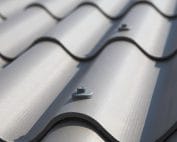
Fibre cement roof coverings
Fibre cement roofing for a tractor and machinery shelter
In brief
A machinery shelter is intended to protect equipment from precipitation and provide convenient access. Its roof, however, requires the same structural attention as the covering of an enclosed building. Fibre cement sheets can be a good choice for a simple roof slope. Asbestos-free fibre cement must be matched to the open structure, the dimensions and the intended use of the shelter. The design begins with the overall dimensions of the equipment and the manoeuvring routes. The tallest parts of the machines and the space needed to operate them must be taken into account. The gutter, flashing or projecting roof edge should not fall within the space through which the tractor passes. Collisions are a functional problem, not merely an aesthetic one. It is also worth planning for future equipment.
Entry height does not determine the overall geometry
Changing the function of the shelter may require additional height or closing a wall. Such assumptions are passed to the designer before selecting the structure. A margin of space under the eaves alone does not mean the roof will suit any later extension.
Wind also acts from below
In an open shelter, air has access under the covering. The load arrangement differs from that in an enclosed building. Corrugated fibre cement sheets and their fixings must be checked for the geometry of the specific structure. It is not enough to copy the screw spacing from the roof of a neighbouring warehouse.
Corners, edges and zones around wide openings require particular attention. The structure must have its own bracing. Sheets fixed with the intended clearance should not be treated as an accidental way of stiffening the entire shelter. These decisions belong to the design, not to adjustments made when laying the sheets.
The support is selected to suit the chosen system
Longer corrugated fibre cement sheets can reduce the number of joints on the roof slope. However, this does not mean they can rest on purlins spaced arbitrarily far apart. The spacing and number of supports depend on the format, system requirements and loads. Before ordering, it is worth reconciling the laying drawing with the structural drawing.
Supports should form a suitable plane. Pulling the sheet down to uneven timber or steel can introduce stresses. The edge must not overhang without limit, even if extending the eaves seems advantageous. The permissible overhang is a parameter of the given solution.
A roof does not guarantee that equipment stays dry
An open shelter limits direct rain exposure but does not isolate equipment from humid air. Condensation may form beneath a cool roof slope. Asbestos-free fibre cement can temporarily buffer moisture, but it does not override the laws of physics. A sheet that is persistently damp has a limited capacity to absorb further water.
If droplets appear, it is worth observing whether they occur during rain or after a cool night. The first situation may point to a detail, the second also requires an assessment of condensation. Sealing the laps alone will not always solve the problem. Removing the cause is more important than masking the visible trace.
Water should bypass the entrance and parking areas
The gutter system is designed for runoff from the entire roof slope. Discharge should not direct water under the wheels or towards the foundations. Access for cleaning should be left available. A gutter hidden between machines or behind stored equipment will be harder to keep clear.
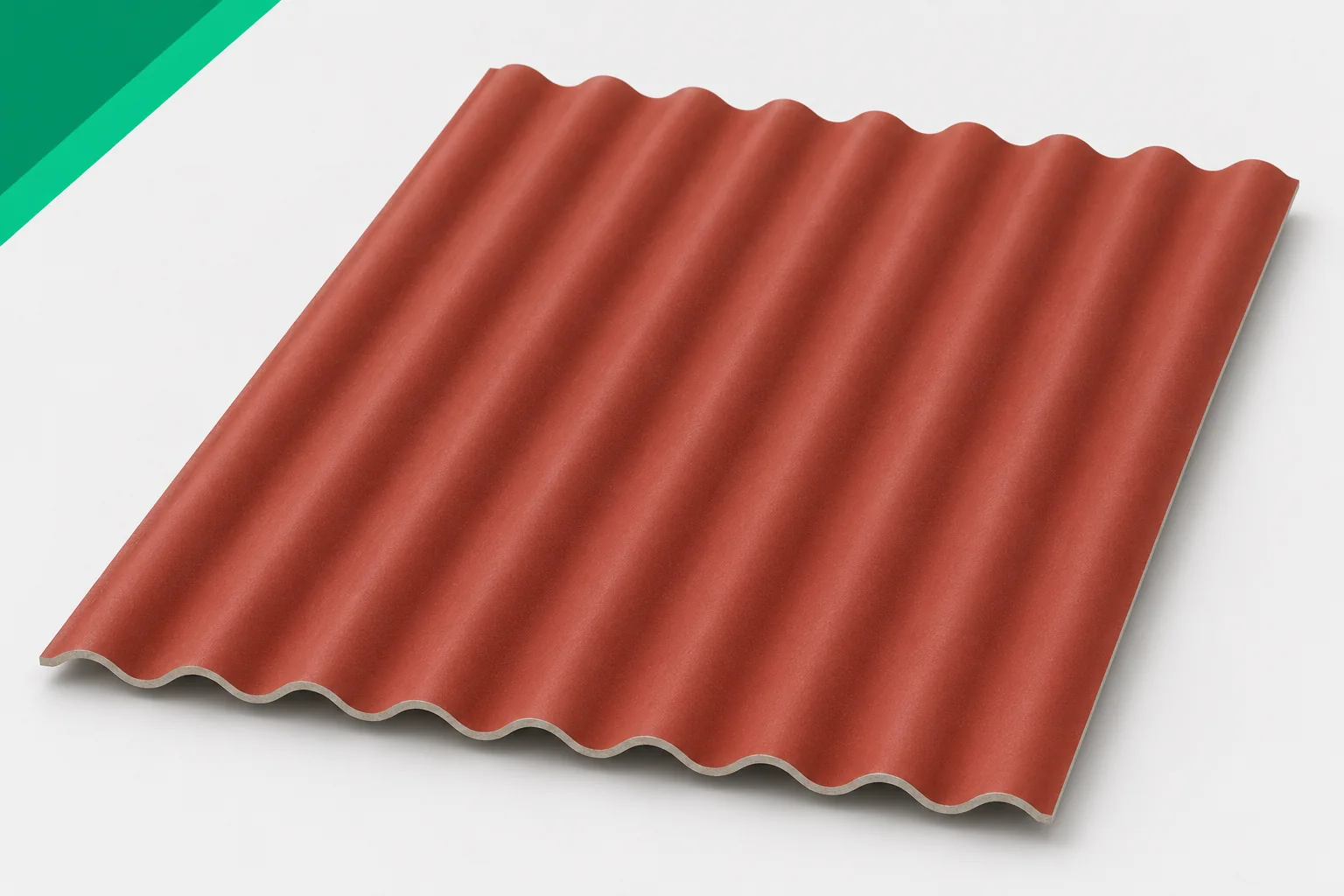
Corrugated fibre cement sheets require a suitable finish at the edge. The overhang, gutter position and flashings form a single detail. An edge that is too short may not direct water into the gutter, while one that is too long may work beyond the intended support. The setting is not chosen on the basis of appearance alone.
The covering is not a shelf for equipment
Lamps, cables and additional installations are often added to the shelter structure. Their fixing should be provided for separately. Equipment should not be hung on a randomly made hole in the sheet. The sheet is there to cover the roof slope, and the forces from devices must be transferred to the appropriate supports.
A similar principle applies to later photovoltaics. Corrugated fibre cement sheets do not become the supporting structure for panels. Loads, the way fixings pass through and sealing must be checked. It is best to discuss provision for a future installation at the design stage, before the support layout limits the possible solutions.
The finish affects maintenance, not just colour
The natural surface and factory-painted variants allow the roof to be matched to the farm. The colour on screen is indicative only. A sample is worth viewing in daylight next to existing buildings. Not every colour is available in all formats, so the offer is confirmed for a specific order.
In the machine parking area, the ability to inspect the underside of the roof slope also matters. An exposed roof makes stains and damage easier to spot, but it does not remove the need to plan safe access. The sheet is not walked on for cleaning or repair. An inspection can often begin with a visual check from the ground.
Delivery should fit the site organisation
The material is unloaded at a stable location outside the manoeuvring route. The pack should not stand where it risks being struck by forks or flooded. The sheets are protected from moisture trapped under the covering. The rules for unpacking and storage follow from the delivery documentation.
It is worth ordering asbestos-free fibre cement sheets together with a complete set of trims and fixings. This helps avoid makeshift details during installation. Finally, keep a record of the profile designation and the laying plan. For future repairs, you will know what to look for instead of comparing the corrugation from a photo alone.
For a quote for the shelter, prepare the dimensions of the equipment, the wall openings and the drainage plan. This will help match the roof to safe parking and everyday manoeuvring.
7 branches. Materials closer to your project.