Roofs and metal sheets
What flashings are needed on a metal roof and how do you calculate their quantity?
Key points in brief
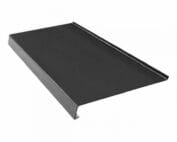
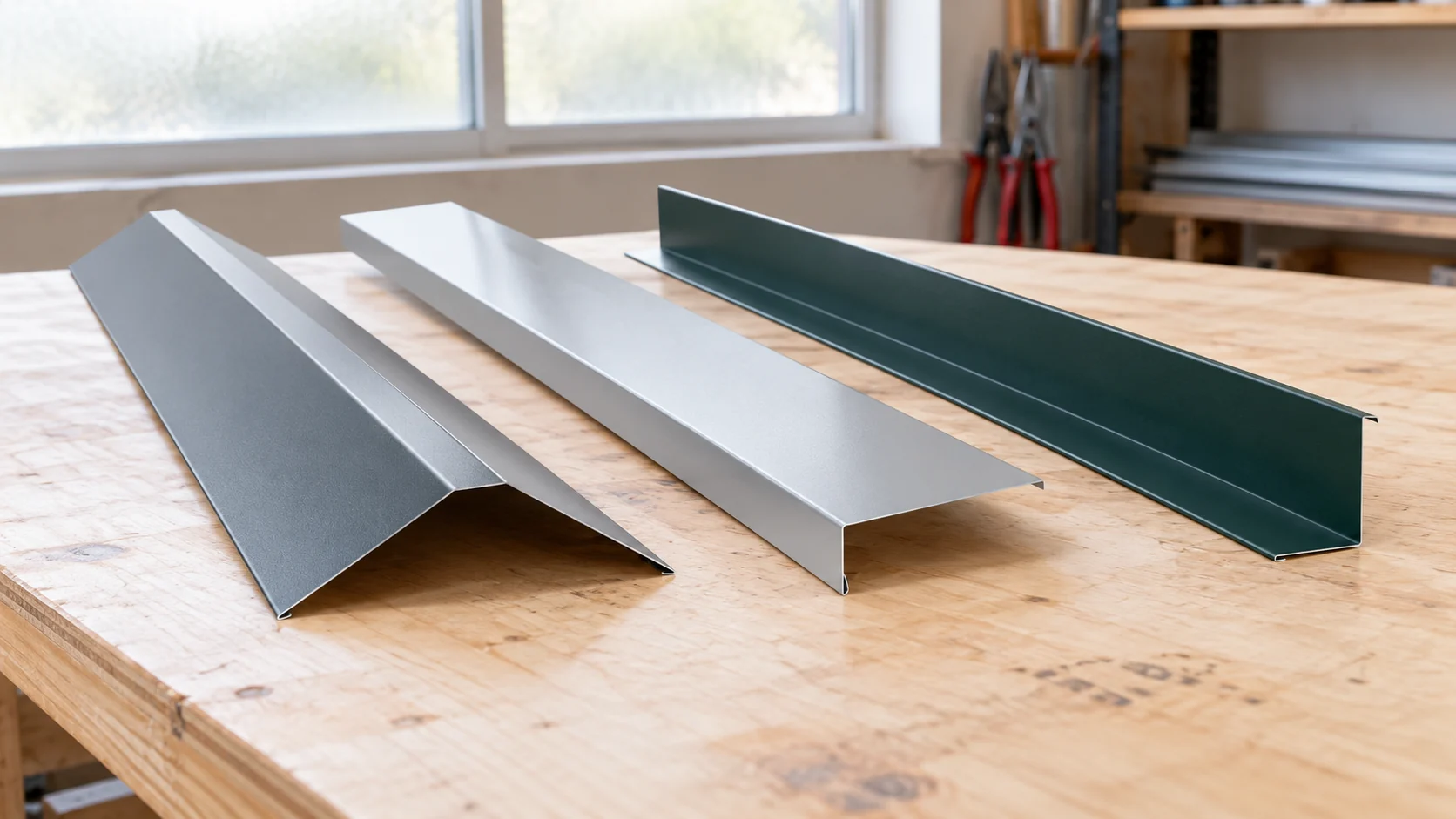
Flashings close the edges and guide water through difficult roof areas. A complete set cannot be selected from the roof surface area alone. A plan of edges, roof valleys and penetrations is needed. The easiest approach is to go over the roof on the drawing from the eaves to the ridge. For each section, note its length and purpose. In this zone, water from the covering must be directed into the gutter and the layers below properly terminated. The gutter apron and the fascia cover serve different purposes. Their presence and shape depend on the chosen detail. It is not worth ordering both simply because they have similar names.
What is located at the eaves?
At the eaves there is also an air inlet if the roof has a ventilated gap. The finish should not accidentally close it. The number of elements is counted along the actual eaves edges. On a broken roof these may be sections of different heights and details.
How are the side edges and the ridge closed?
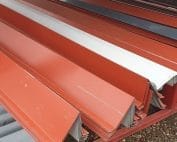
Barge boards protect the side ends of the roof slopes. They work together with the sheet profile and the board or structure at the edge. The ridge cap closes the point where the slopes meet at the top. In this zone, protection against precipitation must be reconciled with the intended airflow.
Do not add up the ridge and the hips without describing their geometry. A hipped roof will have different terminations and connections than a simple gable roof. The shape of the flashing and its opening angle are matched to the roof slope. The same sheet section does not automatically fit every angle.
When are roof valleys and wall flashings added?
The roof valley collects water from the concave junction of the slopes. Its working width and the method of support derive from the roof design. Wall flashings are needed where the covering meets a higher wall. The chimney, vents and other penetrations are considered separately.
It is worth marking each such detail on the plan in a separate colour. This way, short but demanding sections are not lost when ordering. The price per metre of the roof valley does not automatically include the execution of all connections at its ends. The scope of work should state this clearly.
How do you calculate a simple gable roof?
In the example drawing we have two eaves of 9.6 m each, a ridge of 9.6 m and four gable edges of 4.8 m each. This gives 19.2 m of eaves, 9.6 m of ridge and 19.2 m of sides. These are the lengths of the lines to be finished, before any laps or end adjustments.
On top of this come details arising from the design. If there is a chimney on the roof slope, it is not enough to add its perimeter as a single flashing. The back, front and sides have different functions. Likewise, not all flashings are calculated using a single developed width of sheet.

How does the workshop change the number of sections?
Let us assume sections of 2 m and a lap of 0.15 m. For six elements the total length when assembled will be 12 − 5 × 0.15 = 11.25 m. There are five laps, because each joins two consecutive parts. This is an arithmetic example. The actual lap length is determined by the adopted detail.
A set calculated in this way would be enough for a straight line of 10.7 m before adjusting the ends. However, it must be checked whether the sections split into separate edges. The remainder from one end does not always fit elsewhere. This applies particularly to left-hand and right-hand elements.
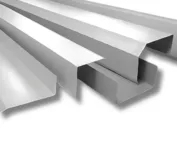
Break the flashings down into sections before ordering the bending. One long element may be awkward to transport, while several short ones will increase the number of joints. The lengths should match the detail and the way the material behaves. Also determine the direction of successive laps.
Why does the developed width matter?
Two flashings of the same length may use different amounts of sheet. One has two narrow folds, the other a wide apron and several hems. The quote also depends on the material, the number of bends and the batch. A running metre alone, without a description of the cross-section, does not allow a fair comparison of costs.
For a non-standard detail, provide a drawing with dimensions and the side of the coating. A mistake in the bending direction can put the colour on the wrong side. Also determine the bending radii and the material requirements. Too sharp forming can damage the coating.
How do you organise the list for ordering?
For each item, record the function name, cross-section, section length, number of pieces and side of manufacture. Add the colour and coating. List short elements at transitions separately. This way they will not disappear into a general “complete flashing set” item.
Before ordering, compare the list with the roof plan. Check all corners and ends. Agree with the contractor which parts will be ready-made and which will be made after measuring on site. A well-chosen set reduces interruptions, but it should not force the installation of an element that does not fit.
Short answers
Do the flashings have to be the same colour as the roof?
No, they can create a deliberate contrast. However, they should have a suitable material and coating. It is worth looking at samples, because the same colour code does not guarantee an identical appearance.
Can the quantity of flashings be calculated from the roof area?
Not exactly. You need the edge lengths, the number of roof valleys and penetrations, and how they are finished. The roof slope area does not contain this information.
7 branches. Materials closer to your project.