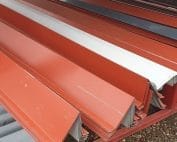
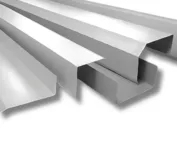
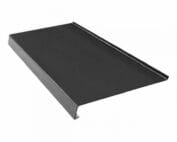
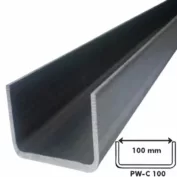
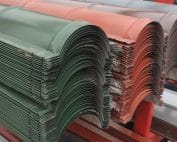
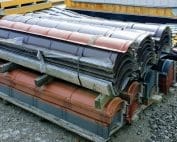
Flashings
Matching the flashing finish to the facing of a sandwich panel
In brief
Well-matched flashings fit sandwich panels in dimension, application and surface type. The same colour alone is not enough to assess the whole set. Barge boards, ridge caps or gutter aprons may come from sheet with a different finish than the panel cladding. It is worth establishing the specification before ordering. This helps limit visual differences and check whether the material suits the building’s conditions of use. Steel sheet forms the substrate of the flashing. A metallic coating protects this substrate against corrosion, and in colour-coated sheet an appropriate system of organic layers is added on top. That is why the terms galvanised and coated do not have to describe two entirely separate groups. Colour-coated sheet may have a zinc layer beneath the paint.
Separate steel from its protection
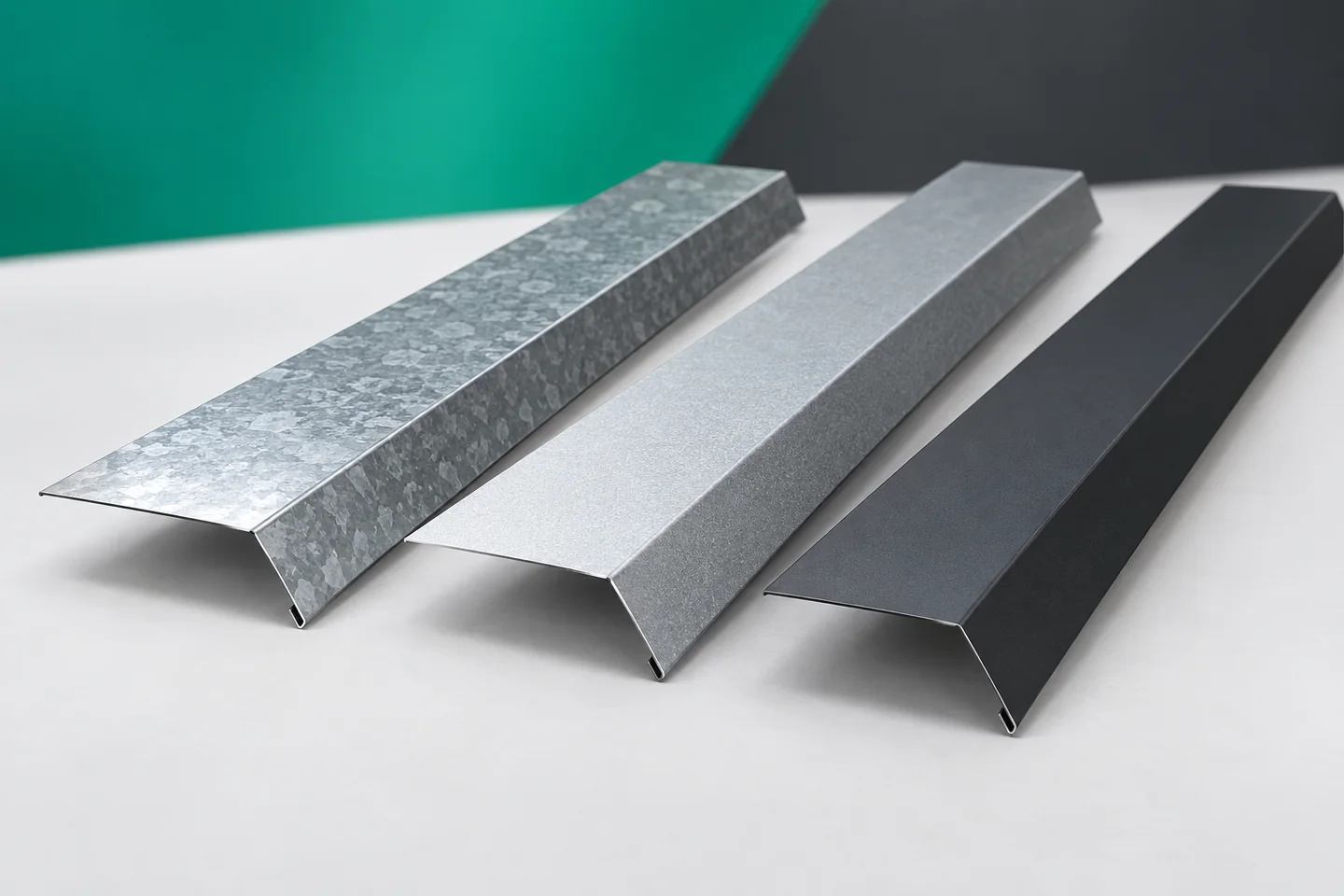
Aluzinc denotes a different type of metallic coating. It is not a name for aluminium sheet or coloured paint. When comparing offers, you therefore need to read the full material description. The word steel alone does not yet say what protection is present on both sides of the finished component.
Match the material to the installation location
Ridge caps work at the top of the roof, while starter profiles are at the lower part of the wall. Gutter aprons regularly come into contact with running water. Flashings inside the hall may in turn be exposed to conditions associated with the business activity. This does not always justify an identical choice of coating in every zone.
The specification should be linked to the actual environment. It is worth taking into account moisture, dirt and the method of cleaning the surface. Recommendations for an ordinary façade should not be transferred to a room with a different purpose without checking the data. The answer should follow from the material documentation.
A colour code does not describe the whole surface
Two flashings in the same colour may differ in gloss and structure. On a long façade such a difference is often more visible than on a small sample. Before ordering, it is therefore worth comparing the material in similar light. Both the hue and the character of the reflection are assessed.
Verge flashings and corners are often viewed from a different angle than a flat wall. This additionally affects the perception of colour. Conformity should not be assessed solely on the basis of phone photos. When aesthetics matter a great deal, samples should correspond to the finish actually being ordered.
Thickness must match the function
The cover flashing and the mounting profile do not have to be made from the same sheet thickness. In catalogues, starters are listed separately from thin verge trims or cover trims. A change in thickness can also affect whether a particular bend can be achieved. It is worth establishing this before preparing the cross-section.
However, it cannot be assumed as a simple rule that a thicker sheet will always improve any detail. It may change the way it connects to the panel, require a different tool, or make the intended installation more difficult. The selection must be related to the function of the element. It should not be an arbitrary upgrade to the ordered solution.

Check the visible side and the hidden side
The drawing of the flashing must indicate on which side the intended finish is located. This matters for asymmetrical cross-sections. Incorrect reversal of the colour may require the element to be remade. It is not always possible to solve the problem by rotating the finished trim.
The concealed surface also requires proper specification. It should not be assumed that lack of visibility allows its specification to be omitted. This applies in particular to flashings at damp contacts and connections with other materials. The contact conditions should be known to the person selecting the entire system.
Installation can change the condition of a good coating
Galvanised, aluzinc and coated sheets must be protected against damage during transport and on-site processing. Sliding one element over another may leave scratches. It is worth unpacking the flashings in a place that allows them to be set down without contact with sharp waste.
Cutting with an abrasive disc is an unsuitable method for cutting such flashings. Tools designed to work without overheating the edges are used. After drilling, swarf must be removed. Damage should be assessed according to the recommendations for the specific coating, rather than covered with arbitrary paint.
The order should describe the complete set
For each group of elements, the material type, thickness, finish and colour side are recorded. This makes it easier to check the delivery of ridge caps, verge flashings and chimney flashings. Non-standard sheet metal flashings should have the same accuracy of description as catalogue elements. A drawing alone without the material is incomplete.
At acceptance, the markings are compared with the order and the surfaces are inspected. Any change of material must be clarified before the element is installed. This is easier than assessing differences after the roof is completed. Consistent documentation also helps to determine the later method of cleaning and maintenance.
Questions and answers
Can coated sheet also be galvanised at the same time?
Yes. An organic coating can be applied to a steel substrate protected with zinc. The full specification of the steel sheet being ordered should be checked.
Are aluzinc and aluminium the same thing?
No. In this application, aluzinc refers to a metallic protective coating on steel. It should not be confused with flashings made from aluminium sheet.
7 branches. Materials closer to your project.