Roofs and metal sheets
Where does water under a metal roof come from? Eight places to check
Key points in brief
A wet patch does not always indicate the location of the leak. Water can run down the underside of a sheet, a batten or the underlay. It can also arise from vapour inside the building. Identifying the circumstances of the dampness usually yields more than adding another layer of sealant. Check when the roof becomes wet and the path the water takes. Note the date, type of precipitation and wind direction. Check whether the patch appears during rain, after thawing or in the morning without precipitation. Take photos from inside. Mark their position relative to the chimney, ridge and walls. This creates a map of symptoms that can be passed to the roofer.
What to note before the inspection?
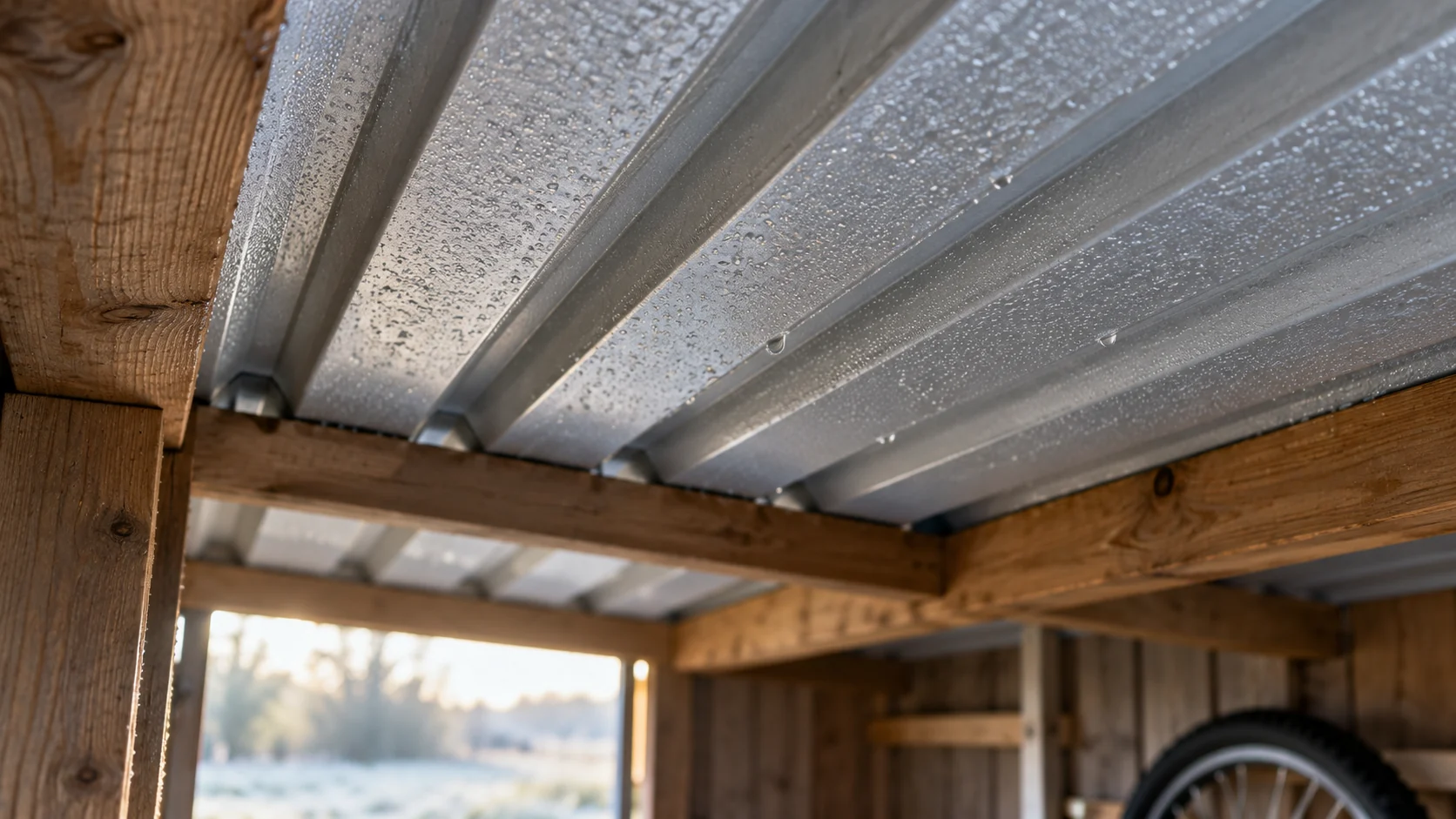
For example, in a bicycle workshop in Chojnice a wet trace may appear after bringing in many wet bicycles. This is a hypothetical case. It does not prove a defective covering. It shows why the way the room is used must also be taken into account when diagnosing the problem.
First cause: vapour condensation
Water vapour contained in the air can condense on a cold surface. High humidity, a low sheet temperature and poor air exchange encourage this. In an uninsulated building, droplets may appear over a large area. This is a different symptom from a single damp patch at a roof penetration.
Ventilation, the airtightness of the layers on the interior side and the insulation build-up are checked. An anti-condensation fleece has a limited capacity to retain water. It needs conditions in which to dry out. It does not remove the cause of a constant excess of moisture and does not replace all the other roof layers.
Second and third causes: fixings and laps
A fastener set at an angle may press the seal unevenly. Overtightening can be just as unfavourable as undertightening. The screw must also match the substrate and have the appropriate working range. A damaged hole cannot be reliably repaired by simply retightening the same screw.
The second place is the joints between sheets. An overlap that is too short or poorly formed may let water through in wind. A low pitch makes the problem worse. Check the laying direction and the run of the seals. Sealants applied on top will not correct the wrong drainage direction.
Fourth and fifth causes: chimney and roof valley
At the chimney, water must bypass the obstacle and return to the covering. The area above the chimney is often the most demanding. Water must not stand there. Check the connections of the flashings, the fixing of the batten to the chimney and the possibility of movement between the chimney and the roof slope. Rigidly bonding everything together encourages cracking.
In the roof valley, runoff from two roof slopes collects. Leaves, twigs and a narrow gap can impede drainage. Do not run random fixings through the water-transporting zone. It is also worth inspecting the end of the valley at the eaves. A leak may only occur there.

Causes six and seven: edges and penetrations
The ridge, eaves and side edge of the roof each have their own tasks. Incorrect detailing can direct water under the sheet. The lack of proper protection in wind makes it easier for precipitation to be blown in. Conversely, excessive sealing of gaps can impede the designed ventilation. Each of these symptoms requires a different correction.
A separate group comprises vents, flues and installation brackets. The seal must match the shape of the covering and the operating conditions. For elements added after the roof was completed, check how they are routed through all layers. A tight outer surface does not resolve a leak below.
Cause eight: damage and accumulated debris
Small metal filings left after installation corrode. Scratches that expose the metal weaken local protection. Over time, leaves retaining moisture can exacerbate the problem. Areas where other teams have worked also require inspection. A dent can change the drainage path, even if it did not create a hole immediately.
Safe access and appropriate equipment are used for the inspection. Wet sheet metal is slippery. You do not have to go onto the roof to start documenting the defect. Photos from attic level and observation from the ground often allow the first area of the specialist’s work to be identified.
How do I commission a repair that removes the cause?
Ask for a description of the identified water path and the scope of the correction. It should be clear which elements will be replaced and which will be re-fixed. For sealants and tapes, compatibility with the substrate matters. Random silicone can worsen the adhesion of later, proper sealing.
After the repair, compare the roof’s behaviour under similar conditions. Wet insulation does not dry immediately. Sometimes it requires separate assessment and replacement. Keep photos and a description of the works. They will facilitate further inspection if another leak appears in a neighbouring part of the roof slope in the future.
Short answers
Does a leak always appear exactly above the stain?
No. Water can travel across roof components. That is why the area higher up the roof slope and the drainage path inside the building envelope are also checked.
Can a leak mark be painted over straight away?
First the cause must be eliminated and the damp layers assessed. Covering the wet area will make observation more difficult. The finish is restored after the necessary drying.
7 branches. Materials closer to your project.