XPS insulation
XPS in industrial facilities: service temperature considerations
At a glance
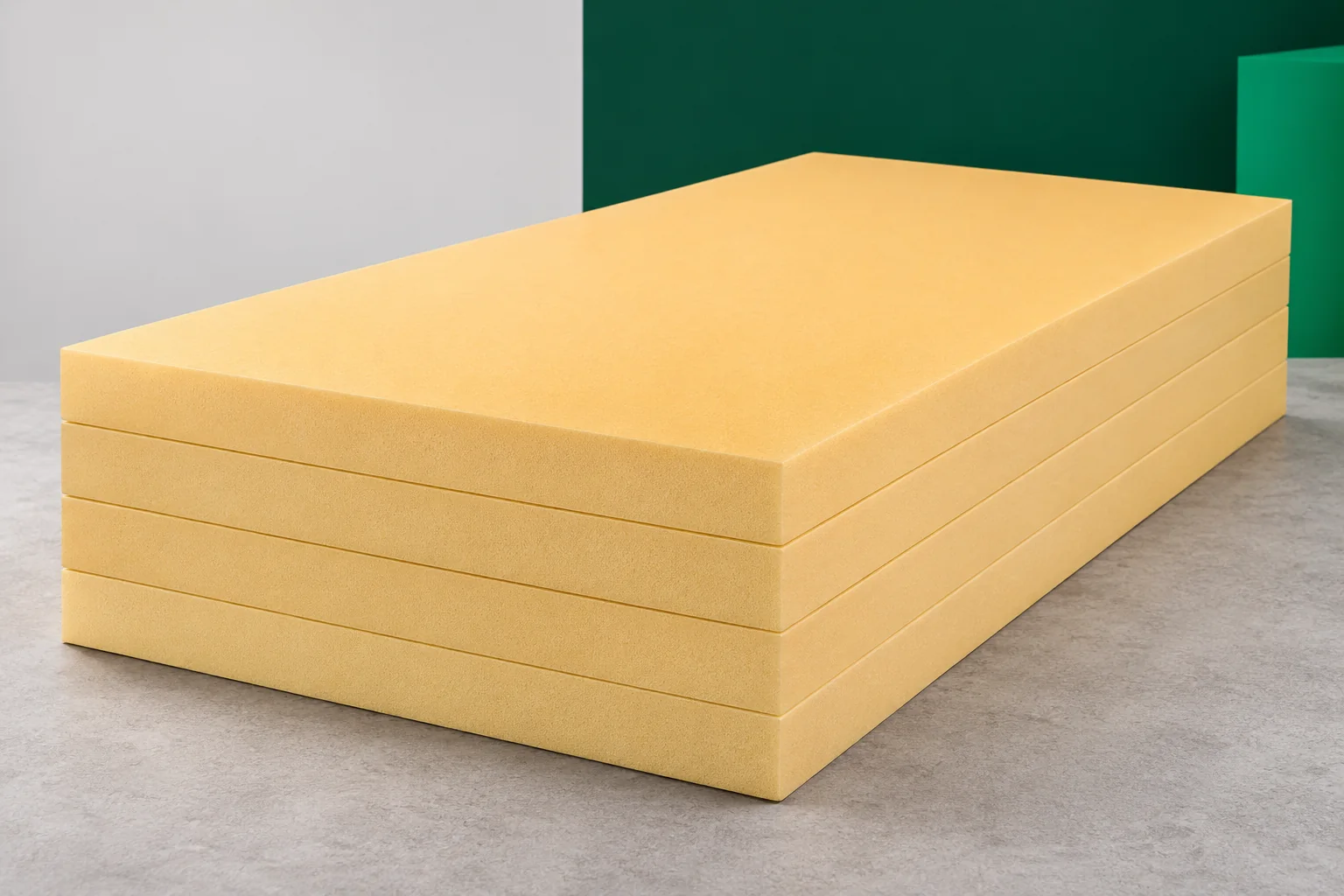
In an industrial plant, the air temperature is often moderate, yet hot surfaces occur locally. This applies to pipes, equipment housings and zones of the technological process. XPS may only be used under the conditions permitted for the specific product. Extruded polystyrene is not a universal high-temperature insulation. Its suitability is determined by the temperature of the board itself and by the other influences that occur during plant operation. It is worth distinguishing between general and local conditions. A measurement in the middle of the room does not describe what happens behind a hot housing or next to a pipe. XPS may be exposed to heat conduction through an adjacent component, to radiation and to heating from the air.
The hall temperature alone is not enough information
The design should take into account the actual way in which energy is transferred, and not solely the temperature read from the thermostat.
Data on the duration of exposure is also needed. A brief rise in temperature and many hours of equipment operation do not constitute the same load. Extruded polystyrene is assessed within its intended range of use. The limit given for one XPS should not be transferred to all boards available on the market. Even a similar appearance does not mean identical material limitations.
What can be read from the documentation
The technical data sheet may state the maximum operating temperature and the storage conditions. Separately, one finds parameters for dimensional stability tested at a specified temperature and humidity. These pieces of information should not be equated. The result of an XPS test under given conditions does not on its own constitute permission for continuous operation at such a temperature in any system.
If the documents lack the necessary data, one should ask about the intended application. A general assurance that extruded polystyrene is suitable for industry is not enough. The temperature, duration of exposure, load and contact with other materials must be specified. Only then can the XPS be assessed or another insulation chosen. Such an assessment should precede the purchase, not appear after the boards have deformed.
Hot installations require a separate solution
The passage of a warm pipe through the XPS layer should not be carried out by randomly fitting the opening. First, the surface temperature of the pipe, its own insulation and the fire requirements for the penetration must be established. A suitable detail defines the permissible contact of materials and the method of protection. The floor’s thermal layer does not replace the pipe’s technical insulation.
Machine supports or components that transfer heat from the process must be treated in a similar way. Extruded polystyrene may need to be separated from such a zone by another solution. The protective layer must not be improvised without checking how it performs. XPS covered with concrete remains difficult to observe. The design should therefore also take into account foreseeable shutdowns, start-ups and changes in the operating mode of the equipment.
The sun can heat the material before installation
The risk of overheating does not begin only in the operating hall. XPS boards left in the sun can heat up under dark covering or an adjacent layer. In some documentation, manufacturers expressly warn against such an arrangement. The cover should protect against radiation and not cause uncontrolled accumulation of heat. The storage conditions must be checked for the material supplied.
Before installation, the flatness and condition of the edges are inspected. A deformed XPS board should not be forced down with the structural layer. If the cause or extent of the change is in doubt, an assessment by the supplier is needed. Extruded polystyrene should reach the building element in a condition that meets the requirements. Quickly covering up damage only makes it harder to establish its source later.
Heat can occur together with other factors
In an industrial plant, temperature is often combined with load, water or chemical substances. XPS must be assessed in such an environment as part of a complete system. A compression test result alone does not explain behaviour under long-term pressure and elevated temperature. Data corresponding to the application and the calculations required by the project are needed.
Not every adhesive, primer and sealant is suitable for contact with polystyrene. Solvent-based components can damage XPS. For this reason, compatibility is checked both for the products used during construction and for possible operational interactions. In a chemical warehouse, the specific substances are analysed. A general description of “chemically resistant” is not a sufficient basis for selection.
When to abandon a given solution
XPS is produced by Synthos, HOCH and Finnfoam, among others. Each product must be assessed according to its own documentation. The term styrodur does not indicate its maximum service temperature. If the process conditions exceed the range confirmed for the board, the material or the detail must be changed. Confirmation should not be sought solely in a general description of applications.
Extruded polystyrene may be suitable under a standard floor or the ground-level area of a hall, yet unsuitable right next to a hot installation. This distinction allows XPS to be used where its advantages are needed. The specification should mark exceptional zones and how they are to be accepted. This prevents the contractor from automatically repeating one insulation build-up throughout the entire facility.
7 branches. Materials closer to your project.