Roof coverings
Modular or cut-to-length metal roof tiles: which format should you choose?
In brief
The roof layout, not the sheet format itself, is the decisive factor. Before ordering, check how sheets or modules will be arranged on the slopes, where cuts will fall and whether transporting long elements is realistic. Compare the cost of complete installation rather than the unit price. Assess steel and coating quality separately, as these do not depend on sheet size. In both variants, agree the layout drawing before approving production and delivery.
What is different already at the ordering stage?
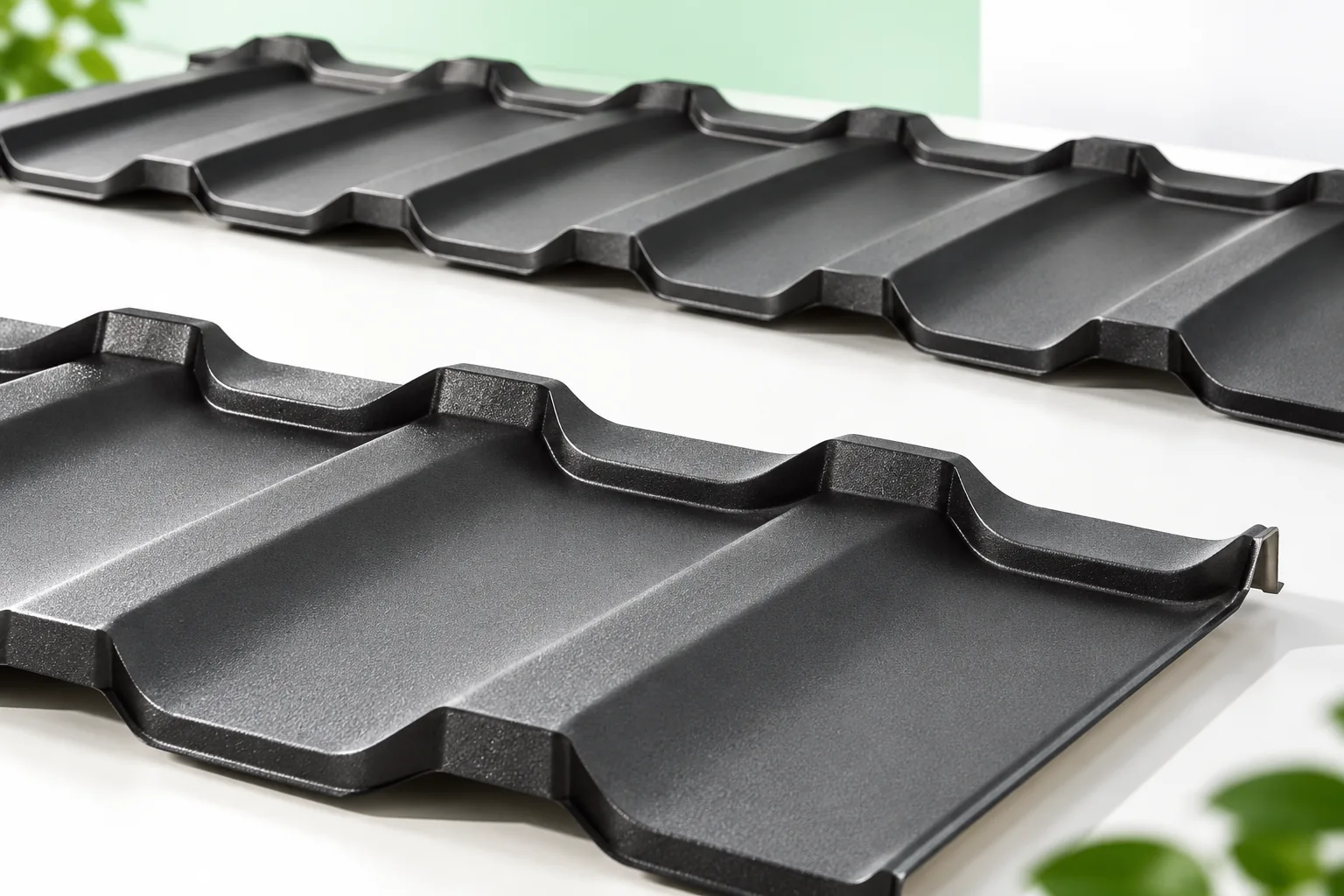
In the cut-to-size version, sheets are prepared with lengths matched to the roof slope and to the rules of the specific profile. Accurate measurements and a schedule are required. Modular panels have a defined format, and the order comprises the appropriate number of pieces. Even so, you still need to know how they will be laid out on the roof and where cuts will occur.
Measurement does not become unnecessary with modules. An error in the coverage width or the number of rows can result in a shortage of material or a large surplus. With sheets, a length error can be harder to correct, especially when it affects an entire batch. In both variants, it is worth agreeing the layout drawing before approving production and delivery. Also mark the sides of the roof slopes and the measurement reference points. The note ‘roof length’ may mean a different section to different people. A drawing with the eaves line and ridge line limits such misunderstandings.
What is the significance of the roof shape?
A gable roof with rectangular slopes favours the use of long sheets. This can reduce the number of transverse joints and allow a clear installation sequence to be planned. If the slopes are short or have many breaks, the large format may require frequent cutting. The remaining pieces are not always suitable for use elsewhere.
Modules provide more division points, which can help with dormers, roof valleys and small areas. However, they do not guarantee the absence of waste. The result is determined by the coverage grid of the specific model. A good cutting plan should show not only the number of pieces but also the cutting points and the possibility of using the remaining parts without turning them against the profile direction.
What makes transport and storage easier?
Smaller panels are usually easier to fit into limited space and to move efficiently. Long sheets require a suitable vehicle, support and greater care during unloading. If access is narrow or there is no space in front of the house, logistics can genuinely determine the choice. It should be checked before ordering, not on the day of delivery.
Both formats must be protected from improper storage. Moisture between sheets and damage during movement can negate the benefit of good material. A pack of modules is not a permanent store on an open yard. The permissible time, substrate and method of ventilating the pack depend on the instructions and the conditions of the specific delivery.

Does the number of joints affect roof quality?
A large sheet can reduce joints in the direction of slope, but it still has side laps and fixings. Modules have more designed transverse joints. Both solutions can be correct if installed according to the rules. The number of laps does not replace an assessment of their construction, fit and the correct roof slope.
With either format, a level batten plane and the correct batten spacing are essential. Geometry errors should not be hidden by tensioning the sheet with screws. Different models also have different rules for the order of laying. The ability to install one system in several directions must not be automatically transferred to all modular tile-effect metal roofing sheets.
How do you calculate the actual cost difference?
Compare the same level of protection, nominal thickness and colour. Then calculate the purchase by effective coverage area and actual cutting layout. A module may be priced per piece, while a sheet is priced per full metre. Without bringing them to a common basis, it is easy to consider cheaper an offer that merely presents the price differently.
For both variants, add accessories, transport, unloading and the crew’s work. Some costs will be similar, because the ridge, chimney and drainage remain the same. Others will change with the organisation of the installation. Ask the contractor to point out these differences. A general rate without a description of scope will not show whether the saving comes from the material or from omitted work.
What should you choose for renovation and phased works?
Modules can facilitate deliveries of small batches and the organisation of work on successive sections of the roof. However, possible batch differences and the availability of the same finish must be taken into account. Cut sheets should be precisely matched to the exposed and checked structure. In both cases, renovation requires an assessment of the condition of the roof truss and the layers that are to remain.
The most useful choice arises from two complete proposals for the same building. Check the cutting layout, logistics and details, then compare the totals. If the simplicity of the roof slope favours sheets, it is worth taking advantage of it. If handling long sheet metal makes the work more difficult, modules may bring greater benefit than a small difference in the rate per metre.
7 branches. Materials closer to your project.