Roof coverings
Coated steel or titanium zinc: how do the materials differ?
In brief
Coated steel sheet and titanium-zinc are two different materials and should not be compared by colour alone, nor should one be treated as a more expensive version of the other. In coated sheet, steel provides the mechanical properties while successive coating layers give colour and gloss; in titanium-zinc, the core material is a zinc-based alloy on which a natural patina may form. Before deciding, check the chosen system’s documentation: layer build-up, fixing requirements, compatibility of materials in contact with the sheet, and detailing at eaves, chimney and ridge.
What lies beneath the visible surface?
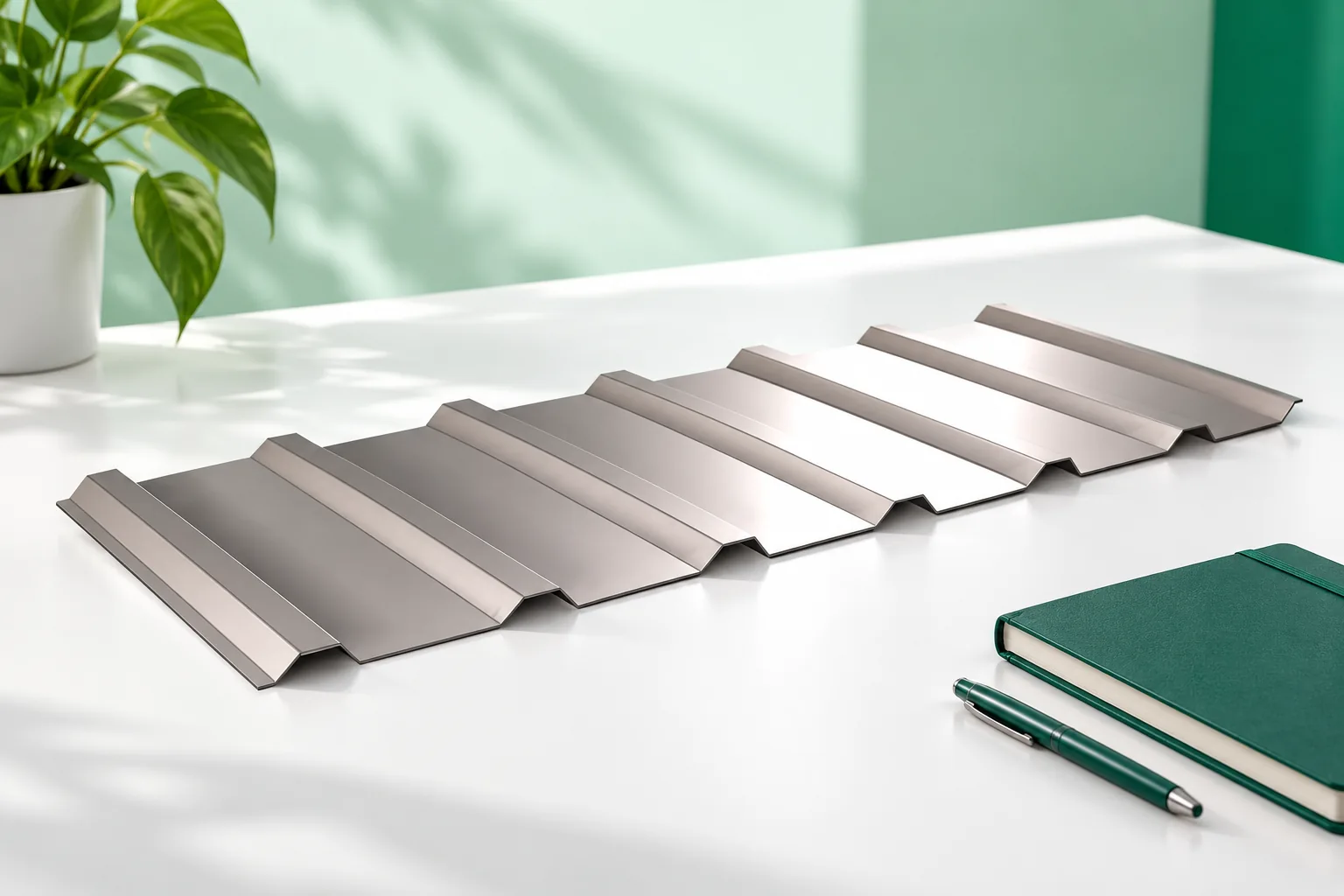
In popular coated steel sheet, steel is responsible for the mechanical properties. It is covered by a metallic layer, followed by a suitably prepared coating system, including a decorative layer. The exact construction depends on the product. The sheet can be profiled as tile-effect metal roofing, trapezoidal steel sheet or another element approved for a specific application.
Titanium-zinc sheet is not steel coated with zinc. Its base material is a zinc-based alloy with small additions. The difference matters when designing connections and processing. Instructions for steel tile-effect metal roofing cannot be transferred to a traditional covering made of this alloy. Similar thickness or colour does not mean similar behaviour.
How does the colour age and what is patina?
The organic coating of steel sheet gives it the planned colour and a defined degree of gloss. Under atmospheric conditions it may change appearance over time. The rate of these changes depends on the coating system, solar exposure and the surroundings. It is therefore worth comparing the parameters for radiation resistance and the conditions of the aesthetic warranty.
On natural titanium-zinc, a patina forms as a result of the surface reacting with its surroundings. It is part of the character of this material, not an equivalent of red steel rust. The process does not have to proceed uniformly on all parts of the roof. Shading, roof slope orientation and the effect of water influence the result. Factory-prepared surfaces are also available.
Are both materials installed the same way?
Tile-effect metal roofing and trapezoidal steel sheet are fixed according to the rules specific to their profile. Supports, laps, fasteners and flashings are important. A covering made of flat titanium-zinc sheet may require a different substrate and joining technique. Allowing for changes in the material’s length under the influence of temperature is also important.
The fixing method should not be chosen solely according to the installer’s convenience. An element that should be able to move must not be accidentally immobilised. The processing conditions and permissible bending radii are equally important. These requirements must be checked in the documentation of the selected system before any details are executed on site.

Why do the surroundings and adjacent materials matter?
Every metal covering requires an assessment of the environment in which it will perform. Proximity to the sea, industrial dusts and prolonged moisture can change the service conditions. In steel sheet, suitable protection is selected for these. The name ‘coated’ alone does not describe the level of protection or the conditions covered by the warranty.
With titanium-zinc, you must also check the compatibility of materials that come into contact with the sheet and those from which water flows onto it. Some chemicals, corrosion products and components of other layers can trigger unwanted reactions. An accidental tape or underlay does not become suitable just because it was used previously under a different sheet. For this reason, it is worth preparing a list of all auxiliary materials, including sealants and drainage components. Compatibility should cover the entire detail, not just the pair of sheets.
How can costs be compared without false simplification?
The price per metre of the material itself is only a starting point. The substrate, flashings, fixings and the work of an installer familiar with the given system must be taken into account. Traditional joining of flat sheet may require a different labour input than laying ready-made profiles. The complexity of the roof often affects the difference more strongly than the surface area.
The comparison should cover the same technical scope and the same building geometry. It is worth separating the purchase price from planned maintenance activities. A long guarantee is not a promise that no inspections will be needed. Likewise, a natural patina does not mean that every titanium-zinc detail will be durable without proper moisture drainage and correct installation.
Which material suits your project?
If you care about a specific colour, a repeatable profile and a choice between sheets and modules, coated steel offers many possibilities. With a natural grey surface and traditional metalworking technique, titanium-zinc can be considered. In both cases, the choice should follow from the design, the desired appearance and the availability of a suitable installer.
Before deciding, ask for a description of all layers and details at the eaves, chimney and ridge. Check how thermal movement and moisture from below have been addressed. Only such documentation allows two offers to be compared fairly. A good material used in a random arrangement will not deliver the result suggested by the aesthetic sample shown at the point of purchase.
7 branches. Materials closer to your project.