Flashings
Parapet flashings for sandwich panels – detailing the layers beneath the cap
In brief
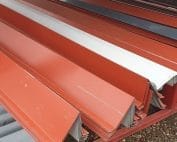
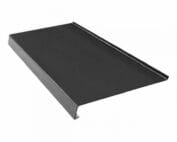
The parapet flashing covers the top of the wall and connects to the roof detail. In a building with sandwich panels, the specified arrangement of insulation and seals must be maintained. A wide sheet on top of the wall alone does not describe the whole solution. Its slope, support, connections and edges all matter. Corners and points where the parapet changes height require particular attention. The outer and roof sides of the parapet are subject to different conditions. One side may be a façade, the other a roof covering with its sealing. The flashing must work with both surfaces. Dimensions should be determined from a section, not only from the façade view.
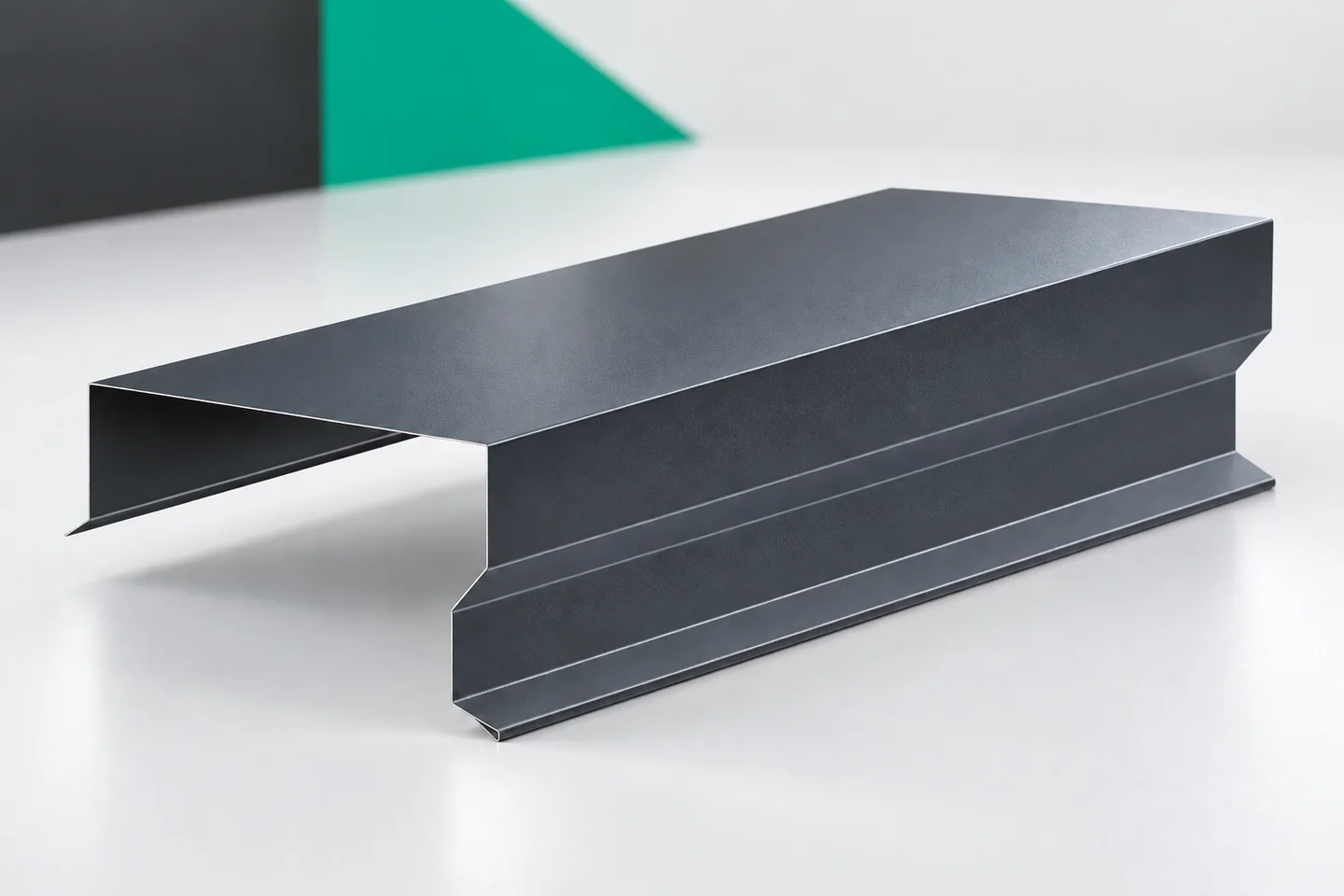
Check both sides of the wall
The thickness of the finished assembly and the position of its layers must be taken into account. A sandwich panel may end at a different point from the adjacent roof element. In such an arrangement, appropriate supplementary flashings are needed. The cover should not accidentally obscure an unfinished panel end.
Plan the drainage direction from the coping
Water falling on top of the parapet should drain to the side specified in the design. The actual slope of the surface after installation is what matters. If the substrate is uneven, the bend angle of the sheet metal alone may not ensure the intended drainage path. The support must therefore be checked in advance.
The edges of the flashing should retain the designed folds. Their purpose is also to properly terminate the water path at the edge. The arms should not be shortened without assessing the entire detail. Fitting too tightly against the façade can change the way the flashing sheds water.
Continuity of insulation is assessed before covering
The top termination of the wall is where different layers meet. Insulation and seals must be executed in accordance with the roof and enclosure documentation. Their correctness cannot be inferred from the appearance of the cover. Once it is installed, some areas will become inaccessible.
It is therefore worth planning acceptance before the parapet is closed. The inspection should also cover the corners, not just the straight section. Where the direction changes, a small section of a layer can easily be overlooked. A photograph taken at the right moment helps document how the materials are joined.
Long flashings require well-considered joints
The parapet coping usually consists of sections matched to production and installation capabilities. Joints must be positioned with account taken of component movement and the method of water drainage. They should not result solely from transport convenience. The required detail specifies how adjacent parts work together.
The sections should not all be rigidly connected with an arbitrary number of screws. The intended method of fixing must be maintained. Sheet metal changes dimensions with temperature, and a long run of flashings should account for this. However, the principle does not justify independently reducing the number of fixings.

Corners are not just about cutting straight strips
Different drainage directions and flashing arms meet at the corner. A clear drawing of the shape and connection is needed. A simple cut and overlap of two sheets does not always correspond to the adopted solution. It is worth ordering corner elements with the installation location marked.
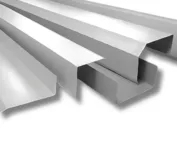
Non-standard sheet metal flashings may also be needed at offsets and wall terminations. Each such element must be described with dimensions and the colour side. Ridge caps or verge flashings from the rest of the roof are not an automatic substitute. A similar colour does not mean functional compatibility.
The material is chosen to suit the surroundings and appearance
Suitably selected galvanised, aluzinc and coated steel sheets are used for parapets. The choice depends on the design and the availability of the given section. Where the upper line of the building is visible, it is worth checking the gloss and surface texture. A long strip strongly reveals differences between deliveries.
The coating must be protected during handling. A wide coping can easily rub against the ground or the corner of another element. A clean surface is needed at the installation site for laying down flashings. Dirt and swarf should be removed before closing the joints.
Hand over the parapet together with the roof and façade
The inspection should cover the coping, its fixings and the contacts with adjacent layers. The terminations of all sections must be checked. Inspecting the façade from outside is not sufficient, as some problems may be on the roof side. Access to the entire detail is needed.
Gutter aprons, starter profiles and chimney flashings form other enclosure nodes. However, it is worth planning a joint acceptance of their connections in the work schedule. This makes it easier to catch places omitted between the scopes of the crews. The parapet should be handed over as a complete, checked part of the building.
Questions and answers
Does the parapet coping ensure continuity of insulation?
The sheet metal alone does not provide this. Insulation and seals must be resolved across the full section of the wall and roof, and then inspected before covering.
Can all corners be formed from straight sections?
This depends on the approved method of connection. At the corner, the water flow and geometry must be checked, which is why a separate detail drawing is often required.
7 branches. Materials closer to your project.