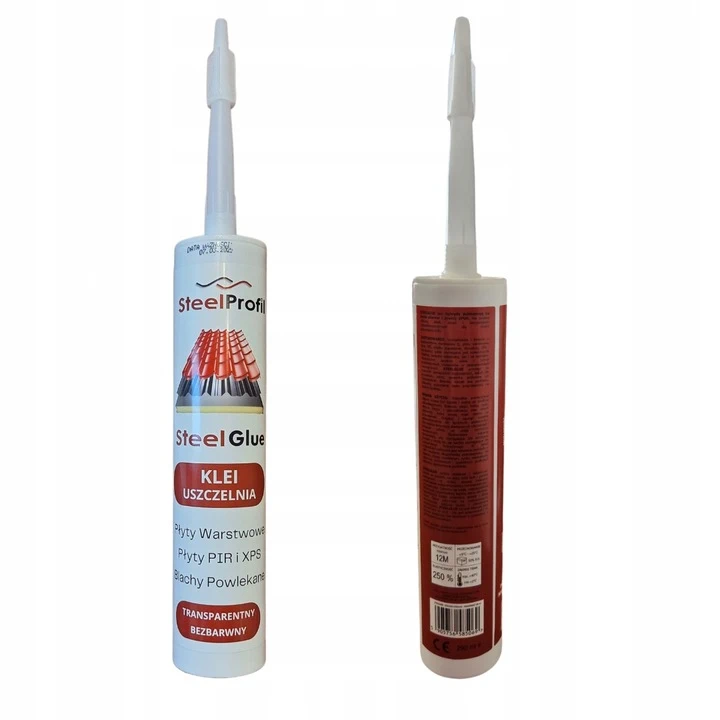
SteelGlue adhesive for sandwich panels, PIR and XPS insulation boards and trapezoidal steel sheets
Flexible, one-component, crystal-clear hybrid adhesive based on silanes and SPUR resin
Product features:
⭕ Hybrid polymer based on silanes and SPUR resin
⭕ Bonds and seals
⭕ Neutral odour
⭕ Paintable
⭕ Transparent / colourless
⭕ Permanently flexible
⭕ Solvent-free
⭕ Easy to work with
⭕ Volume: 290 ml
⭕ Store at +5°C to +25°C
⭕ FREE FROM: silicone, alkalis, bases and isocyanates
Price unit: pack
Pack / price coverage: 290 ml pack
Sales unit: pack
Bond and seal with SteelGlue — clear adhesive, 290 ml
8,54 € incl. VAT
In stock
In stock
Description

Tapes and seals for joints
A small gap can affect how the entire roof or wall works. Plan the joints when choosing panels, sheet metal or insulation. Tapes and seals can then be matched to the detail they must protect. SteelProfil supplies accessories alongside the main material so the installer has compatible components when work begins.
Continuity starts where materials meet
Joint tape can connect the sealing layer of an insulation system; a profiled seal fits the geometry of a roof covering. Start with the location and its function. Compare width, shape and material properties against the actual detail, even when the products look alike.
For PIR insulation, match the tape to the facing and the way the joint is formed. On sheet metal cladding, check the eaves, ridge and flashings. The materials you have already bought can only perform as intended when their edges and junctions are finished correctly.
Follow the product instructions for cleaning, drying and application conditions. Correct preparation lets the adhesive or seal make proper contact. Check the requirements before work starts and pass them to the crew with the materials.
Allow for accessories in the estimate
SteelProfil offers promotions on accessories as well as main materials. Selected items are available from stock; the wider sheet metal and panel range includes first and second grade. We choose tapes and seals for the actual assembly rather than by appearance alone.
Measure seams, corners and perimeter edges, rather than using roof or wall area alone. This gives the number of rolls or lengths and allows for complex details. Some joints must retain a ventilation path. Follow the design when deciding where to seal.
Well-made joints are barely visible but contribute to comfort and to the function of the envelope. Include them in the order for the roof, wall or insulation. Tell us which materials meet and how the detail is formed so we can check the accessories.
Related products

What our customers say