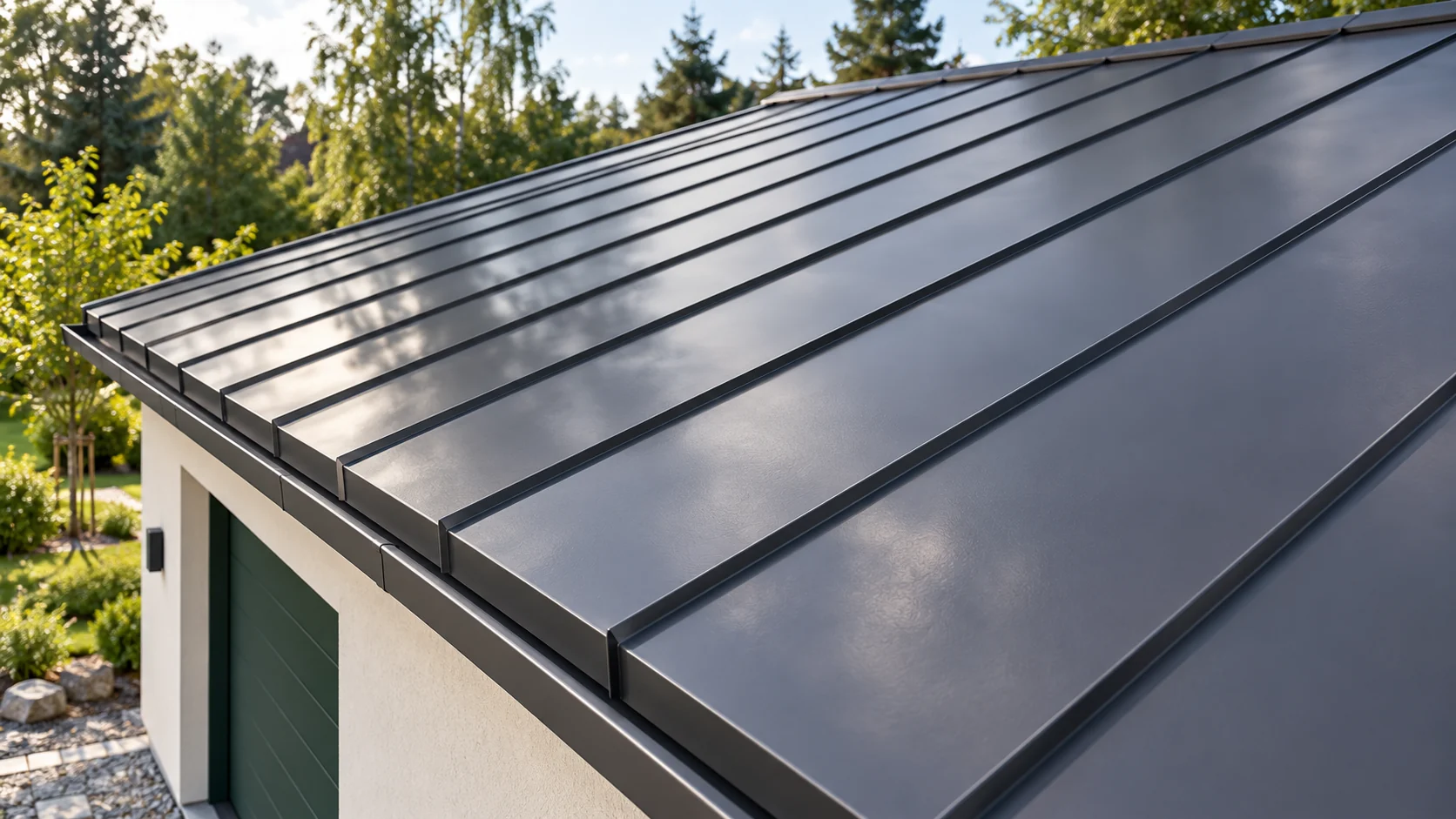
How does a standing seam roof work and what does its watertightness really depend on?
The standing seam raises the longitudinal joint above the plane of water runoff. This is one of the reasons for using such a covering. However, it does not make the roof watertight regardless of how it is installed. Water must have a correct path from the ridge to the gutter. Equally important are the panel ends, the flashings and the ability of the metal sheet to move thermally. The visible strip is a thin metal sheet with appropriately formed edges. On the roof it may be flat or have small pressings. Adjacent strips are joined by traditional folding or a snap lock. From the outside both solutions create a longitudinal rhythm, but they have a different construction.