Roof details
Verge flashing colour and shape: how to coordinate it with the façade?
At a glance
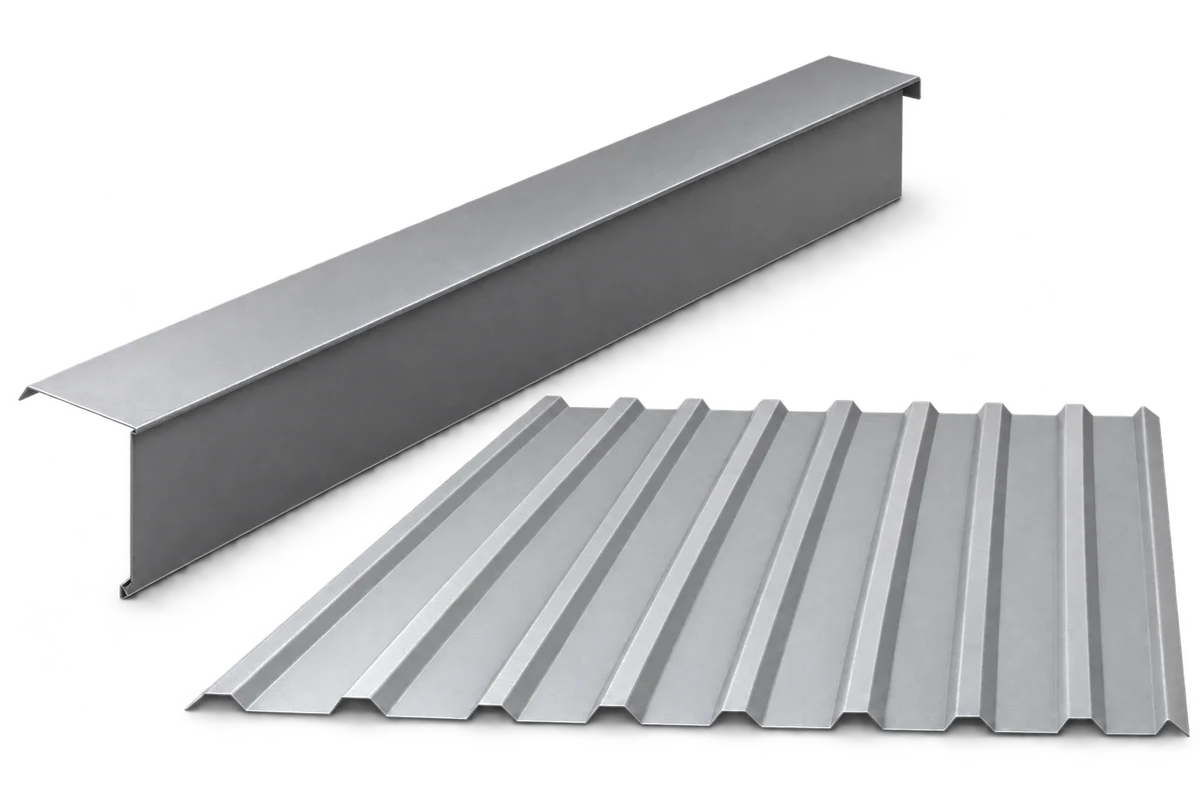
Verge flashing forms a visible border along the side of the roof. Its proportions and colour affect the gable’s appearance, but appearance must be coordinated with the roofing requirements. A visually slim detail cannot be achieved by omitting necessary coverage, and choosing a different shade does not approve any material. This guide addresses visual selection: comparing samples with the façade, assessing visible flashing depth and finishing both sides consistently. It proposes a discussion method for the designer and roofer rather than prescribing one style. Final dimensions, fixings and joints must remain compatible with the roof solution. Base visual assessment on real materials and the whole gable, not just a small catalogue photograph.
View the gable from a normal distance
Choose the usual viewpoints: entrance, driveway or garden. Assess the flashing line together with windows and façade from those positions. A close-up of one corner does not show the proportions of the entire gable.
Compare actual samples
A photomontage can help compare options, but use it as a decision sketch. Lighting and screen reproduction alter colour impressions. Before ordering, move from the visualisation to the specific material designation and an approved physical sample.
Place a flashing sample beside roofing and façade samples. Compare them under conditions resembling the installation location. Similar shade names in two collections do not guarantee identical surface appearance.
Decide whether the edge should blend into the roof or form a distinct outline. This is a composition choice, not a product-quality measure. Record the selection so later additions do not rely on colour memory alone.
Agree the visible border width
Assess the visible side-leg depth against the building’s scale. The roofer must also provide the geometry required by the detail. Do not reduce coverage simply because a thinner line looks better in a visualisation.
For visually symmetrical gable edges, check their actual supports and terminations. Similarity on an elevation drawing does not prove identical site dimensions. Identify differences before fabricating a pair of flashings.
Coordinate adjacent finishes
Verge flashing is seen alongside the gutter, fascia and ridge cap. Bring their samples or designations together in one palette. They need not match, but differences should be intentional rather than the result of an unnoticed substitution.
For an extension, compare new material with the older building as well. Selecting the same colour reference may not produce the same visual result. View the sample beside the existing finish and agree the transition between sections.
Check the detail before completing the whole roof
For an unusual profile, agree to review the first complete section. Check both the view from ground level and technical approval by the installer. Resolve differences between the approved sample and the actual arrangement at that stage.
An appearance change during work calls for rechecking the connection. A different bend or leg depth can affect the adjoining piece. A colour change should also specify the coating rather than only a shade name.
Separate visual review from technical acceptance
At the final visual review, assess line continuity, corner fit and material conformity with the order. Fixings and connection performance require separate installer checks. An attractive outline does not prove adequate protection of the whole edge.
Keep a photograph of the accepted finish with product references. For future extensions, it is a discussion reference rather than a promise of an invisible old-to-new junction. Comparing an actual sample on site remains worthwhile.
7 branches. Materials closer to your project.