Mineral wool panels
When are outlet mineral wool wall panels a good buy for a small workshop?
Key points in brief
A cheaper mineral wool panel can close off the back of a workshop well. The condition is a known reason for the reduction and a wall layout suited to the available pieces. A minor scratch, a short length and a damaged interlock mean three different situations. Before buying, it is therefore worth assessing not only the appearance but also whether the cladding can be assembled tightly. In a bicycle workshop, the wall from the yard is viewed differently from the front with the customer entrance. A slight difference in shade may be easier to accept there. This does not change the requirements for load-bearing capacity, tightness and protection against moisture. A panel from a reduced quality group does not therefore receive gentler installation rules.
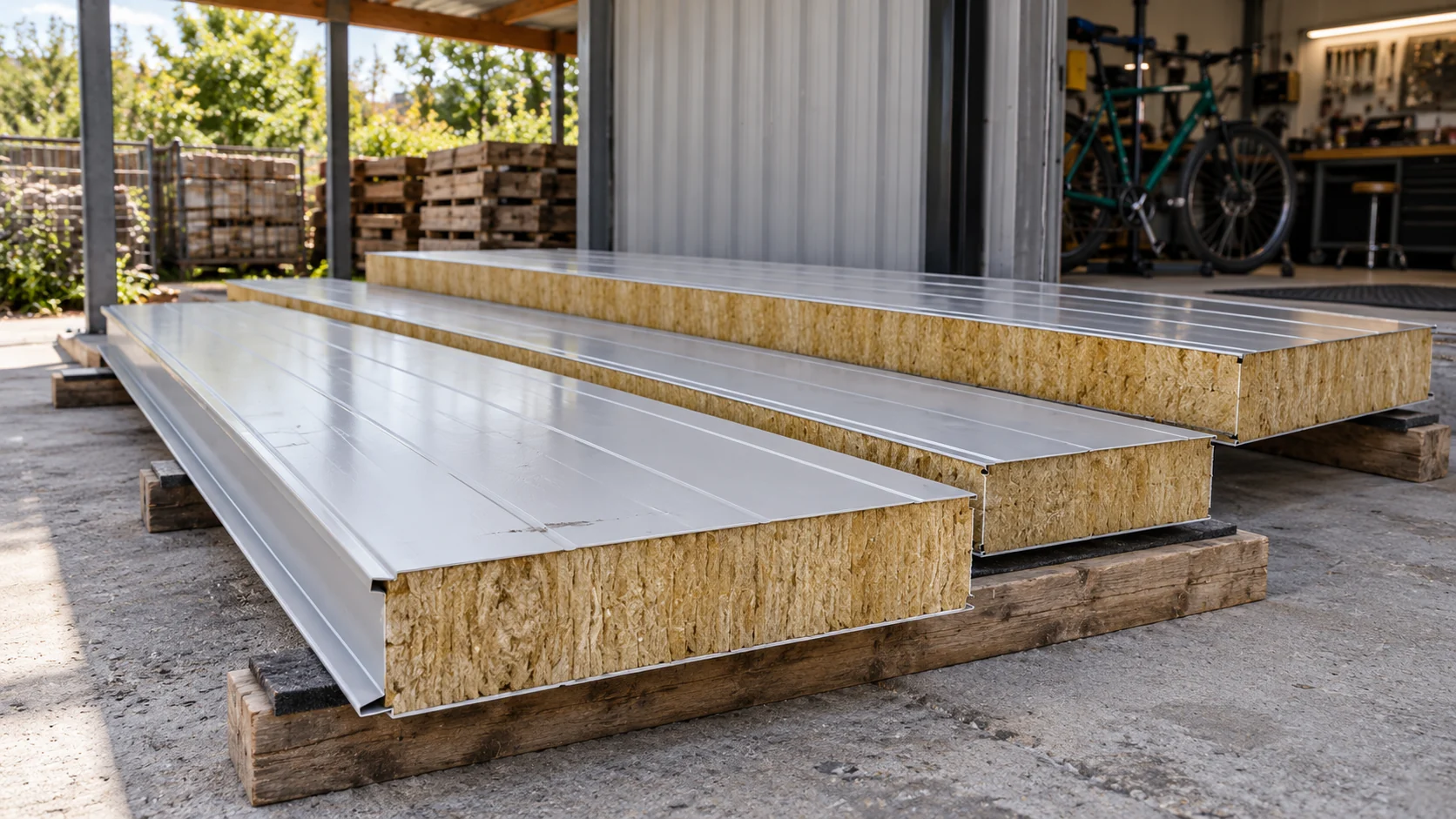
First choose the less demanding location
Start with a drawing of the specific wall. Mark the door, window and skirting line. Determine which sections will remain permanently visible and which will be concealed by equipment positioned independently of the cladding. This creates a sensible division into areas where a visual defect is acceptable and places requiring uniform material.
In a hypothetical back room in Grajewo, the owner may accept minor colour differences on the warehouse side. This is not a description of a completed project. Such an example merely shows that an aesthetic assessment is worth assigning to a specific surface, rather than rejecting or accepting the entire pack in one go.
Distinguish cosmetics from loss of properties
A scratch confined to the coating requires assessment and repair with a suitable system. A dent on the edge may already make it difficult to join the panels. Detached steel sheet, a crushed core or wet mineral wool are signals to suspend the purchase until the condition of the product is clarified. A photo of the entire pack does not show such differences.
Ask for photographs of both sides and of each end. For pieces with a defect, a description and its location are needed. Also check whether the damage occurs before or after the planned cut line. Cutting off the defective end may help only if sufficient length remains and the manufacturer permits further use of the panel prepared in this way.
Calculate usable material, not just the pack
Suppose a batch contains 34 m² of panels, of which 29 m² fit the wall after cutting. At an assumed €22.22 per m² excluding VAT, the batch costs €755.48 before VAT. Dividing by the usable area gives about €26.05 per square metre of finished wall, excluding VAT. These figures illustrate how to compare batches.
This amount is increased by the necessary repairs, flashings and transport. Short sections may require an additional latch and a horizontal joint. The saving on material must then be weighed against the work on this detail. Leftover pieces have value only if there is a specific use for them with confirmed requirements.

Do not lose the panel’s identity
The product designation, thickness, core and facing type, and proper batch documentation are required. The word ‘wool’ alone does not define thermal or fire performance. Two panels with a similar surface area may have different edges and not form a single system. Also, bright sheets do not necessarily have the same coating.
Treat the partition with the required fire resistance with particular care. The classification applies to a specific assembly, arrangement and connections. A damaged component cannot automatically be considered compliant with the tested configuration. A lack of evidence of properties is difficult to remedy with the seller’s consent to a lower price alone.
Check whether shorter pieces suit everyday work
In a small workshop, a vacuum cleaner, ventilation duct or new cabinet appears later. Do not plan additional joints exactly in places exposed to impact from equipment. Heavy equipment should have its own fixing to the structure. An offcut of panel is not a substitute for a designed lintel.
It is also worth checking the inner face. A water mark or scratched coating by the sink means something different from a minor scuff in a dry storeroom. The surface should be suitable for the planned cleaning. Matching the material to the function of the room helps avoid a saving that quickly disappears in repairs.
Record the purchase conditions for each batch
In the list, include the number of pieces, their lengths, the cover width and the agreed defects. Establish whether the photos shown depict exactly the items being purchased. Ask about the complaint conditions and the scope of responsibility for the described deviations. The term ‘second grade’ without elaboration does not say what you will actually receive.
After delivery, protect the panel ends from precipitation and store them according to the instructions for the specific product. Do not seal a wet pack tightly under additional film. Set aside pieces that raise doubts separately. Only after assessment can it be determined whether they are suitable for the planned partition or require a different solution.
Short answers
Does a light scratch rule out the panel from use?
Not always. Its depth, location and method of protection must be established. A scratch at the tongue and groove or seal requires closer assessment than a superficial scuff in the middle of the sheet.
Can panels from different batches be mixed?
This must be checked for the specific system. Matching edges, modules, facings and the required properties of the whole wall all count. A matching colour alone is not enough.
7 branches. Materials closer to your project.