Insulation and comfort
Why do droplets appear on an insulated wall panel?
Key points in brief
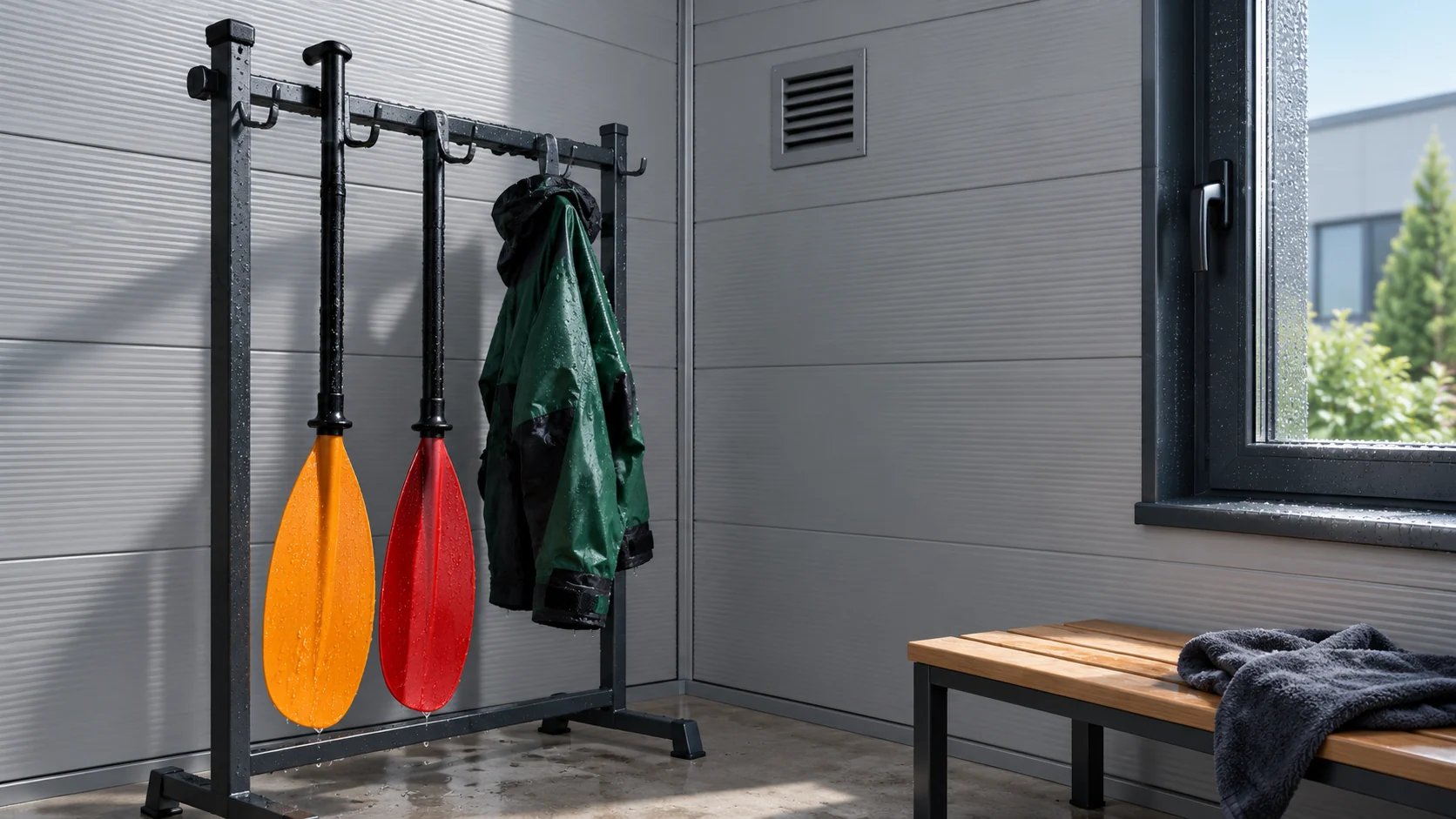
Droplets on the steel sheet do not prove that every sandwich panel is defective. Most often you need to check the air humidity, the surface temperature and the tightness of the details. In an equipment drying room, a workshop or a store that is only occasionally heated, conditions change quickly. Before you add another layer of insulation, establish where the water comes from. Note whether the droplets appear after rain, after the heating is switched on or after wet items are brought in. In a kayak store, moisture can come from clothing and equipment. In a workshop, the source is often washing or a wet floor. Observing when it occurs helps to distinguish condensation from a leak.
Find the moment when the problem begins
A leak is more often linked to a specific path of ingress. Condensation can affect cold elements even in dry weather. However, both phenomena can occur simultaneously. Photos, temperature and humidity readings and a note on ventilation operation give more than a one-off inspection of an already dried wall.
Do not limit observation to one height. A reading next to a radiator may not correspond to conditions at floor level or behind a full shelving unit. Comparing several locations helps find the local cause. Record the results together with the time and information on whether doors and windows were open.
The dew point relates to the surface temperature
Vapour condenses when the surface is sufficiently cold relative to the humidity of the air. Knowing the temperature in the middle of the room is therefore not enough. The coldest point may be a frame, a plinth or a corner. On a large panel surface there will then be no droplets, although they will appear regularly at one detail.
As an indicative example, air at 20°C and 60% relative humidity has a dew point of approximately 12°C. This is a physical approximation, not an assessment of any given wall. If the steel sheet is locally colder, condensation is possible. The result should be checked against actual conditions and temperature variation in the room.
The tightness of the joints is as important as the core
Steel cladding strongly restricts vapour transmission through its full surface. However, panel joints, terminations and service penetrations can be problematic. Moist air passing through a gap reaches the colder part of the building envelope. There it can release water in a place not visible from inside.
Sealants are selected according to the design of the entire wall. The continuity of the sealing layer on the correct side is important. Do not apply an arbitrary compound to all visible gaps without determining the detail. This can leave an air leak while at the same time hindering water drainage from the flashing.

Ventilation must keep up with wet equipment
A tight enclosure does not remove the vapour generated inside. If wet equipment is brought into a small room, a suitable method of drying and air exchange is needed. Briefly opening the door may not match the amount of moisture. It helps to establish when the vapour sources operate and how long elevated humidity persists.
Do not block grilles with stored items. Leave access to ventilation devices and check their operation. Heating without removing moisture may only shift the moment of condensation. After the heat is switched off, surfaces will cool again and the accumulated vapour will still remain in the room.
Additional vapour barrier is not the answer to everything
In a finished sandwich panel, the existing facings and the tightness of the joints must be assessed. Adding a film from the inside changes the layer arrangement and does not automatically repair every leak. Particular care is needed with internal linings that will conceal the steel and hinder later access.
Before such a change, a thermal and moisture analysis is needed. It should take into account the temperatures on both sides, the pattern of use and the connections. Do not seal a wet core under a new finish. First the source of moisture is removed and the condition of the panel assessed. Only then is the repair solution chosen.
Check the improvement under similar operating conditions
After sealing a detail or changing the ventilation, return to the earlier measurements. Observe the same corner during equipment drying and after a night-time break in heating. One dry summer day does not confirm that a problem occurring in winter has been fixed. A comparable situation is needed.
If moisture returns only at the base of the wall, also check the floor and water from outside. If it is accompanied by delamination or corrosion, the scope of the inspection must be extended. The aim is to find the cause and protect the entire building envelope. Merely wiping the steel sheet regularly leaves the conditions for droplet formation unchanged.
Short answers
Will a thicker panel eliminate condensation?
It may raise the surface temperature, but it will not replace ventilation and sealed details. If moisture penetrates through a joint or the vapour source is large, a change in thickness alone does not solve the whole problem.
Does every wet patch come from condensation?
No. A leak at the window, flashing, roof or installation must be ruled out. Comparing when the stain appears with rainfall, temperature and how the room is used helps.
7 branches. Materials closer to your project.