Installation and construction
Which installation errors only show up once the building is in use?
Key points in brief
An installation error is not always visible straight away. Sometimes it is only the first wash, a cold morning or a piece of equipment running that reveals a leak and deformation. That is why it is worth checking the envelope before the shelving is put in place. Supports, fastener clamping pressure, connections and openings that later become difficult to access require the most attention. The first panel may look good, even though the subsequent supports do not lie in one plane. Trying to pull the next elements tight causes stress and deforms the cladding. The interlock may not close correctly. The error then shows up as an uneven facade pattern or a gap that is difficult to seal.
A crooked frame hidden beneath an even start to the wall
Before installation, dimensions, flatness and support widths are checked. Corrections are made with a structural solution, not by randomly compressing the core. In a workshop with a long lamp against the wall, small deformations can become particularly visible. Accepting the frame therefore also protects the finish.
Screw clamping pressure judged only by tool resistance
A twisted seal or dented sheet metal does not indicate a strong connection. Likewise, an under-tightened head can leave a path for water. The fastener should work perpendicularly and in the intended substrate. Tool settings are matched to the specific system, and the result is checked on the surface.
There is no single tightening torque for all panels and screws. It is worth inspecting trial connections before completing the entire wall. If the hole has been damaged, the repair should be agreed. An additional random screw next to it does not automatically solve the problem of tightness or lost load-bearing capacity.
Sealing carried out only where it is visible
The external trim may look neat, while a gap remains in the sealing layer beneath it. Air and vapour then reach the cold part of the connection. Symptoms include droplets or dampness at plinths and reveals. Simply applying more sealant to the visible edge does not always reach the cause.
Check the continuity of seals before they are covered. Verify the compatibility of materials and the condition of the surface to which they must adhere. Dirt, moisture or an unsuitable working temperature can make it difficult to achieve a correct detail. The type of seal should follow from the system and the function of the building envelope.
An opening cut after the new equipment has been installed
A vent or duct is often installed where it is currently most convenient. However, the cut-out may weaken the panel or end up too close to its joint. If the wall has a required fire resistance, the penetration must maintain this function. A simple sheet metal cover does not confirm the properties of the entire alteration.
It is worth planning service penetrations before ordering the cladding. Where a later change is necessary, it should be checked against the actual support layout. Heavy equipment should have its own suitable fixing. Thin steel cladding is not a universal substrate for brackets and cabinets.

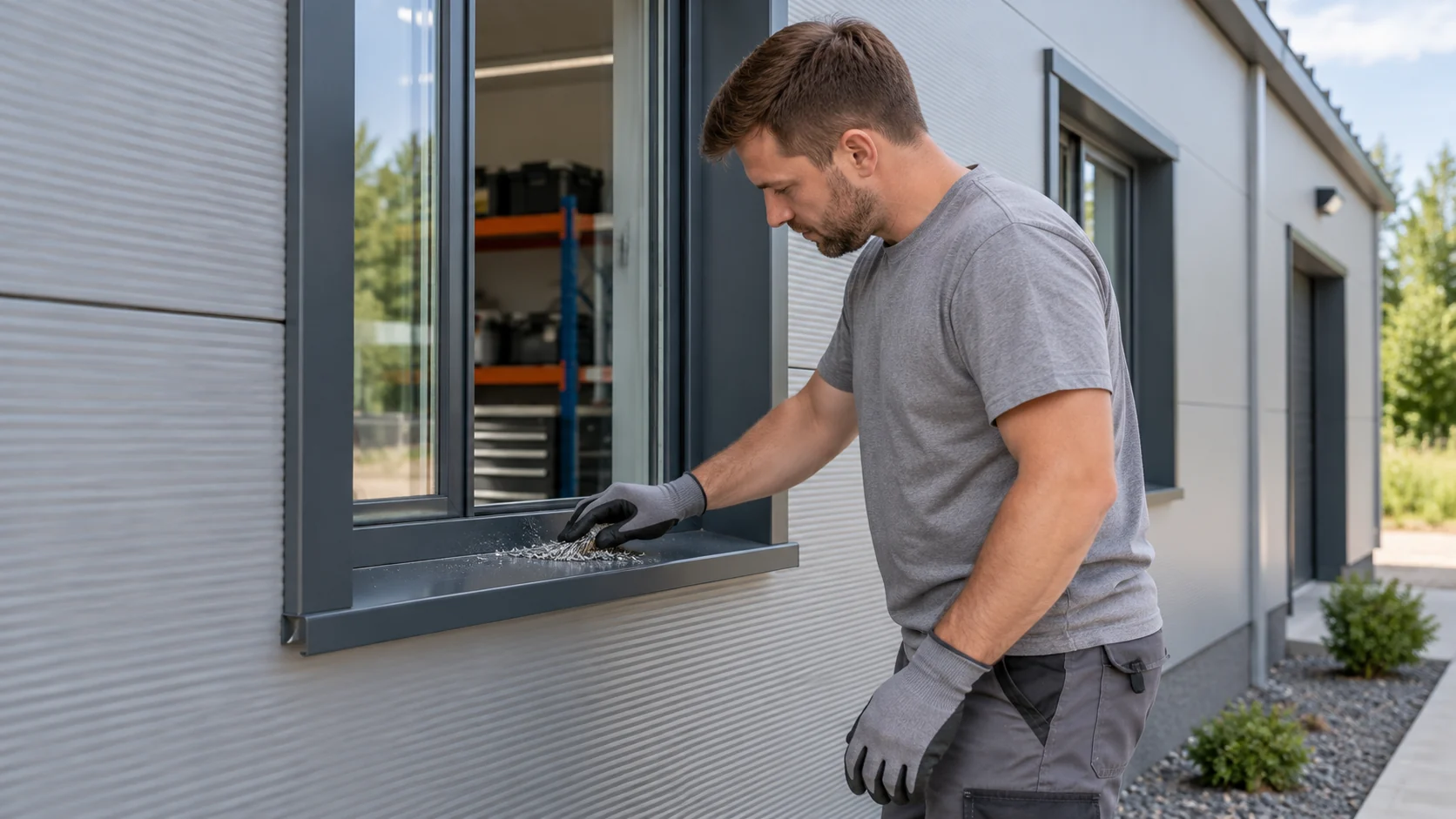
Sworf, film and unclosed ends left for later
Metal filings can corrode on the surface and form stains. Protective film left on too long can bond more firmly to the coating. The product documentation specifies the times and method of removal. A single duration should not be assumed for every type of film and storage condition.
The exposed core end requires proper protection against water. Storage before installation is also important. A panel that has become damp within the pack does not become dry once covered by flashings. Questionable components should be assessed before installation. Later repair with the premises in operation is considerably more difficult organisationally.
Handover without checking places of daily use
After the walls are completed, inspect the floor washing area, the lower door edges and the forklift route. These are places exposed to water and impacts. Check whether the seals and flashings can be accessed once the equipment is in place. Take photos of the details and keep documentation of the products used.
The inspection should compare the workmanship with the design and the instructions, not merely with a general aesthetic impression. After the first period of use, it is worth returning to places that raised doubts. New traces of moisture or deformation are a signal to establish the cause. Masking them does not replace a correct technical solution.
During acceptance, it is good to walk the route of normal work: from delivery through the door to the workstation, and then to the washing area. This is how an unprotected edge or a corner that is too close can be noticed. This is not a substitute for a technical assessment, but complements it with practical experience. It allows a problem to be caught before the equipment conceals the lower parts of the walls.
Short answers
Can every leak be fixed with additional sealant?
No. The cause may be a poor detail, a damaged washer or an incorrect connection. The path of the water must first be established, and then a repair compatible with the system selected.
When should concealed connections be checked?
Before closing them with the next panel or flashing. It is worth confirming the fixings and the continuity of the seals, and keeping photographs of the places that will later be inaccessible.
7 branches. Materials closer to your project.