Roof coverings
Choosing tile-effect metal roofing for a traditionally styled home
At a glance
For a house in a traditional style, a metal roof tile with a gentle, wavy pattern usually fits better than a strongly geometric profile. Before choosing a pattern, however, check how the covering will look against the whole building form, its wall colour and the size of the roof slopes. Assess the sample in a photograph of the house, not just on a counter. At the same time, verify the roof pitch, the condition of the structure and how the eaves and ridge are made. Traditional architecture does not impose a single roof pattern, so it is worth matching the rhythm of the pressings to the building’s dominant lines.
Start with the shape and proportions of the building
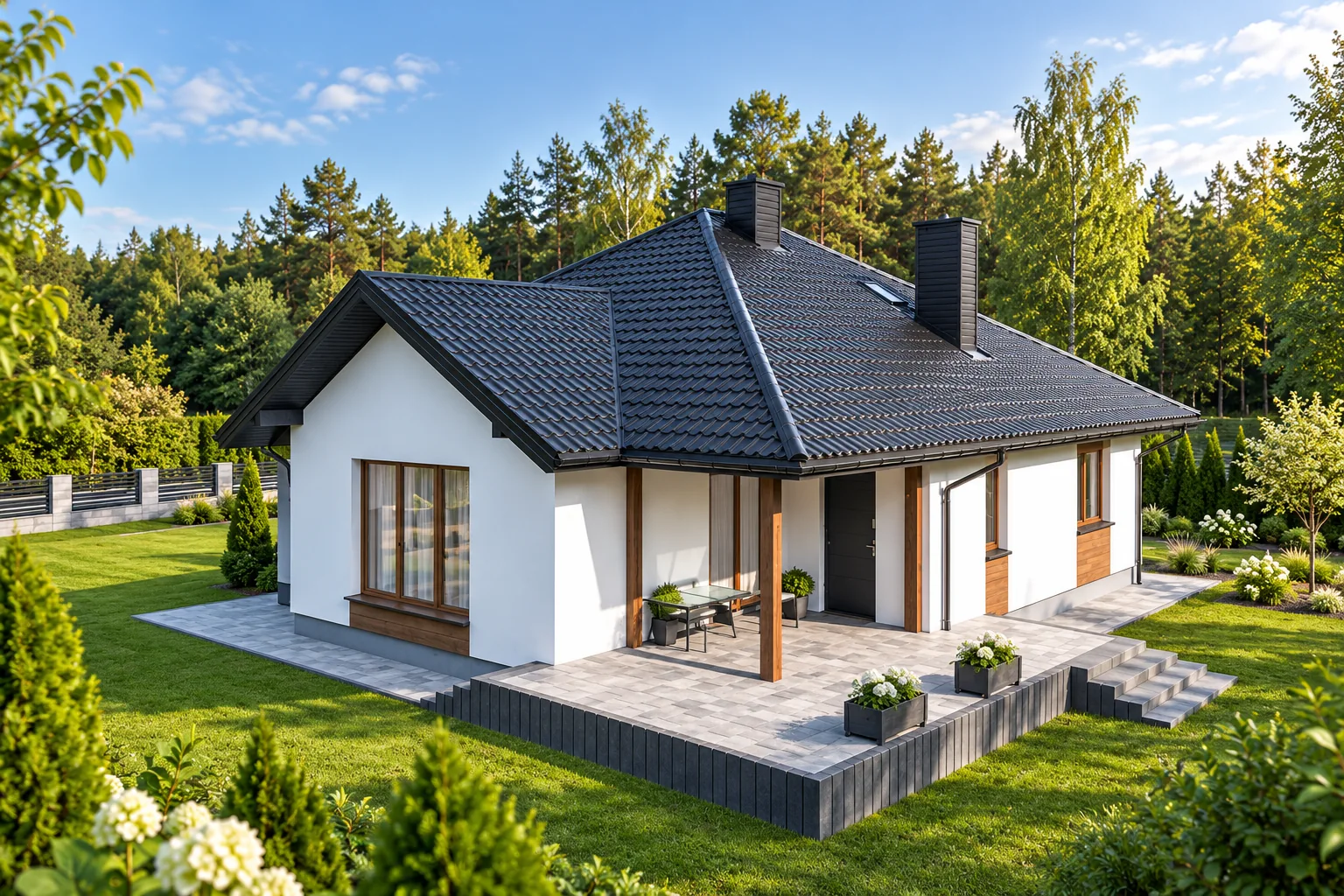
Traditional architecture does not mean a single roof pattern. A low house with broad slopes looks different from a building with a tall roof and dormers. On a large, clearly visible surface, the profile becomes an important part of the façade. It is therefore worth assessing it in a photograph of the whole building, not just on a small sample placed on a counter.
A simple exercise helps. Look at the house from the places where it will most often be seen, and mark the dominant lines. These are the ridge, the eaves edges, the dormers and the window divisions. The covering should harmonise with this arrangement. A very pronounced profile can emphasise the roof, but on a small building with numerous details it can easily introduce an excess of patterns.
How should you choose the wave shape and module length?
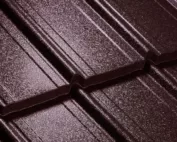
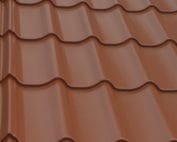
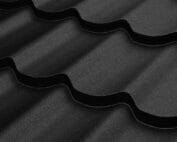
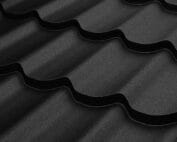
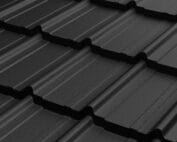
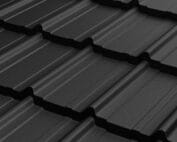
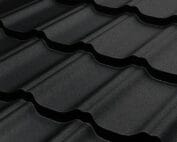
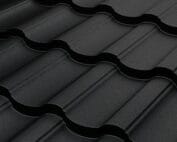
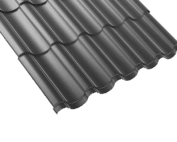
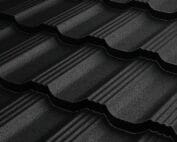
The rounded profile echoes the appearance of traditional roof tiles. The width of the wave, its height and the spacing of the transverse profiles matter. Two sheets in the same colour can produce a completely different rhythm on the roof slope. A higher step draws the shadow more clearly. A gentler profile usually dominates less over the windows, fascia boards and other details.
The profile should not be chosen solely on the basis of its height. The behaviour of the sheet is determined by the entire geometry, thickness and support. An aesthetic parameter does not replace technical data. It is good to see several joined test elements. Only then can you see how the pattern repeats in both directions and where the overlap lines run. When extending a house, it is worth comparing a sample of the new covering with an old section in daylight. Similarity of colour alone will not hide the difference in wave width and profile rhythm.
How do you coordinate the roof and wall colours?
Warm shades of façade and wood can be combined with brown or muted brick tones. Cooler walls tolerate greys well. These are not rigid rules. More depends on the brightness of the surface, the proportion of stone and the colour of the joinery than on the colour name itself. The roof occupies a large area, so a dark sample on a table may weigh more heavily on the building form once installed.
View samples outdoors, also in cloudy weather. Gloss changes the perception of colour with the viewing angle. Matt gives a calmer reflection, but can also have a distinct texture. It is not worth choosing all elements separately. Combine the sheet with a section of façade, gutter, flashing and window frame colour before ordering the complete material.

Are modules or long sheets more suitable?
Both formats can have a traditional appearance. Modularity should not be equated with a modern look. The difference lies primarily in the organisation of installation, transport and the way the covering is divided. On a simple roof, long sheets can create a clear layout. With many dormers, small panels may prove more convenient.
Material savings need to be checked on the cutting plan. A traditional house often has roof valleys, dormers or extensions. Each of these elements requires flashings and sheet adjustment. Choosing a larger format simply because it has a lower price per metre can result in unexpected waste. Ask for a comparison of both variants on the same roof documentation.
Pay attention to the details visible up close
The final appearance is not determined only by the large roof areas. A wide barge board, an irregular ridge tile shape or a poorly chosen soffit can change the character of the building. Flashings should match the profile and form consistent lines. In a house with a decorative eaves, it is important that the new covering does not obscure the proportions of the timber elements.
When renovating, it is also worth examining the way water is discharged. The new steel sheet may have a different profile and height than the previous covering. The position of the gutter and the gutter apron requires re-checking. Preserving the traditional form does not justify repeating the old detail if it caused leaks or hindered roof ventilation.
What should you check before placing the final order?
In an older house, the basis is an assessment of the structure and roof geometry. The low weight of tile-effect metal roofing can be an advantage when replacing a covering, but it does not indicate that the roof truss is in good condition. The support, method of fixing and loads must be verified. The chosen pattern must also match the roof pitch in a solution approved by its manufacturer.
If the building is subject to conservation protection or local requirements regarding appearance, establish these before purchase. Finally, compare the sample, the detail drawing and the complete quote. This order allows you to choose a covering with the right character without adapting the whole house to a material that was ordered too early.
7 branches. Materials closer to your project.