Roof coverings
When are single-module metal roofing sheets worth considering?
In brief
A single-module metal roof tile is worth considering where the roof has dormers, valleys or tight passages and the priority is handy handling and precise fitting. Readers should check not only the price of an individual panel but the whole project: where packs will be placed, the sequence of work and how material will be passed up. The key decision variable is a roof-slope drawing with a covering grid, which shows whether narrow strips will appear at the edges and how the last row under the ridge will lay out. Only then can you judge where the small format really helps and where it brings no benefit.
What does the small format offer on site?
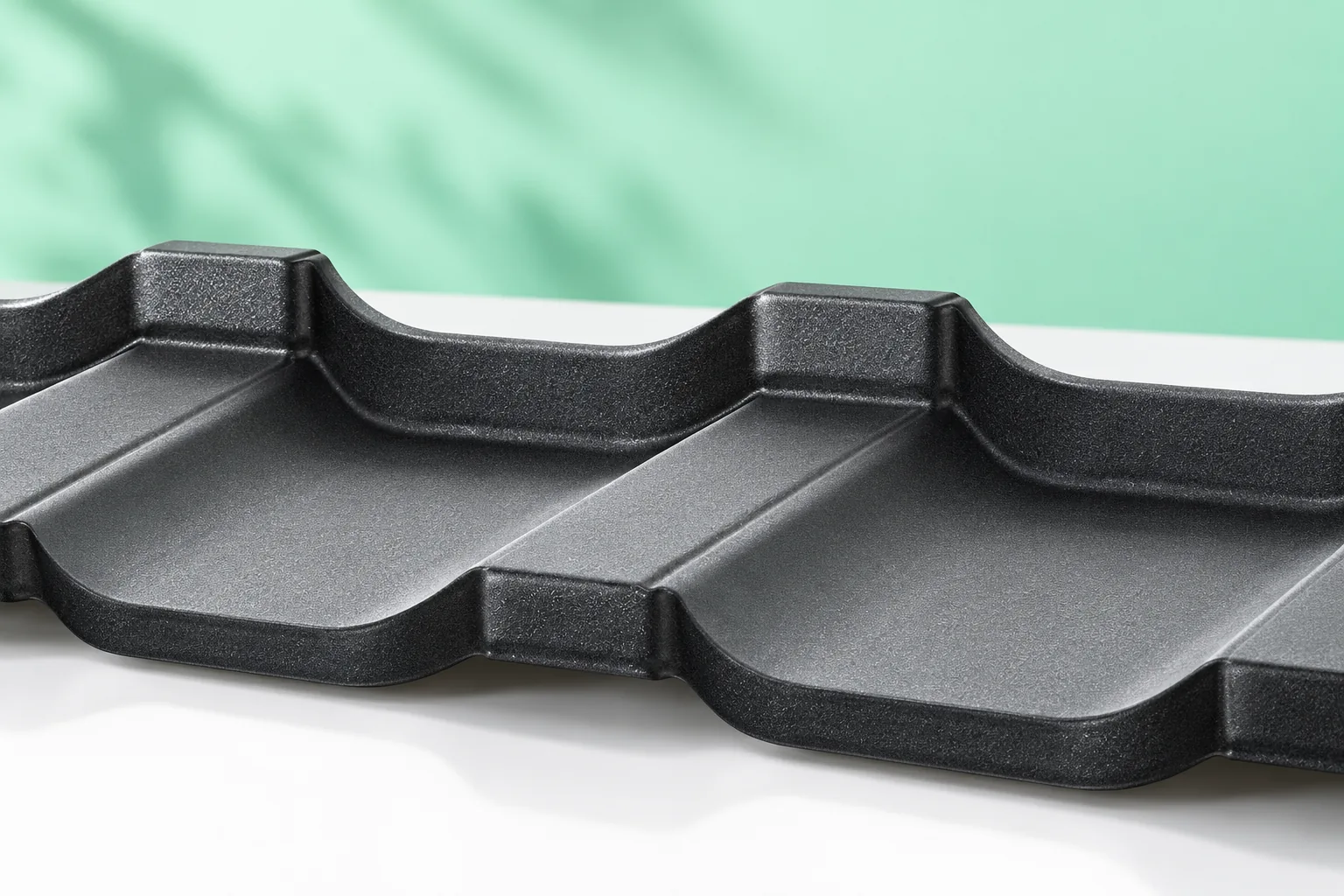
A short panel is easier to carry through a narrow passage and to set down at the work area. This is useful on plots where there is no space for long sheets. A smaller component can also make it easier to pass material onto the roof in line with the team’s work organisation. Safe transport methods must still be used and the edges protected from deformation.
Convenience does not mean that installation can proceed without preparation. The panels have a defined laying direction and gripping points. If an unsupported section is stepped on, it may deform. Before starting work, it is worth establishing where the packs will be placed and how they will reach the individual roof slopes. This helps limit unnecessary moving of material.
Where does a small panel make fitting easier?
The greatest benefits may arise near roof valleys, dormers and service penetrations. A shorter element gives the installer a smaller piece to fit. It is easier to plan the work sequence around an obstacle, but every detail still requires proper treatment. A panel should not end at a randomly chosen point simply because it fitted between two openings.
A good starting point is a roof slope drawing with the covering grid. On it, you can assess whether narrow strips arise at the edges and how the last row will sit below the ridge. If the manufacturer permits different laying methods, it is worth comparing them. However, the profile orientation must not be changed in a way that conflicts with the direction of water drainage. Also pay attention to the position of small pieces relative to the supports. An element may geometrically fit the available space but still needs proper bearing and the specified fixing.
Is it easier to limit material waste?
A smaller format increases the number of possible division points in the covering. This can avoid cutting a long sheet in some places. However, the benefit depends on the dimensions of the entire roof. On a simple slope, well-fitted larger panels can also produce little waste. There is no single percentage saving that applies to all projects.
It is worth calculating the example for a specific dormer or corner. Mark the full element, the piece used and the waste. Then check whether the cut-off piece is actually suitable for reuse. It must retain the correct joint edge, and its installation must comply with the instructions. A similar dimension alone does not mean that the piece will fit tightly.

How does the small format affect storage?
Panels are easier to accommodate in an orderly storage space than multi-metre sheets. However, the conditions matter. Moisture trapped between the metal sheets can damage the surface even though the outer packaging looks correct. Packs should not be treated as permanent protection for storage on site for an indefinite period.
You need to know the delivery date and the installation schedule, then follow the recommendations on location, support and storage time. Panels intended for later repair also require dry storage. It is not worth buying an excessive surplus without a plan for using it. It may take up space for years and lose good condition before it is ever used.
What does single-module construction not change?
It does not automatically improve corrosion protection, steel quality or colour resistance. These properties result from the material and the coating. Nor does it mean any roof pitch is acceptable. A model with small dimensions may have more demanding conditions of use than another, larger profile. Before purchase, you must read the data for the specific product.
The small format does not replace proper ventilation or loft insulation. The roof still consists of several interacting layers. The support must be level, and the batten spacing must match the profiling. The screws must be matched to the substrate and the fixing points. If these elements are poorly prepared, additional joints between the panels can only make it harder to correct errors.
How do you assess whether the benefits are worth the price?
Compare the cost of the panels per square metre of effective coverage and the complete specification for the roof. Add flashings, fixings, transport and labour. It is worth asking the installer how the small format will change the sequence of work. The answer should refer to specific areas of the roof slope, not just a general statement that the panels are convenient.
If the roof has many difficult sections, ease of handling and the ability to adjust may have real value. On a simple, large roof slope, it is worth honestly comparing the two-module version and cut sheets as well. Single-module tile-effect metal roofing is a good tool for specific tasks. It is best chosen when the cutting plan shows where it helps and what you are paying for.
7 branches. Materials closer to your project.