Roof coverings
What to look for when choosing tile-effect metal roofing
In brief
First check whether the metal roofing tile profile matches your roof’s geometry and pitch – only then compare material, format and colour. This order lets you reject options that look good but require unforeseen changes. The profile data sheet sets out the conditions of use, including requirements for the layers beneath the covering. Two visually similar models may have different requirements, so confirm compatibility before purchase, including on low extensions and roofs with an unusual layout. Compare full specifications and complete quotations so the decision rests on actual parameters, not general slogans.
Does the model match the pitch and geometry?
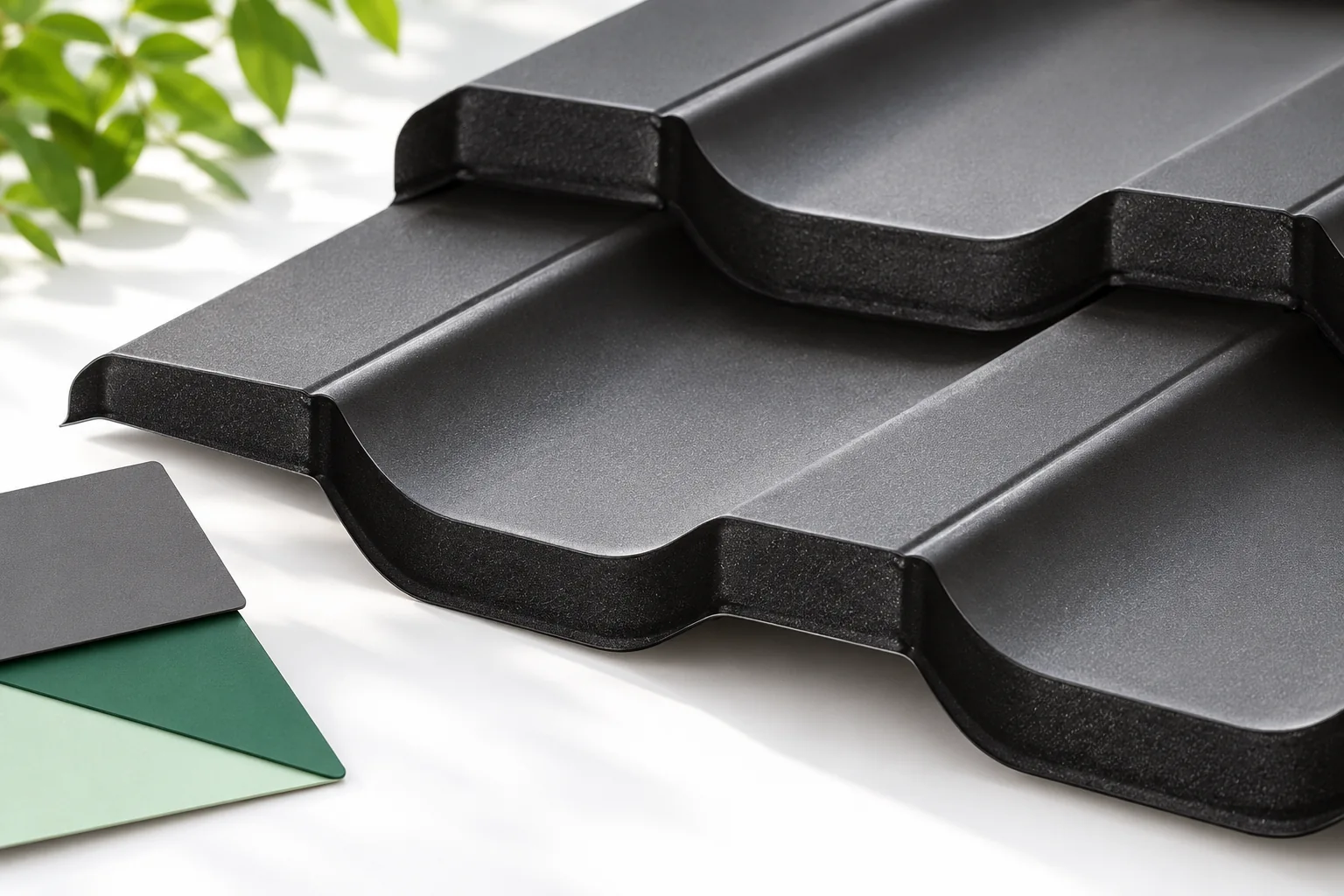
The data sheet for the selected profile sets out the conditions of use. The roof pitch and the way the layers beneath the covering are built up are particularly important. It is not enough to say that the tile-effect metal roofing is suitable for a pitched roof. Two visually similar models may have different requirements. Compatibility must be established before ordering, especially on low extensions and roofs with an unusual layout.
Next, check the actual dimensions. The cutting plan should account for the eaves, ridge, roof valleys and openings. It is worth asking whether the measurements come from the design or from the completed structure. This difference can be significant during renovation. Material cut to outdated dimensions may require corrections that could have been avoided before production.
How can you distinguish steel parameters from appearance?
The steel core, metallic layer and organic coating perform different functions. They should be described separately in the offer. Check what the stated thickness refers to and which material variant has been priced. A deep profiling should not be equated with thicker steel, nor a heavier sample with better surface protection.
Assess the appearance on a sample, but the properties on the basis of documentation. A matt coating may have a different structure and different parameters. Likewise, colour alone says nothing about resistance to corrosion or colour change. If the seller presents several finish classes, ask for the specific differences and scope of application, not just the category names. Also pay attention to the protection of the underside of the sheet. The covering is exposed not only to rain. Condensation and conditions inside the system can be relevant to material selection, especially in buildings with elevated humidity.
Which format will make your roof easier to install?
Sheets cut to size can fit long, straight roof slopes well. Modular panels are often convenient where there are more obstacles and limited space on site. The choice should be determined by the cutting plan and the organisation of installation. There is no reason to assume that a newer format in the offer is automatically more suitable for every house.
Ask about delivery and how the material is to be passed onto the roof. A long sheet requires adequate support, and a small panel must still be protected from deformation. It is worth establishing the storage location and the timing of the works. If the material is to wait, check the storage instructions. Improper storage conditions can damage a good product before it is installed.

Does the offer cover the complete finishing system?
The covering requires matching flashings, fasteners and ventilation components. Additional parts are needed at the chimney, windows and service penetrations. Their absence from the quote does not mean they will not be needed. It is worth asking for a schedule broken down by roof slope and edge to see the full scope of the order.
Also check the availability of roof access systems and the components required in the design. Not all accessories fit every wave height. Choosing at the last minute may force a change of detail or colour. It is more convenient to settle these matters together with the covering and to make sure the installer knows how the selected parts are fixed.
How to compare price and warranty terms?
Bring the price to a common basis, preferably taking into account the actual coverage and cutting layout. Do not compare gross metre directly with effective metre. Add transport, accessories and labour. Then it is easier to recognise whether the difference results from product quality, the quantity of material, or a different scope of service.
In the warranty, check separately the protection of appearance and the safeguard against specific material damage. The ambient conditions, installation requirements and inspections are important. The number of years without this information is incomplete. Keep the purchase documentation and the delivery identification. They may be needed for later selection of accessories or for clarifying a problem.
How to confirm your choice before payment?
Set a colour sample against the façade and flashings in daylight. Check that the selected profile appears in the final order together with the correct coating. Agree the date and conditions of acceptance. It is good for the cutting layout drawing and specification to be approved by those responsible for measurement, delivery and execution.
On acceptance, check the quantity, dimensions and visible damage. Colour differences or deformed edges must be clarified before installation. This is the last easy moment to correct the order without dismantling the roof slope. Careful selection does not end with the colour. It covers the whole process from matching the product to checking what actually arrived on site.
7 branches. Materials closer to your project.