Installation and construction
What work does a roofer carry out?
In brief
A roofer mainly handles the outer layers of a roof that drain water and shield the building from the weather. The scope may include flashings, gutters, underlay and accessories, but it need not cover structural design or roof truss repairs – these tasks must be separated before work begins. The substrate must be prepared and the covering correctly fixed. With sheet metal on battens, check the batten geometry and sheet layout; with sandwich panels, supports, fasteners and joint seals matter. The roofer uses the instructions for the specific covering.
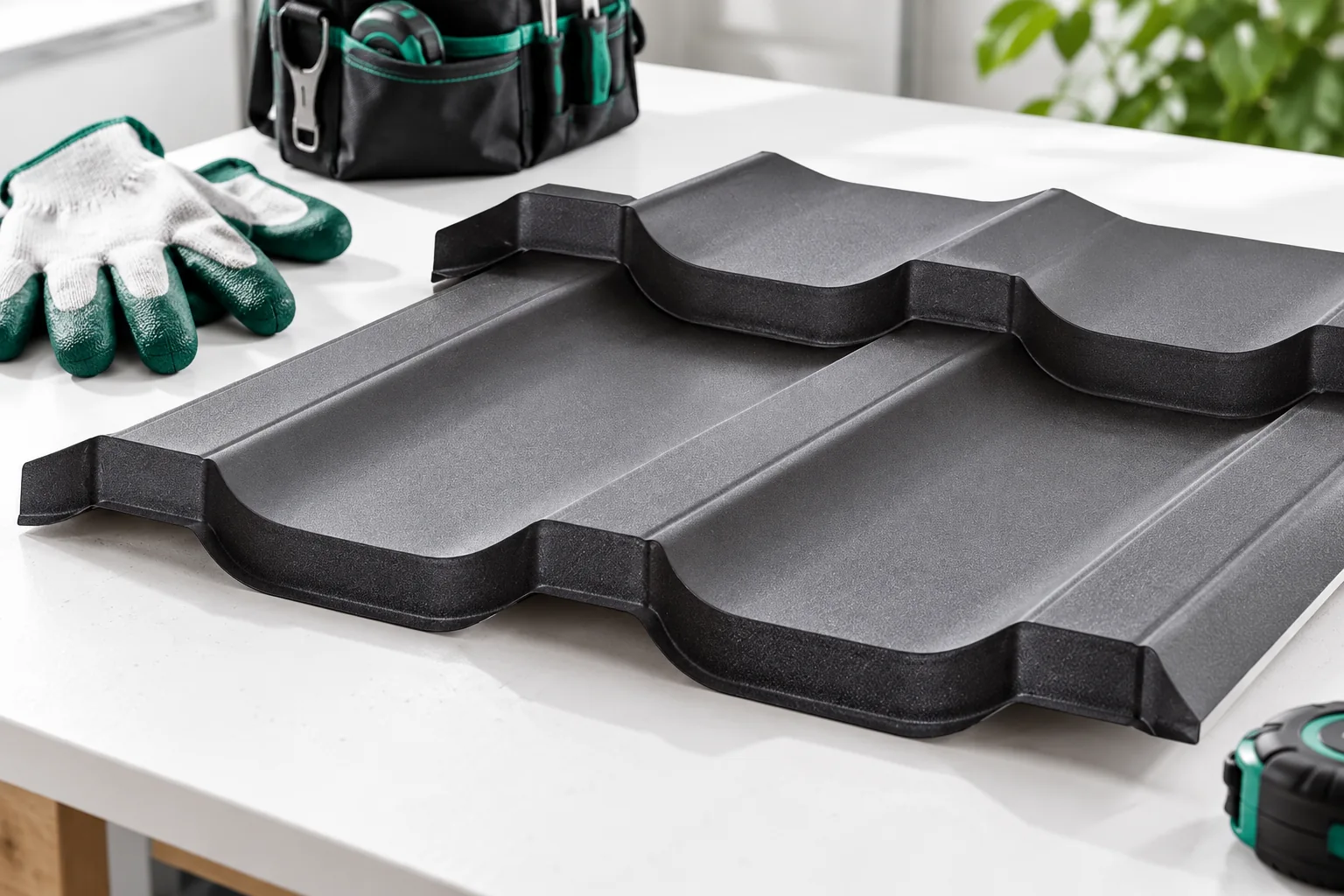
Which works are part of roof covering?
The basis is preparing the surface for laying the chosen material and fixing it correctly. For sheet metal on battens, this includes checking the geometry of the substructure and planning the layout of the sheets. For sandwich panels, supports, fasteners and sealing of joints are important, among other things. These are different installation systems.
The roofer should follow the instructions for the specific covering. The ability to cut sheet metal alone is not enough. The direction of installation, overlaps, position of fastenings and the way the roof slope is finished are important. Changes from the design should be explained before execution, particularly where they affect load-bearing capacity or the layer build-up.
Why are flashings so important?
Flashings connect the covering to the chimney, wall, eaves and adjacent roof slope. At these points, water changes direction or meets an obstacle. A good detail leads it outside without trapping it in corners. It is not enough to match the colour of the trim and cover the gap. The correct profile is needed.
Some flashings are made to order, others are components of a ready-made system. In both cases, care must be taken with support, overlaps and the ability of the metal to move. Some locations require coordination with the chimney or façade contractor. It is worth establishing responsibility for interfaces between works before each party carries out their part.
Does a roofer install gutters?
Often yes, but this should be confirmed in the quote. Rainwater drainage includes more than the gutter and downpipe. Brackets, outlets, connectors, corners and suitable wall fixings are needed. The selection should take into account the catchment area and the route of the discharge. A random set of components may not form a functional installation.
The roofer is responsible for correctly connecting the eaves to the gutter within the agreed scope. Further drainage of water on the plot may belong to another team. This boundary should be defined. A pipe ending at the wall does not yet mean that the entire rainwater management problem has been solved.

Where does roofing work end and structural work begin?
A carpenter builds the timber roof structure and its connections according to the design. A roofer may also have these skills, but this should not be assumed automatically. Changing the rafter cross-section, removing a post or repairing the wall plate requires a proper structural assessment. This is not a routine adjustment of the roof covering.
During renovation, the boundaries of the work can be fluid, because the condition of the timber only becomes apparent after dismantling. It is worth providing in the contract for how such discoveries are to be reported. The decision to repair should specify the scope, cost and technical solution. Covering the damage with new sheet metal does not remove its effects.
What tools are required for working with sheet metal?
Tools are needed for measuring, cutting and forming, as well as equipment for safely handling the sheets. The type of cutting should protect the coating. Tools that produce hot filings can damage it. It is also important to remove installation residue before it soils or scratches the surface.
The screwdriver should allow the fastening to be controlled without destroying the seal. Using the correct screw is more important than speed of work. For long sheets, a method of transport that limits deformation is also needed. Good organisation of the work affects quality just as much as any individual tool.
Does the scope include safety and securing the building?
The organisation of the workplace should take into account access to the roof, fall protection and the area below the works. During renovation, protection of the exposed building from precipitation must also be planned. Establish who supplies the scaffolding and covers and whether their cost is included in the quote.
Additional accessories, such as roof access steps and snow guards, should be matched to the structure. Their installation may require preparation of supports. It is not worth leaving this to the end as a minor addition. Later intervention in the finished covering may mean dismantling part of the roof slope.
What should the contractor hand over upon completion?
Material documents, usage instructions and photographs of the works being covered are useful. The acceptance should indicate any defects and the deadline for their removal. It is worth agreeing which elements require periodic cleaning and inspection. This is not a promise of a maintenance-free roof, but a description of its proper use.
Ask for an unambiguous specification of the material used in the flashings and covering. This will make it easier to select a repair or extension in the future. If a problem arises after installation, a good description of the works carried out shortens the diagnosis. As a result, the conversation concerns a specific detail rather than a general statement that the whole roof is defective.
7 branches. Materials closer to your project.