Maintenance and renovation
How can snow be removed without damaging the roof covering?
In brief
Before you start clearing snow, establish a plan that considers the roof’s load-bearing capacity, its shape and people’s safety. The layer’s thickness does not reflect the actual load – wet snow and ice are far heavier than powder. Carry out the work with proper access and protection, and do not chip ice off metal coverings. What matters is the weight of the snow lying there, how unevenly it is distributed and the condition of the structure. Drifts near higher parts of the building load the roof differently from an even layer. Do not assume one centimetre figure is safe for every building. Visible deformation, unusual cracking or faults in building elements require prompt assessment by a specialist.
When does snow require assessment?
The weight of the snow cover, uneven accumulation and the condition of the structure all matter. A drift at the higher part of the building may load the roof differently from a uniform layer. A single figure in centimetres should not be taken as a safe limit for all buildings. Knowledge of the structural design assumptions and current conditions is needed.
Visible deformation, unusual creaking or problems with building elements require prompt action and assessment by a specialist. Independent access to the roof should not then be attempted. The risk to people must first be reduced. How to proceed further depends on the scale and nature of the symptoms observed.
Why is snow not removed at random?
Sudden relief of only one part of the roof slope may change the distribution of forces. The work plan should take into account the sequence and method of removing the snow cover. The place where snow is deposited or thrown down is also important. New heaps must not be created on a part of the roof that is to remain loaded.
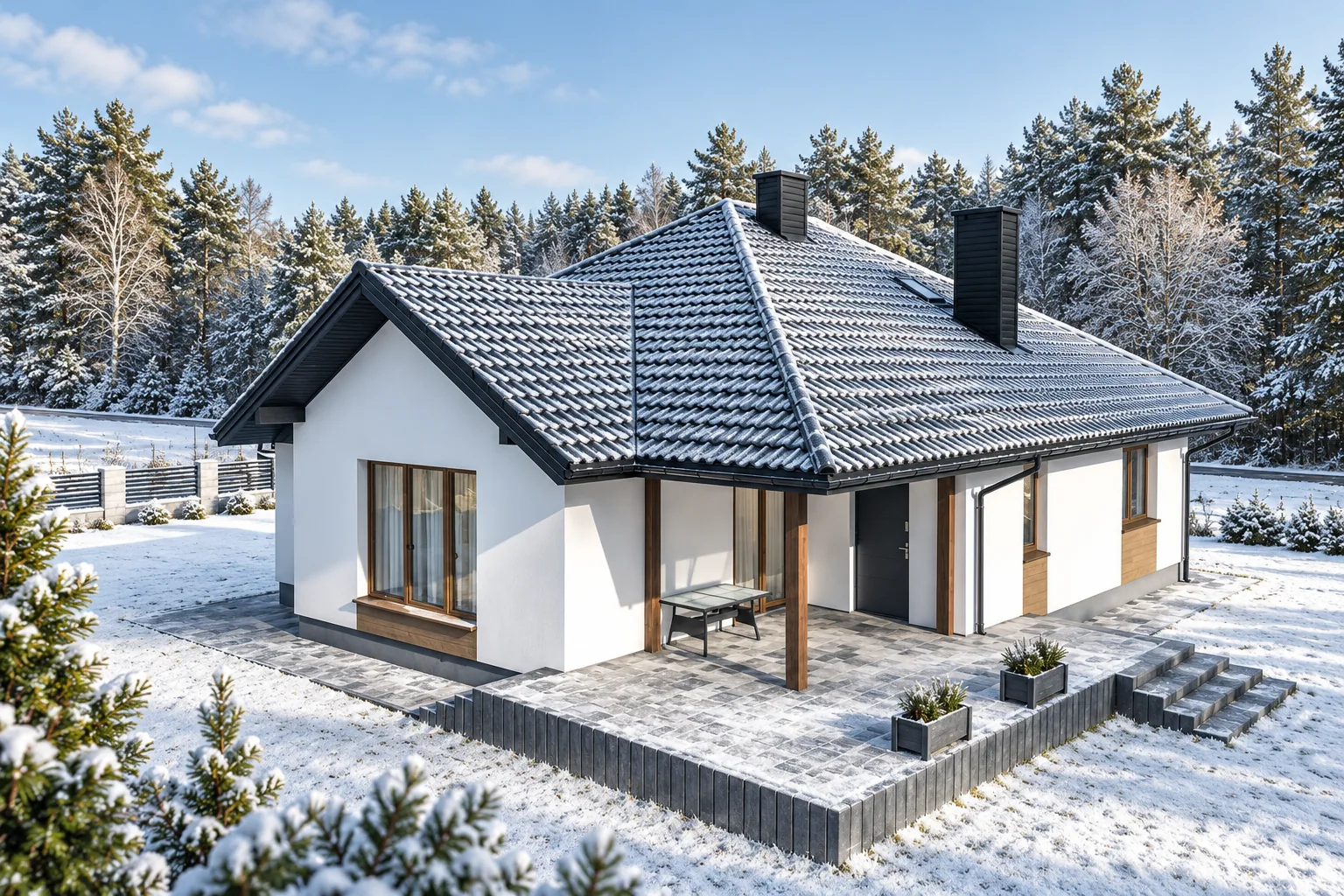
For halls and large roofs, the organisation of snow clearing should follow from the building documentation and an assessment of the structure. For a house, the shape of the roof slopes and access must also be taken into account. One method of working does not suit a flat hall, a steep roof with tile-effect metal roofing and a light canopy. Each of these buildings behaves differently.
How to protect the metal surface?
Tools should not scratch the coating or deform the profile. Sharp metal edges and chipping off ice can damage the sheet metal and seals. Exposing bare metal at all costs should not be the aim. How a protective layer is left and the extent of removal are determined according to the covering and the conditions.
Watch out for protruding screws, flashings and accessories. They may be invisible under the snow. Jerking a tool can damage a connection or tear out an element. The people carrying out the work should know the layout of the roof. Photographs and drawings help to identify obstacles before removal of the snow cover begins.

How to secure the area under the roof?
Falling snow and ice pose a risk to people, vehicles and elements of the surroundings. The zone must be closed to traffic and the actual fall range taken into account. Placing a small container under the eaves is not enough. Masses of snow can slide off suddenly, especially from the smooth surface of metal roofing.
At entrances and pedestrian routes, particular organisation is needed. It is worth planning an alternative route for movement. Snow should not be thrown onto gutters, cables or the lower part of the roof without assessing the consequences. Protecting the surroundings is part of the task, not an addition carried out only after work has begun.
Do low parapets exempt from inspection?
Snow guards limit the sliding of the snow cover in a specific way. They do not automatically reduce its weight on the structure. They must be selected for the length and pitch of the slope and the loads. A random single row at the eaves may not correspond to the actual needs of the roof.
After an intense winter, it is worth checking the brackets and fixing points. A bent snow guard may indicate overloading or an installation defect. Straightening alone does not explain the cause. Damaged elements should be assessed before the next season, and the method of protection corrected according to the design if necessary.
What to do about ice at the gutters?
Ice can block drainage and cause water to back up. Do not strike the gutter or pry at the flashings. The patency, slope and cause of the blockage must be assessed. Sometimes the problem is linked to uneven snow melting or heat escaping from inside. In that case, removing the icicles alone will not solve the situation.
An ice protection installation requires proper selection and execution. It does not replace correct eaves construction or regular cleaning. Its use is worth considering after identifying the cause. Ad hoc pouring of hot water on the roof may create another layer of ice below and increase the risk in the surroundings.
What should be checked after the work is finished?
After snow removal, the coating, flashings and fixings should be inspected when conditions allow. It is worth recording any damage noticed and the places where snow accumulated unevenly. Such documentation helps prepare for the next season. If a leak has occurred, both the covering and the drainage must be checked.
For recurring problems, a solution to the cause is needed. It may include correcting the protections, improving a detail or assessing the structure. Annual improvised snow removal does not replace a maintenance plan for the property. The owner should know whom to call and what data to provide before further work begins.
7 branches. Materials closer to your project.