Metal fence pickets and fences
Metal pickets in fence bays of different widths: arranging the gaps
In brief
Bays in an existing fence rarely have perfectly equal clear widths. Differences also arise at new driveways, corners and gates. Metal fence pickets can be laid out so as to maintain a calm rhythm. However, it is not enough to divide the entire fence length by the width of one element. Each bay has its own edge gaps. It is worth calculating them before purchase, rather than correcting the last section during installation. First, establish between which points the pickets will be distributed. The clear width between the posts is not always equal to the width available for the infill. Part of the space may be taken up by a frame, a trim strip or another element of the system. The measurement should correspond to the actual method of installation. Record dimensions in a single unit, preferably in millimetres.
Measure the space intended for the infill
Measure each bay at the points relevant to fixing. If the posts are not parallel, the width at the top may differ from the width at the bottom. First, it must be decided whether the structure requires correction. Changing the picket spacings does not remove the posts’ lean. Such a measure can only transfer the unevenness to the visible gaps of the entire bay.
Use the width of the finished picket
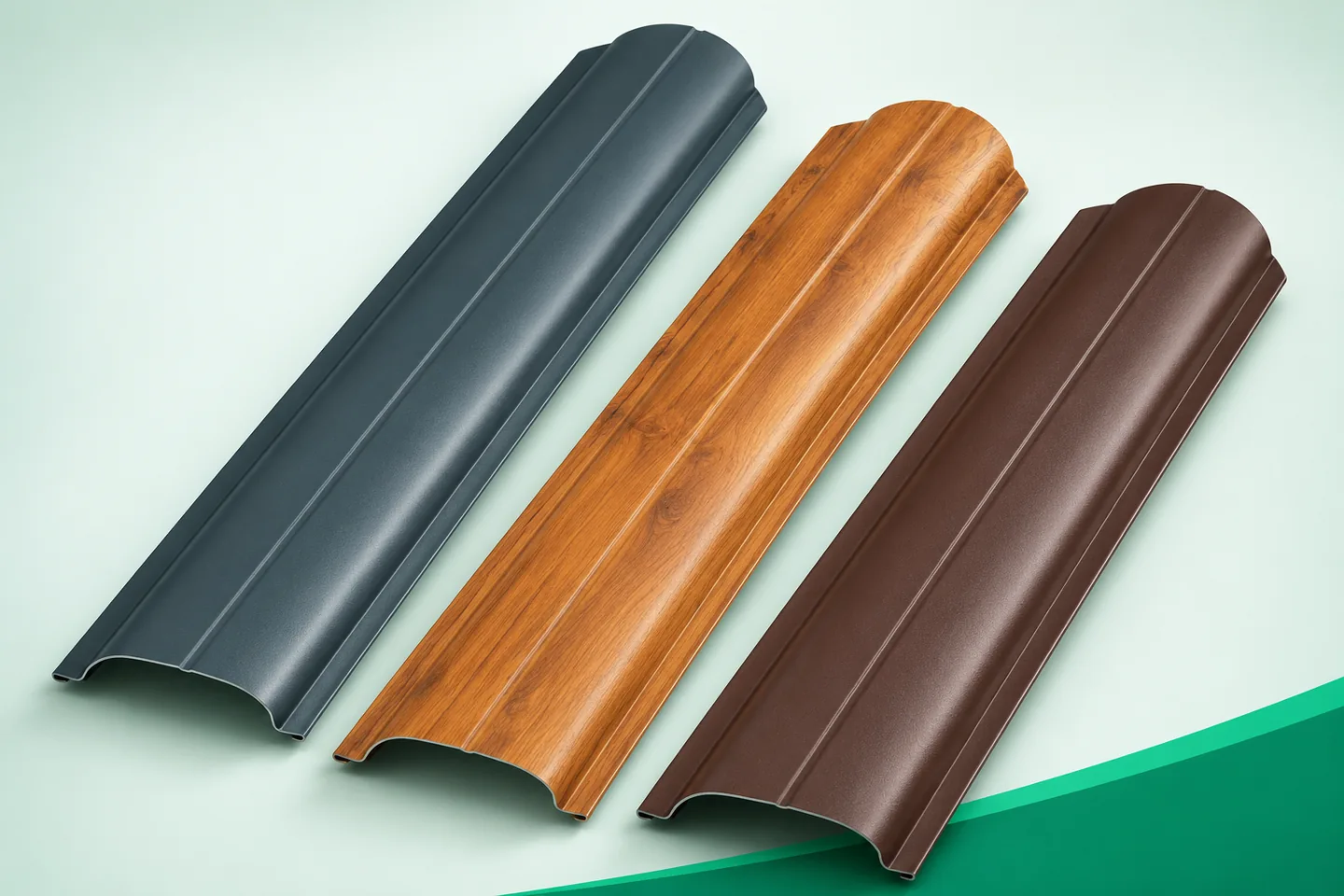
The product data sheet may state the width of the steel strip and the width of the finished profile. The latter is used to calculate the rhythm. The strip is the band of material before profiling. Part of its width is consumed by the pressings and bends. The metal pickets therefore have a different visible width on the fence after the profile has been formed.
Choose a specific section before the final quantity calculation. Replacing a 100 mm wide picket with the 115 mm variant can change the number of elements in the bay. It should not be assumed that the difference can always be hidden in the gaps. Also assess the permitted fixing method. The infill must suit the structure, not just the elevation drawing.
Calculate the pickets, the gaps and both edges
For a single row, a simple calculation can be made. If the bay has width W, contains n pickets of width b, internal gaps s and two edge spacings a, we get W = n × b + (n − 1) × s + 2 × a. This is a statement of geometry, not a structural recommendation. It assumes equal element widths and uniform gaps within the given field.
An example shows the principle. In a field 2000 mm wide, 14 pickets of 115 mm can be considered. Their total width is 1610 mm. With two edge spacings of 30 mm each, 330 mm remains for 13 internal gaps. Each is then approximately 25.4 mm. The final layout must still be checked on the product and in the mounting system. Keep more precision in the calculations than in the working description. Rounding each gap before summing can change the result at the end of the bay.

Choose how to equalise the differences
If the adjacent bay is slightly wider, you have several decisions to make. You can keep the number of pickets and slightly change the gaps. You can also consider an additional picket if the layout allows. Each variant must be examined on the drawing. Merely aiming for an identical internal spacing can leave an accidental wide gap at one post.
Consistency is most important. Decide whether the priority is similar clearance, symmetry of bays or fixed edge spacings. It is not always possible to maintain all three features at once. Metal pickets should not be arbitrarily compressed to compensate for missing space. Changing the section can affect their appearance and fixing method.
Count two rows separately
A double-row layout requires its own drawing. The offset of the rear row, the ends at the posts and the fixing points must be shown. Multiplying the quantity from a single row by two can only be a preliminary approximation. The outermost pickets do not always line up in the same way. A full schedule for the specific solution is needed for ordering.
Also bear in mind the purpose of such a layout. Offset metal fence pickets restrict the direct view through part of the gaps. They do not automatically create a full wall at every angle. The quantity of material and the degree of infill of the bay also change. Conformity of the structure with the target layout must be confirmed before installation, not only after additional elements have been delivered.
Check the calculation on the first bay
Before installing the entire fence, lay out the pickets in one prepared bay. Use repeatable spacers if the working method provides for them. Check not only the first gap but also the cumulative spacing. A small error repeated a dozen or so times can become noticeable at the end. It is worth comparing the arrangement with the recorded plan before finally fixing all elements.
After checking the first bay, keep its dimensions as a template for the corresponding group of bays. Prepare separate schedules for the other widths. Metal sheet pickets offer great freedom of layout but require honest measurement. A well-calculated fence looks calm even when the bays are not identical. Its order is determined by a repeatable rule, not by randomly adjusting the last picket.
7 branches. Materials closer to your project.