Façades and fences
Which type of fence suits your home?
In brief
Start by deciding what the fence should achieve: privacy, appearance or ease of upkeep. Metal pickets let you adjust the gaps, open panels create a greater sense of openness, and fuller infills screen the property more effectively. Every option needs suitable posts, foundations and fixings. The price of a single panel does not reflect the total cost. Identify which sections should screen the garden and which merely mark the boundary – the front, the side by the terrace and the utility zone may have different needs. Keep a consistent colour and orderly rhythm so the whole reads as one coherent design.
Which needs should you start with when choosing?
First, determine which sections are to screen the garden and which are merely to mark the boundary. The front of the property, the side by the terrace and the utility area may have different requirements. It is not necessary to apply the same degree of screening everywhere. It is worth maintaining a consistent colour and an orderly rhythm so that the different sections form a considered whole.
Check how the gate and pedestrian gate are used, visibility at the entrance and the clearance from the ground. If there are children or animals, gaps and the ends of elements also matter. Choosing the material does not replace planning these details. A small sample of a bay will not show how the fence will perform in everyday use across the whole plot.
When is it worth considering metal pickets?
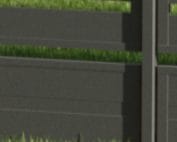
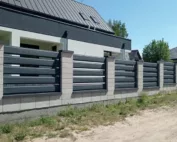
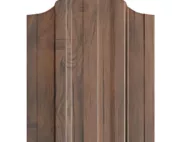
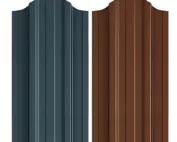
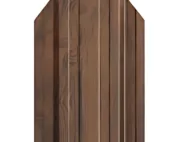
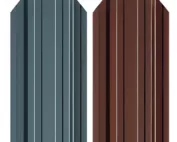
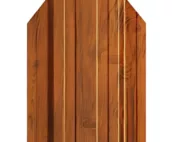
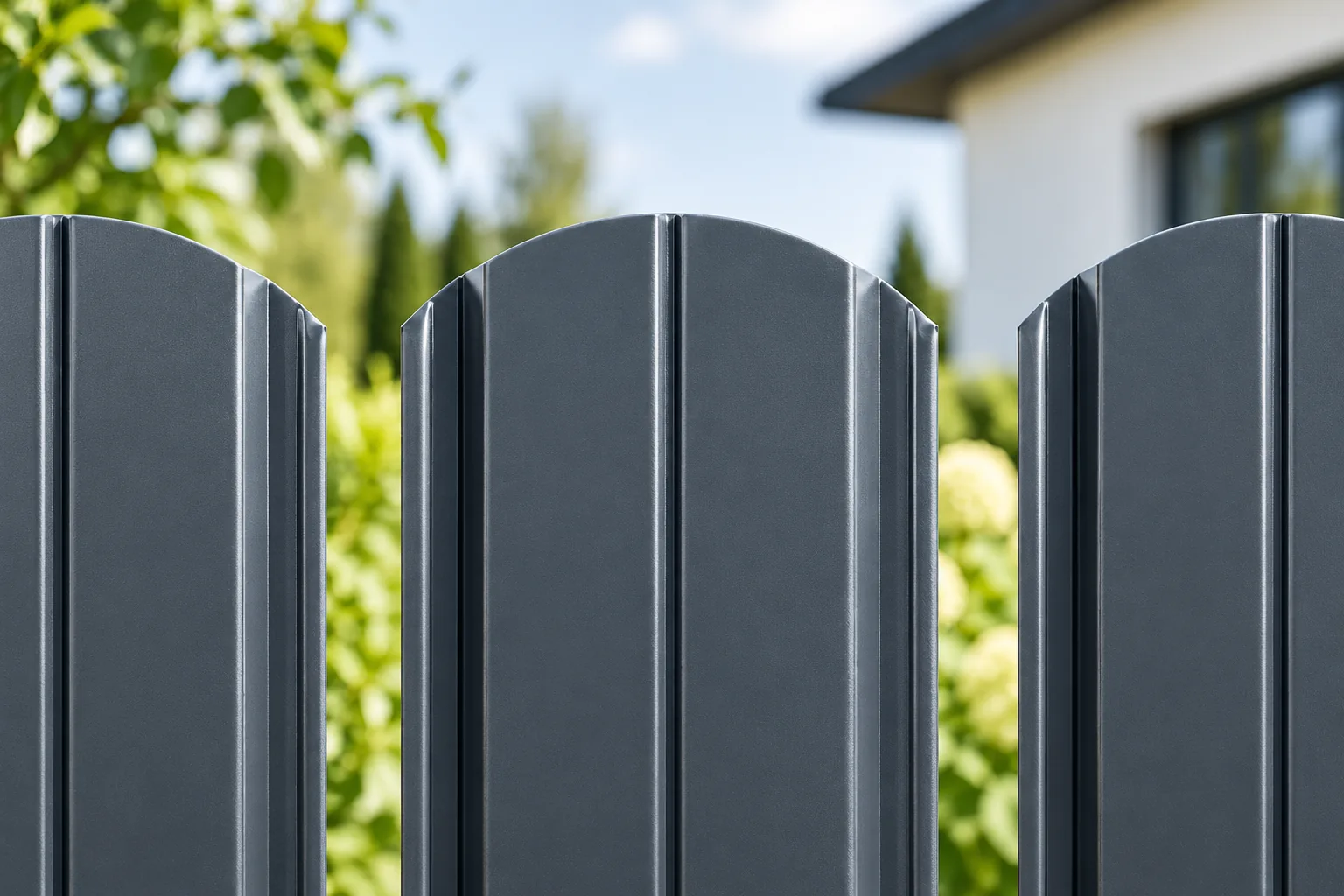
Pickets allow you to set the spacing and the appearance of the top line of the fence within a given system. They can provide a traditional rhythm or a calm contemporary form. They do not require the periodic impregnation typical of wood, although they still need inspection and cleaning. In many configurations, a single damaged element can be replaced.
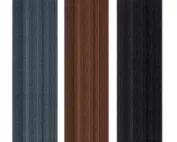
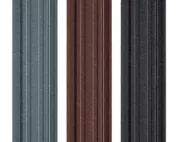
Before purchase, check the coating on both sides and the method of fixing. The surface on the garden side may differ from the front. The availability of lengths and the fit to the gate also matter. If you want to set the pickets densely, assess the effect of such infill on the structure. Greater privacy means a different wind effect than a very open configuration.
What does an openwork panel offer, and what does a fuller screen offer?
A panel or mesh allows you to retain a view of the surroundings and visual lightness. They can be practical where marking the boundary is the priority. However, they do not provide the same privacy as dense infill. Adding screens to an existing fence must be assessed structurally, because it changes the way wind acts on an originally open configuration.
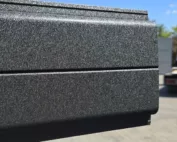
Fuller sheet metal or densely spaced elements screen the garden better but dominate the space more strongly. It is worth checking their appearance from the inside as well. A long continuous section may require careful division. Not every full screen should be regarded as an effective acoustic solution. Noise reduction is determined by the entire designed system, its height and its tightness.

How do you compare metal with wood?
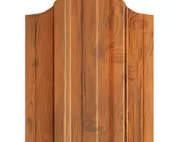
Wood offers a distinctive material and the possibility of shaping details, but requires maintenance appropriate to the application. Metal pickets can reduce the work associated with renewing wood. However, they are not maintenance-free. Deposits must be removed, the coating checked and damage addressed. The comparison should cover the realistic scope of work, not only the initial purchase price.
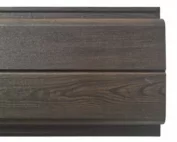
It is worth viewing a wood-effect finish on a sample from both sides. From a distance it may give a different effect than up close. The texture, pattern repeat and colour of the structural elements are important. It is not worth assuming that the material will look identical to natural boards. It is better to assess whether its own appearance suits the house and garden.
Why is the structure as important as the infill?
Posts, rails and foundations must match the height and degree of enclosure of the fence. When replacing old panels, corrosion and the stability of existing parts must be checked. New infill will not automatically strengthen a worn structure. Fixings should be selected to suit the support material and the anticipated load.
Differences in terrain also affect the design. Steps, the line of the bottom edge and how gaps are closed must be established. At the gate, the movement space, the position of the drive and the method of fixing the hinges or tracks are important. These elements are best planned together with the fence, rather than adapted after all the panels have been installed.
How do you calculate the cost and choose a variant?
Compare fences of the same length, height and function. Add the structure, foundations, gate, pedestrian gate, accessories and installation to the infill. Check site preparation and any dismantling. A different panel or slat width changes the number of elements, so the unit price alone is a weak basis for comparison. In the estimate, also record the number of corner posts and end pieces. The same linear metreage on a single straight run and on a plot with many angles may require a different quantity of parts. When comparing quotes, it is worth using a shared sketch of all sections.
Finally, consider future cleaning and access for repairs. By a road, the ability to remove salt and mud is important, and near plants, residues of soil and leaves. Choose a material whose appearance you accept from both sides and whose maintenance suits your capabilities. Then the fence will be suited to the property even after the installation itself is complete.
7 branches. Materials closer to your project.