Profiles and steel structures
Galvanised steel sections: planning delivery, unloading and storage
In brief
Long cold-formed profiles require planned unloading. Their low weight relative to their dimensions does not mean that packs can be grabbed and moved at will. The geometry of the cross-sections, the surface and the markings must be protected. A well-prepared storage area also makes subsequent panel installation easier. The crew finds the required zed purlins, channels, sigma and omega profiles more quickly instead of having to dismantle several stacks at once. The storage area should be stable, accessible and suited to the length of the elements. Access for the unloading equipment and a safe working area must be provided for. The subsequent direction of transport on site is also important. It is not worth placing packs where they will have to be moved again shortly afterwards.
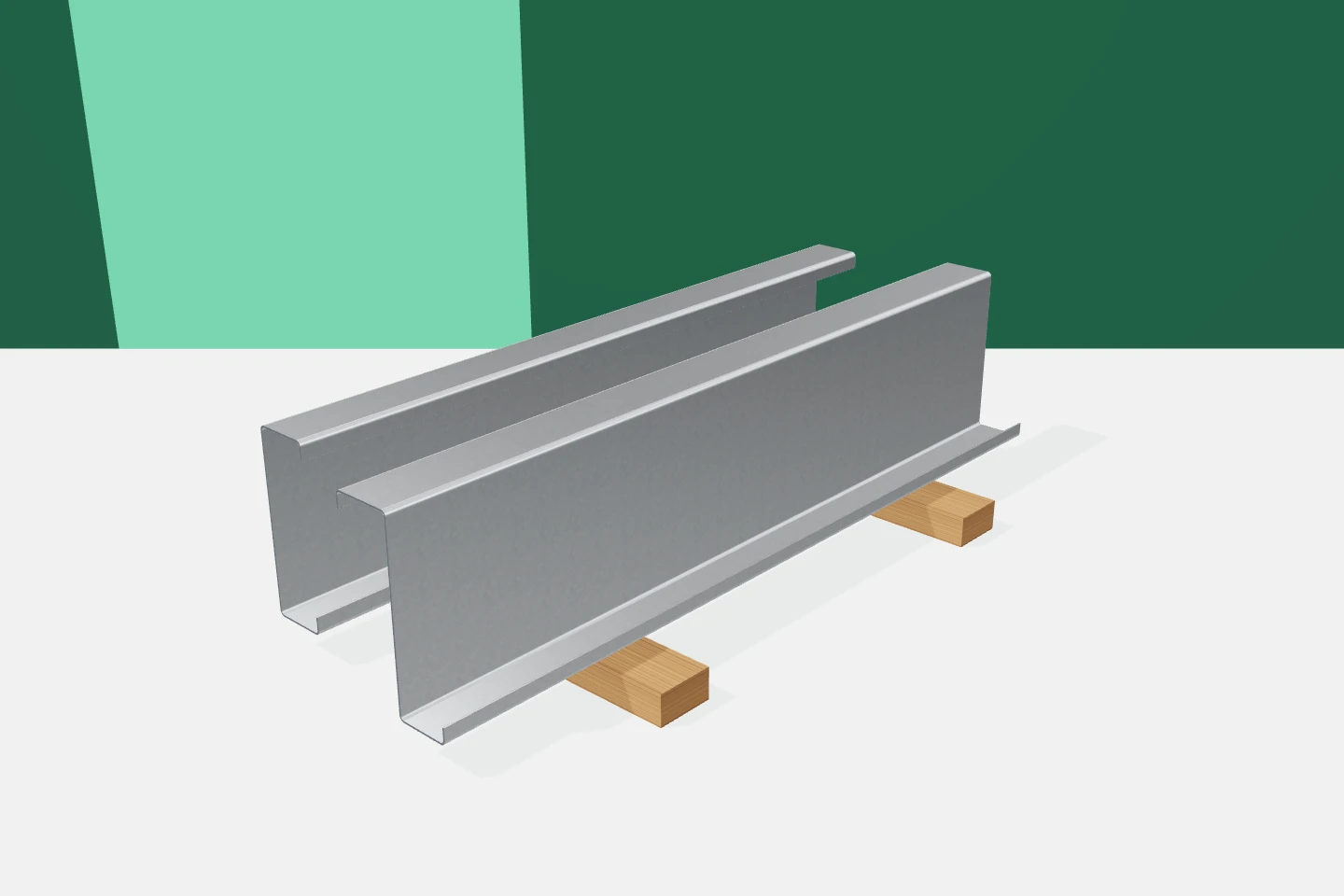
Prepare the site before the vehicle arrives
The lifting method should correspond to the supplier’s recommendations and the work plan. The weight of the bundle and its length must be known. Excessive overhangs can lead to undesirable deformation. The spacing of lifting points should not result merely from whatever equipment happens to be available.
Receipt begins with identification
Before unpacking, it is worth checking the number of bundles and their labels. The markings are then compared with the delivery documents. This allows missing items to be identified quickly. Once components are distributed across several locations, reconstructing this information will be more difficult.
Galvanised profiles with a similar appearance may have different thicknesses and steel grades. They should not be mixed without retaining their markings. Lengths and hole patterns are equally important. Two purlins of the same height need not be intended for the same part of the roof.
Inspect the edges and bends
Visible crushing, twisting or surface damage should be recorded. Particular attention is required for the lips and web bends. In a thin-walled component, their geometry performs a structural function. These are not fragments that can be straightened with a hammer without assessment.
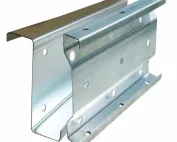
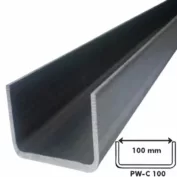
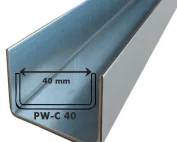
Z-sections have opposite flanges, C-sections have flanges on one side, and sigma sections additionally have a shaped web. Omega sections must also retain the intended spacing of their cross-section parts. If damage raises doubts, the component should be assessed before installation. Covering it with a panel will make resolving the problem more difficult.
The support should preserve the geometry of the pack
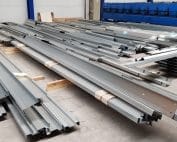
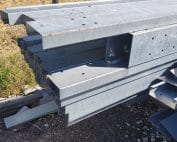
Profiles are laid on suitably prepared supports in accordance with the supplier’s requirements. They should not lie directly on the ground. The risk of uneven support and local pressure must be limited. The conditions depend on length, number of layers and method of packing.
High random stacks should not be created without checking their stability. This applies in particular to bundles of different lengths. Items needed in the first stage should be left accessible. Such order reduces the number of transport operations and opportunities for damage.

Water between profiles is a problem
A zinc coating does not mean unlimited resistance to wet storage. Water trapped between adjoining surfaces can hinder their drying. The storage method should therefore limit moisture and provide the conditions recommended by the supplier. This also applies to a short stay on site.
A damp bundle should not be tightly wrapped in random film and the matter considered closed. Protection against precipitation must work together with the possibility of moisture drainage. If the material arrived wet, the correct procedure must be established. The speed of response matters for the condition of the surface.
Separate material from dirty work
Near stored profiles, cutting and grinding of other elements should be limited. Swarf can settle on the galvanised surface and later corrode. Contamination also makes it difficult to assess the condition of the delivery. Order in the site store is therefore of technical, not merely organisational, importance.
Cold-formed profiles must be protected from accidental contact with substances incompatible with the coating. If soiling occurs, the cleaning method should correspond to the material recommendations. A strong chemical agent is not always the right solution. It may remove the soiling while at the same time impairing the protection.
Issue components according to the installation plan
A practical solution is to divide the hall into zones or successive stages of work. Markings on the bundles should match the drawings. Information about the complete set of fasteners and accessories should be included. Issuing the purlins alone without the necessary cover plates does not create a ready assembly station.
When removing markings, the ability to identify parts must be retained. This is important also after shortening the packaging or separating the delivery. Reliance should not be placed solely on the employees’ memory. A simple issue register helps establish where individual galvanised profiles have gone.
Inspection does not end at unloading
Before lifting onto the structure, the element should be inspected once more. It may have been damaged during storage or internal transport. The correct number and orientation should also be confirmed. A few minutes of checking reduces the risk of interrupting work at height.
Good logistics make it possible to take advantage of ready-made lengths and factory-punched holes. C-sections, Z-sections, sigma and omega profiles then arrive at their places in an orderly sequence. Cold-formed profiles retain the geometry and surface protection needed in the finished hall.
7 branches. Materials closer to your project.