Metal pickets and fences
Metal pickets at the garden gate: getting the entrance details right
In brief
The gate is viewed up close and used every day. More details are visible on it than on a long section of side fencing. Metal fence pickets can link it visually with the adjacent panels. However, space must be left for the handle, lock and movement of the leaf. A well-designed entrance area combines aesthetics with convenience. A repeated picket profile helps maintain order, but it should not force an awkward arrangement of hardware or random gaps. The position of the gate follows pedestrian movement. Before choosing the infill, check the path, the place where a guest waits and how the leaf opens. Also mark the intercom, letterbox and lighting. These elements can affect the division of the adjacent panels. If they only appear after the pickets have been installed, it is easy to end up with extra brackets and random drilling into the finished coating.
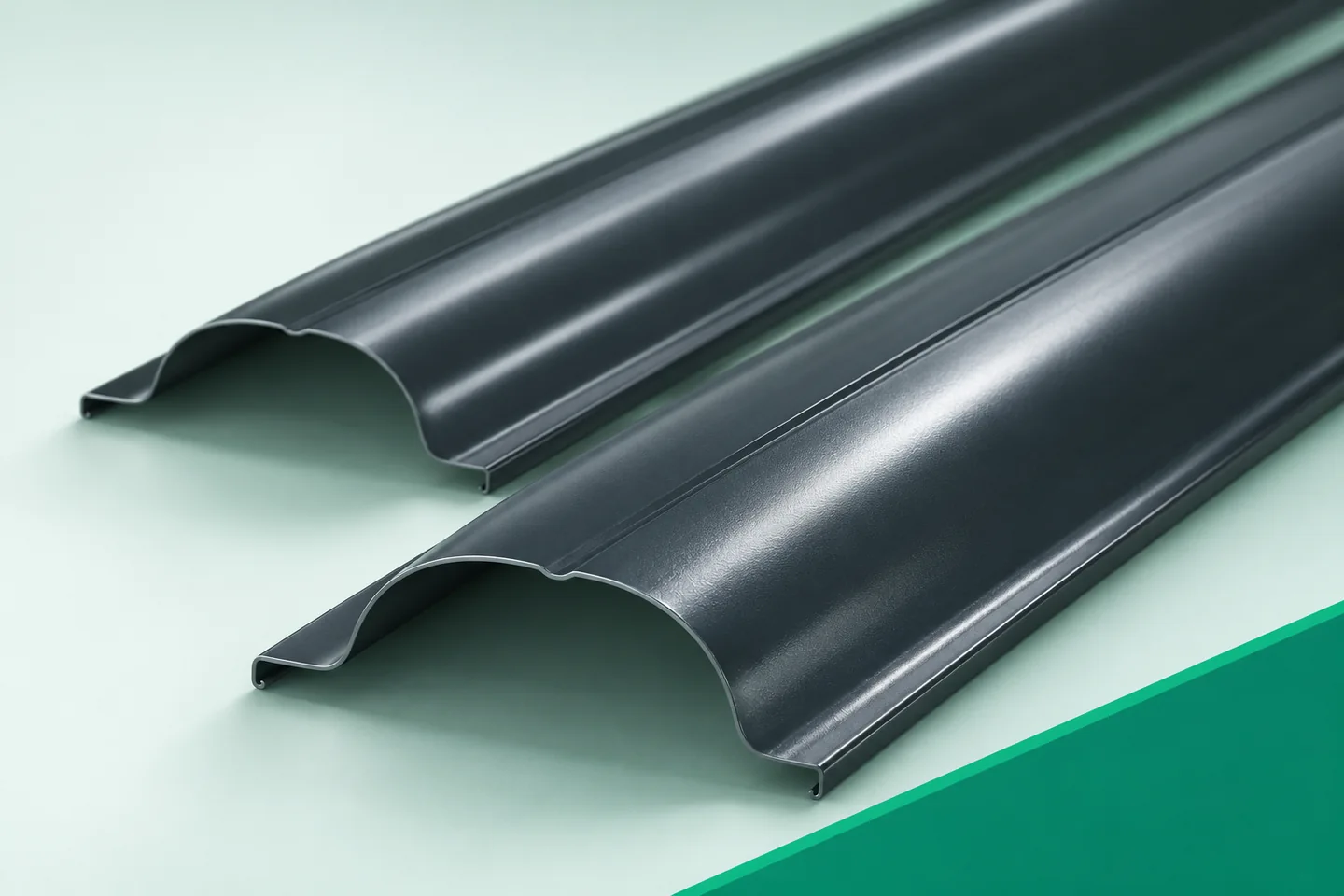
Lay out the entrance together with the approach to the house
Metal fence pickets do not have to cover every free space around the entrance. Equipment can be placed in a designated part of the structure. This solution is often clearer than fitting it into a narrow gap between the pickets. Most importantly, all devices should have a designated mounting base. A thin picket alone should not be treated as a universal holder.
Keep the gate leaf frame distinct
The gate has its own structure. The pickets are its infill, not a replacement for the frame and reinforcements. The way they are fixed must correspond to the design of the leaf. Load-bearing elements should not be removed to achieve an identical look to the adjacent bay. In practice, both parts can look consistent despite different solutions hidden behind the infill.
The area at the hinges and lock is also important. A picket must not interfere with movement or operation of the mechanism. This also applies to its ends, bent edges and screw heads. Before making the entire infill, it is worth checking its layout on the frame. This allows a collision to be spotted earlier, without reworking the finished surface.
Match the rhythm to a narrow field
The gate is usually narrower than the adjacent bays. The same spacing between pickets can produce a different distribution of edge gaps on it. It is not worth leaving this decision to the fitter at the last moment. Count the number of pickets and check the symmetry of the infill. A consciously chosen rhythm looks better than a very narrow strip of material at one side.
Metal fence pickets can be arranged so that they relate to the bays without mechanically copying every dimension. A common colour, finish and profile are often enough. A small difference in spacing may be less noticeable than uneven edges. However, the profile should not be deformed or cut lengthwise unless such a solution is permitted. The geometry of the infill is planned before it is made.

Check both sides and the top line
From the street, we mainly see the face of the pickets. From the house, the frame, crossbars and fixings are added. In the gate area, both sides are regularly visible. It is therefore worth ordering a precisely specified surface finish. A two-sided colour does not hide the structure, but it can help achieve a consistent appearance of the infill from both directions.
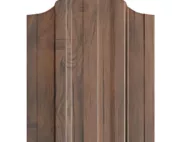
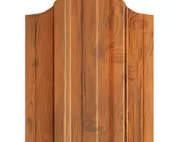
The top line of the gate can be level with the bays or deliberately distinguished. Both decisions require defining the length and type of ends. A straight finish gives a calm line. Rounded ends emphasise individual pickets. Not every model is available in both variants. Before ordering, availability must be confirmed rather than assumed from a photo of a similar profile.
Choose a detail that is convenient in everyday use
At the entrance, the fence is easily touched with a hand or a bag. It is therefore worth examining the quality of the edge finish and the fixing points. A folded edge can limit the exposure of the cut edge along the picket. However, this does not mean that the entire element is free from sharp spots. Particular attention should be paid to the ends and any transport damage.
It is not worth assessing quality only by touching the profile with a bare hand. Appropriate protection is used during handling and installation. After the work is completed, check that no protruding fasteners or metal filings have been left behind. The handover should include opening, closing and access to the handle. Neatly aligned metal fence pickets will not compensate for inconvenient entrance operation.
Leave the possibility of repair without rebuilding the front
At the gate, the risk of local damage is greater than on an unused section of fence. The handle, a bicycle or carried equipment can strike the infill. In many designs a single picket can be replaced, but this depends on the construction. It is worth checking access to the fixings and keeping the details of the specific variant. This will make it easier to select the right element later.
Coated pickets do not need annual painting simply because they are in use. They still require coating inspection and cleaning in accordance with the instructions. At the entrance, particular attention should be paid to areas of frequent contact. A well-finished gate connects with the rest of the fence through rhythm and colour. Its most important advantage, however, remains convenient operation, which a well-thought-out picket layout supports every day.
7 branches. Materials closer to your project.