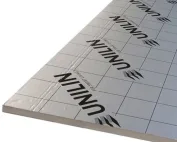
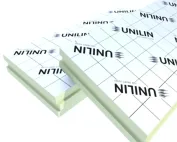
PIR insulation
Utherm Roof BM and roof covering: the significance of the glass fleece
At a glance
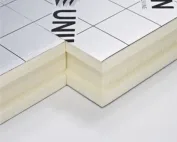
The choice of Utherm Roof BM is determined by the intended interaction between the facings and the other roof materials. The PIR core alone does not define the joining technology. System selection should take into account the correct side of the board, the parameters for the given thickness and the method of forming the first layer. Utherm Roof BM is a PIR board with different facings on its two sides. One surface is finished with a bituminised glass fleece. The terms “polyurethane boards” and “polyurethane foam” are broader than the precise PIR product designation. PIR boards should be shown in a cross-section that explains the two different surfaces of Utherm Roof BM: the bituminised and the mineralised one. When selecting the layers, the orientation of the bituminised and mineralised side of Roof BM must be established.
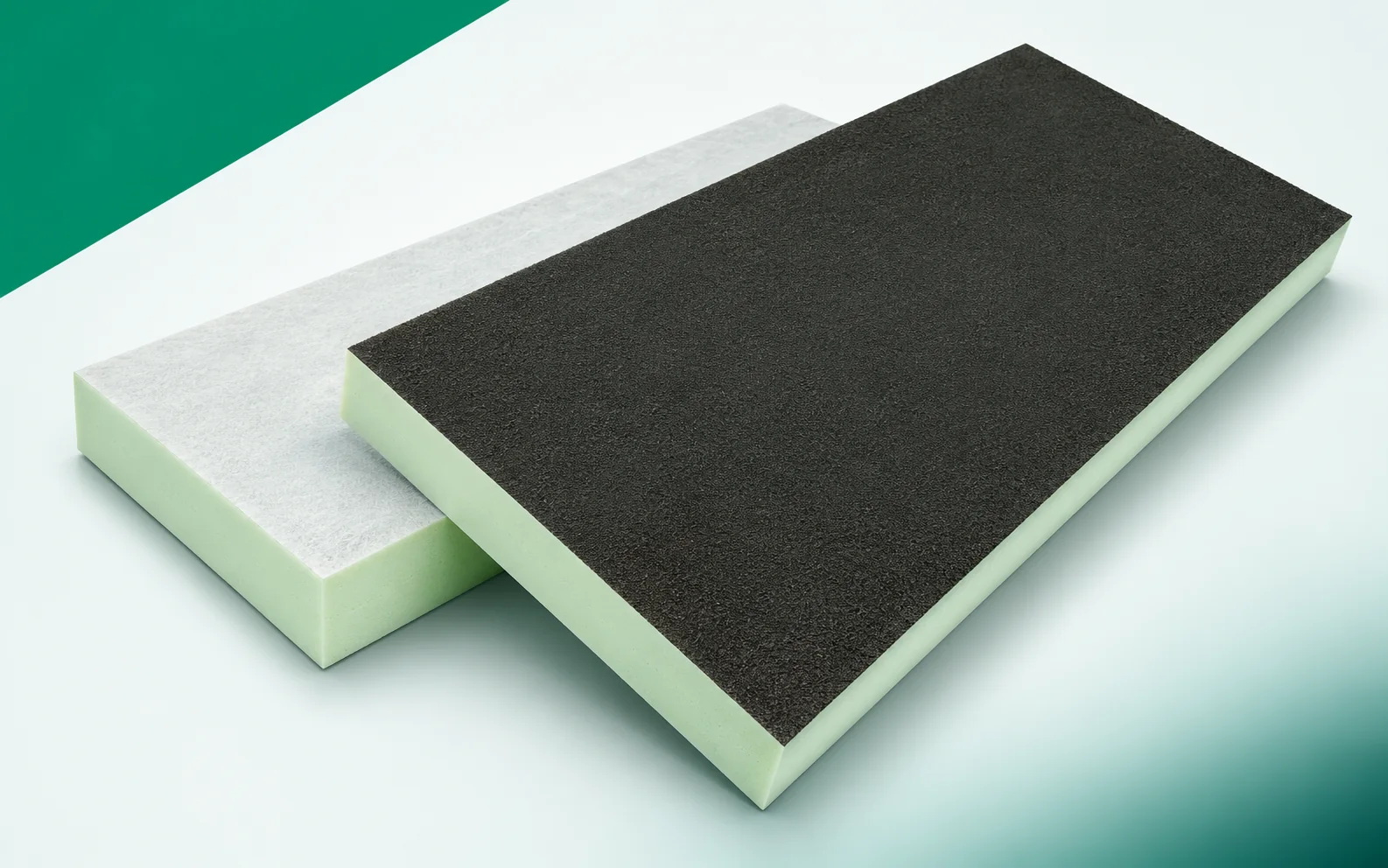
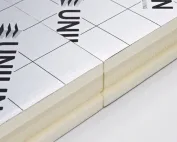
PIR Roof BM boards with two different facings
The individual components do not act independently, because the gas-permeable glass fleece must not be equated with an aluminium laminate. The adopted layer build-up should allow each face of the board to be assigned the correct contact with the adjacent layer. In the system description, show the description of the facings and the technology for making the connection with the roof covering, together with the position of the remaining components.
Lambda Roof BM dependent on thickness
The lambda of Roof BM changes with board thickness: 0.027 W/(m·K) for 30–70 mm, 0.026 for 80 and 100 mm, and 0.024 for 120–150 mm. When comparing two variants, compare a 100 mm board with a lambda of 0.026 and a 120 mm board with a lambda of 0.024 W/(m·K), instead of attributing to one thickness the result from another range.
Read the Roof BM parameters separately for each thickness under consideration. In d/λ, do not combine one board thickness with the thermal conductivity assigned to another range. Check the declared R_D: 3.80 for 100 mm and 5.00 m²K/W for 120 mm. Keeping these values paired allows thermal options to be compared without applying the best result to the entire product family. Then select the thickness and accessories appropriate to the assessed build-up.
Polyurethane insulation with straight edges
Before laying Roof BM, identify both surfaces: the bituminised glass fleece and the mineralised facing. Their position relative to the waterproofing must correspond to the chosen covering system. Then draw out the joints of the rectangular 1200 × 600 mm boards with straight edges. This sequence allows the orientation of the material to be checked before the fastening conceals the markings.
Before finalising the detail geometry, it is worth planning offset joints and Roof BM cuts at roof elements. The regular field does not describe all details, because a straight edge has no factory lap that could be matched in the adjacent row. The detail should allow continuous contact of the boards to be maintained and the layer to be correctly terminated at the edges. When checking the completeness of the system, take into account the joint layout, the support of the edge elements and the method of forming penetrations, and not only the core parameters.
Contact with the roof covering and the sequence of works
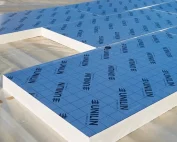
The bituminised side of Roof BM is in direct contact with the covering, so before laying the first layer the dryness and cleanliness of the surface and the adhesion must be confirmed. The fixing is checked separately in the central, edge and corner zones of the roof, and the choice of contact materials follows from the method of connecting the covering to this facing.
When selecting protective layers, the documentation of the first covering layer above Roof BM must be checked. The connection requires its own specification, since the presence of bitumen in the facing does not constitute permission for arbitrary torch work. The sequence of execution should allow compatible contact materials and the sequence of works to be selected for the actual roof. In the system documentation, indicate the type of adhesive or fixing and the surface preparation conditions, and check the compatibility of every contacting material.
CS150 and class F within the relevant scope
Assess the support of Roof BM using compression data: the declared stress is at least 150 kPa at 10% deformation. Note the reaction-to-fire class F separately. These parameters describe different behaviours of the board; they do not mutually confirm their compatibility or the fire resistance of the finished roof. Substrate and fixing solutions are also needed.
Before the system is approved, the result of the Roof BM test must be separated from the requirements of the complete roof covering. A single result must not be extended arbitrarily, because the compressive value and the reaction class describe different phenomena and do not prove any arbitrary load-bearing capacity. Consistent data will allow loads and fire protection to be assessed within the relevant scope. When selecting the layers, combine the product data with the supporting, fixing and system classification solution and with what will actually be installed.
Insulation with polyurethane: selection and quotation for Roof BM
The request for quotation should identify Roof BM by its full designation, thickness and waterproofing, because the addition of “PIR board” alone does not indicate the facings or the bonding side. The quotation for the complete system must therefore cover Roof BM in the selected thickness variant and with the correct side intended for bonding.
Within the complete scope of materials, it is worth linking the supply of Roof BM with the materials needed for a compliant covering. The scope should be established before installation, because the same name PIR does not mean interchangeable facings or an identical lambda. Defining the scope is intended to allow complete solutions to be compared once the required thermal insulation performance has been established. When comparing offers, show the full board designation, a description of the contact layers and the scope of work on the details, so that each relates to the same stage of readiness.
A case worth considering
If the covering is to be installed using heat, the name of the bituminised facing of Roof BM does not close off the choice of technology. The requirements of the entire layer assembly must be read. The method of making the first contact and the protection of the insulation are important. The rules from another product with a similar core must not be transferred. The correct assembly results from the documented interaction of the materials.
7 branches. Materials closer to your project.