Polystyrene and thermal insulation
Can every roofing membrane be in direct contact with EPS?
In brief
The roof membrane and EPS must be compatible as components of a single system. Some coverings require separation from polystyrene by a suitable layer. Others can work in direct contact in specific solutions. The choice is determined by the documentation for the specific membrane, as well as the method of fixing, the substrate and the fire requirements of the roof. Roof membranes are made from various plastics and have different compositions. There are also variants with a factory backing, reinforcement or additional layers. A similar colour and thickness do not prove the same compatibility with EPS. The exact product type must be checked. A general name for a material group does not replace the conditions of use for a specific variant. In some coverings, the problem is the contact of the membrane’s components with the adjacent material.
Why is the word membrane on its own not enough?
This is why the documentation may require a separating layer between the covering and the polystyrene. It should not be omitted on the basis of experience with another membrane. A roof performs over many years, so the assessment cannot rest only on the fact that no changes are visible after a few days.
What should you check in the roofing documentation?
The first question concerns approved substrates and insulation layers. The next covers the need to use a separating layer and its parameters. The documentation should also specify approved adhesives and methods of fixing. If the description does not clarify contact with EPS, it is worth obtaining an unambiguous statement from the manufacturer before purchase. A contractor’s assumption is not confirmation of compatibility.
Contact with existing roofing felt, bitumen and materials at details also requires verification. A roof after renovation may combine several such surfaces. The fact that a membrane is compatible with EPS does not settle its compatibility with every old layer. The design must resolve the actual arrangement across the entire roof slope area and at upstands, outlets and equipment bases.
What function does the separating layer serve?
A separating layer is intended to limit adverse contact between materials. In certain arrangements it may also be relevant for fire classification or surface protection. Not every nonwoven fabric fulfils the same functions. The type of fibres, the basis weight and other properties specified in the system matter. A random fabric is not a substitute for a documented layer.
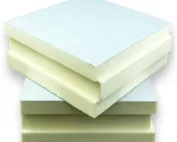
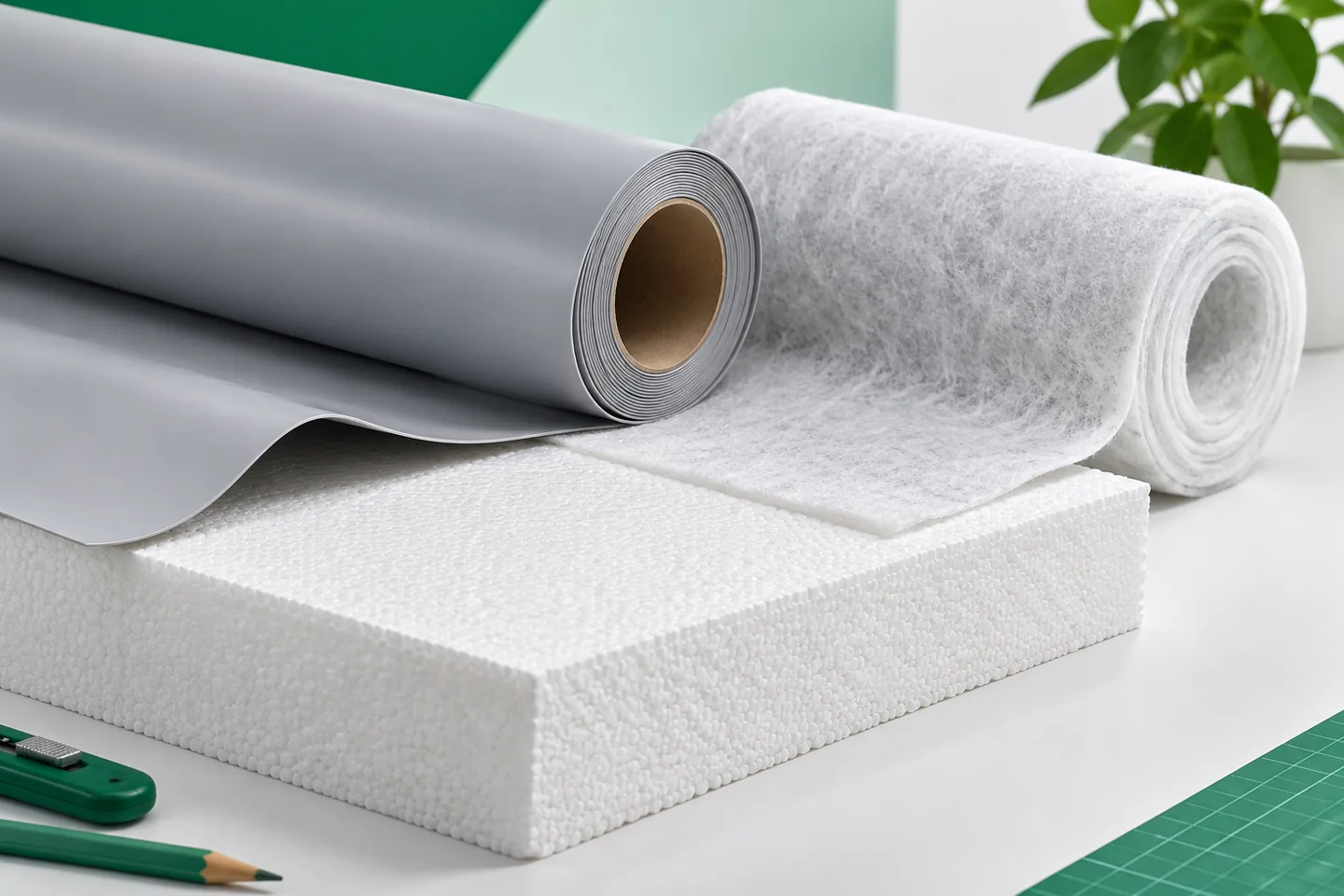
An example is the glass fleece intended by the manufacturer to separate specific PVC membranes from EPS and XPS. This does not mean that an identical fleece will suffice under every covering. Likewise, a layer factory-attached to the membrane does not always remove all requirements concerning the substrate. The documents for the given variant and intended use must be read, not just the description of the product family.
Can the membrane simply be glued to the boards?
Bonding requires the adhesive to be compatible with the membrane and the EPS. Some solvents can damage polystyrene. The product should be approved for the relevant application, and its method of application should comply with the instructions. Temperature, the condition of the surface and any evaporation time are important. The roofer’s word alone does not provide a basis for applying it directly to the polystyrene.
The connection must also transfer wind loads through all layers. The strength of the adhesive will not remedy a weak substrate or an unsuitable insulation surface. With mechanical fastening, the fasteners, the substrate and the roof zones are considered. The spacing must not be carried over from another building. A change in the method of fastening can affect the scope of the documented properties of the entire system.
What should be remembered when laying EPS?
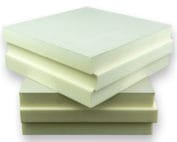
The boards should form an even, adequately supported substrate. Gaps, steps and damage can make it difficult to install the covering. The mechanical parameters must be matched to the loads, including service traffic. The membrane alone does not distribute arbitrary pressures. The board’s CS(10) parameter is not a permissible long-term load and does not replace verification of creep under permanent supports.
Before covering, the condition of the boards and the moisture in the system should be assessed. The thermal insulation should not remain unprotected for an arbitrarily long time. The organisation of the works and the protection of the edges of successive sections are important. The new membrane is to protect the roof, but it does not automatically solve the problem of water already trapped between the layers. In case of doubt, an assessment is needed before the roof slope is closed.
How can an unsuccessful material substitution be avoided?
Before accepting a substitute, compatibility with EPS, the required separating layers, adhesives and fixing must be checked again. The fire performance of the complete assembly must also be confirmed. The board’s reaction-to-fire class does not determine how the roof behaves under external fire exposure. A document relating to a different membrane or a different separating layer may not cover the new configuration.
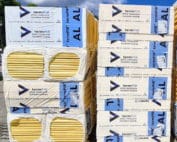
Expanded polystyrene is offered by manufacturers including Paneltech, Arsanit, Neotherm and Swisspor, among others. When selecting it for a membrane, what matters is the specific board and the intended assembly. In the order it is worth recording the required auxiliary materials together with the covering. This avoids a situation in which individually correct products arrive on site separately, but nobody has confirmed their use together.
7 branches. Materials closer to your project.