Polystyrene and thermal insulation
Is standard EPS suitable for an inverted roof?
At a glance
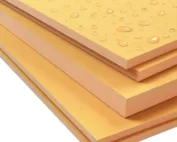
An ordinary EPS board described as suitable for roof and floor is not automatically suitable for an inverted roof. In such an arrangement the insulation lies above the waterproofing and may come into contact with water. A specific product intended for these conditions is required. However, this does not mean that every type of EPS is ruled out from the outset. In an inverted roof the waterproofing lies below the thermal insulation layer. The insulation and the subsequent layers protect it from some external influences. At the same time, the thermal insulation material is closer to rainwater. Rain can reach the spaces between the boards and the surface of the water-protection layer, depending on the system solution. These are different conditions from those beneath a sealed covering in a traditional roof.
What does reversing the order of the layers change?
Contact with water, deformation and the method of draining precipitation must be taken into account. Above the insulation there may be ballast, a terrace surface or a green roof system. Each of these variants adds requirements. Merely changing the order of the membrane and the polystyrene does not create a correct inverted roof.
Why is a roof marking not enough?
A roof-and-floor designation often refers to insulation working in a sheltered system. It does not prove approval for permanent or repeated wetting. The exact applications stated by the manufacturer must be checked. If the document does not list a suitable system, its scope should not be extended on the basis of a similar lambda value.
Likewise, the terms hydro and foundation are not unambiguous confirmation of suitability for an inverted roof. Products may differ in their declared water absorption and other properties. Comparing the colour of the boards is not enough. Documentation for the specific variant and for the layer build-up in which it is to be used is required.
What data must be checked?
What matters is the material’s resistance to the water conditions envisaged in the design. Various water absorption tests can be found in the documentation, so identical parameters must be compared. Data on durability under those conditions are also important. A low WL(T) value alone does not describe all the effects occurring on the roof.
Added to this is the load from ballast, surfacing and users. The CS(10) parameter is not a permissible long-term load. Creep and localised pressure, for example under terrace supports, must be assessed. The material should retain its properties under the intended use. It should not be assumed that the same board will be suitable under loose gravel and under heavy planters.
Can EPS be an approved solution?
There are special grades of EPS on the market for which manufacturers specify use in inverted roofs. Their suitability follows from the documentation, not from belonging to the polystyrene group as such. Before purchase, the conditions of use and the required layers must be checked. Such a product must not be replaced with an ordinary board solely on the basis of a similar compressive class.
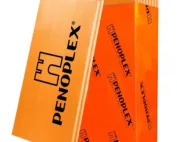
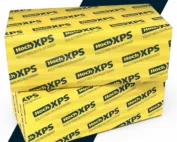
XPS, i.e. extruded polystyrene, is often found in inverted roofs. It is a different material from EPS and has its own documentation. Here too, it cannot be assumed that every XPS board is suitable for any solution. Selection should take into account the thickness, mechanical properties, water-related parameters and the scope of application of the exact product.
Include water in the thermal assessment
Water moving beneath the insulation can affect the roof’s thermal balance. The result therefore cannot always be obtained by simply adding the resistances of the dry layers. The calculations require the rules specific to the adopted inverted solution. The U-value from an identical insulation thickness in a traditional system should not be copied without verification.
Care must also be taken to ensure that the drain is unobstructed and that the layers limiting adverse water flow, if the system provides for them, are in place. They are not replaced by a random foil laid over the boards. Its inappropriate selection can hinder the drainage of moisture. The detail at the outlets should take into account the actual course of the layers, not merely the surface visible from above.
How do you make the decision when buying?
In the enquiry, it is worth stating explicitly that the material is to work in an inverted roof. Documentation confirming suitability and installation conditions should be expected. The offer should specify the exact grade, not just the EPS or XPS group. When substituting a product, the parameters and the compatibility of the entire system must be checked again.
The manufacturers of EPS include, among others, Knauf Therm, Austrotherm, Swisspor and Paneltech. However, naming a brand does not mean that all of its boards are approved for this application. The specific data and the project are decisive. A correct choice may involve a special EPS or a suitable XPS, but an ordinary roof-and-floor board should not be placed over the waterproofing without confirmation.
7 branches. Materials closer to your project.