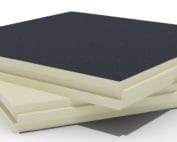
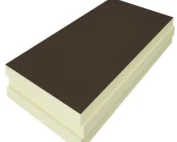
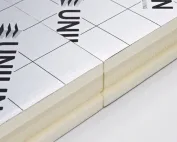
PIR insulation
PIR boards in a roof assembly: identifying the right type
At a glance
PIR boards can perform an important thermal function in a roof, but they do not form it on their own. The choice of variant must be linked to the substrate, the waterproofing and the method of fixing. A cross-section through the entire assembly explains the most. It shows what task each layer has. Polyurethane foam can also mean a spray-applied material or an gap-filling foam. Spray application requires identifying the cell structure and the execution conditions. Foam for filling gaps performs a different function from a board. None of these materials should be regarded as a substitute solely on the basis of the word polyurethane. The rigid core is only one of the elements in assessing a roof board. Polyurethane foam restricts the flow of heat, but it does not automatically take over the function of the sheathing and the covering.
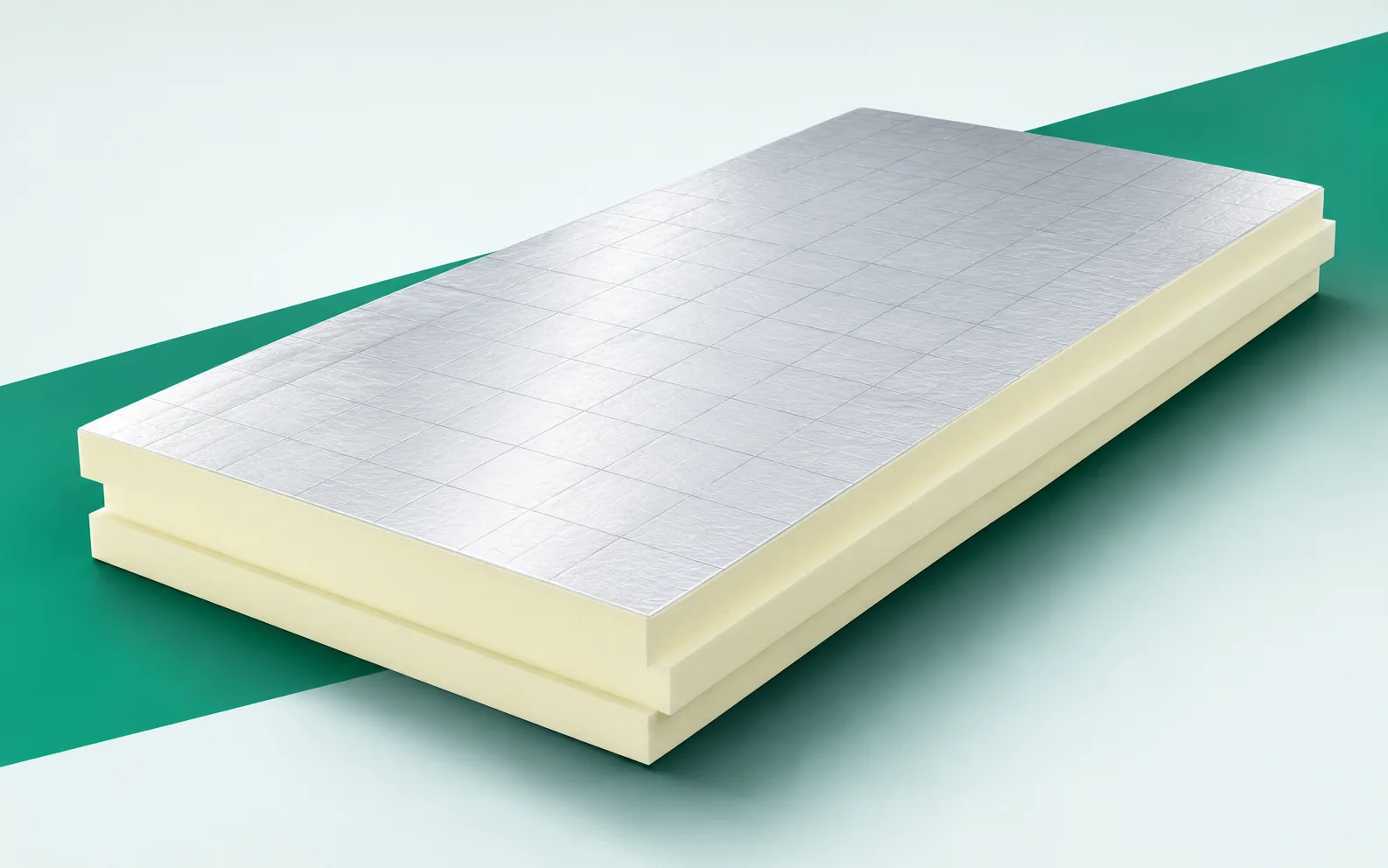
The PIR core and the meaning of the name
This distinction matters when comparing with a sandwich panel with steel facings. A similar name for the insulation material does not create the same structural possibilities. You must first establish what type of product has been specified in the roof documentation.
The facing changes the way it is used
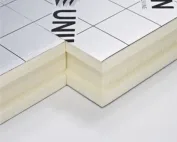
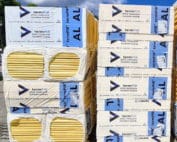
The facing determines what the PIR board can work with in the roof. Aluminium, a multi-layer aluminium laminate, glass fleece or a composite board with another material are different variants, not a matter of appearance. It is precisely the surface that determines bonding with adhesive, membrane or finishing layer, so it is selected for a specific assembly, not the other way round.
With waterproofing, contact with the upper surface of the insulation is crucial. The facing may require a specific method of bonding, fixing or separating the layers. Do not transfer a detail from another roof on the basis of the core’s appearance. Check the exact product and the selected membrane or roofing felt. If the description permits a specific assembly, the conditions of that permission must be maintained. The silver surface alone does not explain them sufficiently.
Why a smaller thickness may be sufficient
The thermal insulation of a homogeneous layer is determined by its thickness and its thermal conductivity lambda. The lower the lambda at the same thickness, the greater the thermal resistance. For many boards with a suitable facing, the declared value is 0.022 W/(m·K). However, this is not a parameter of all PIR variants.
Roof thickness also proves relevant at the parapet and at outlets. In these places, saving a few centimetres can simplify the conversion, but it does not determine the height of all flashings. The fall and the remaining layers must be incorporated into the cross-section. The local insulation thickness may differ from the value at the lowest point. That is why choosing the material on the basis of a single height measurement can be misleading, particularly when modernising drainage.
The application depends on the specific product
Polyurethane insulation is not a self-supporting load-bearing element merely because the board is rigid. Support and load transfer must be provided for. The thermal insulation board itself must not be confused with a structural panel or with a sandwich panel with steel facings. These are different products.
The upper surface of the roof must accommodate the intended use. Movement during installation, later servicing and permanent equipment are different situations. It is not enough to state that the board is hard to the touch. Polyurethane insulation should be assessed within a system that transfers specific loads. The design may provide for suitable bearing layers or traffic zones. These solutions should not be improvised after the waterproof covering has been completed.
The edge helps, but does not replace care
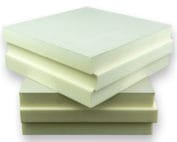
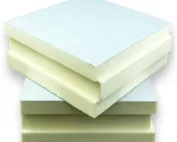
A straight edge, a rebated edge and a tongue-and-groove joint are separate solutions of a specific board variant, not decorative features. A rebated edge and a tongue-and-groove joint are not the same thing. It is worth inspecting the edge detail drawing before purchase, especially when a new delivery is to be joined with material already laid on the roof.
The edge joint affects the continuity of the thermal layer. However, it does not replace the detail at a service penetration. There, elements usually have to be cut and other functions of the building envelope recreated. A well-planned layout shows the run of the joints and the non-standard locations. The installer can then prepare the appropriate sections. When the arrangement arises by chance, a difficult detail often falls at the end of the works and receives too little attention.
Parameters worth checking alongside lambda
Depending on the application, compression behaviour, reaction to fire and moisture-related properties must be checked. The number next to the CS symbol is not a ready permissible service load. Likewise, the reaction-to-fire class of the board alone does not describe the fire resistance of the complete floor or roof.
Acceptance of the material on the roof should take storage conditions into account. Wet packaging or a damaged edge require inspection, even when the core itself has low water absorption. This property must not be taken as permission for arbitrary storage. The condition of the substrate before laying is also checked. Trapping moisture between layers can create a problem that neither a good lambda nor the correct board name on the invoice will solve.
How to compare complete roof systems
On a roof with planned waterproofing, the choice begins with the compatibility of the entire system. A board variant with a suitable surface is needed. Only then are thickness and format compared. This means there is no need to look for a random adhesive for materials already delivered.
Before choosing, record the build-up from the structure to the layer exposed to the weather. For each item, state its function. Polyurethane boards are primarily responsible for thermal insulation, but their selection affects the execution of the adjacent layers. Polyurethane insulation should therefore be described together with the perimeter and drainage details. An orderly cross-section makes it easier to assess alternatives. It also allows you to quickly notice when a supplier’s proposal requires changing the entire solution.
7 branches. Materials closer to your project.