Insulation and energy
How to choose the right membrane for each roof layer
In brief
Roofing membrane should be chosen primarily by the function it is to perform at a specific point in the building envelope, not by its trade name. Before buying, mark on the roof section where the material will be laid: under metal sheeting it may be an underlay, while on the warm side it usually controls water-vapour ingress and helps maintain airtightness. On a flat roof, membrane may mean the final waterproofing. Include a description of the structure, covering and substrate, plus how the interior will be used, in your enquiry.
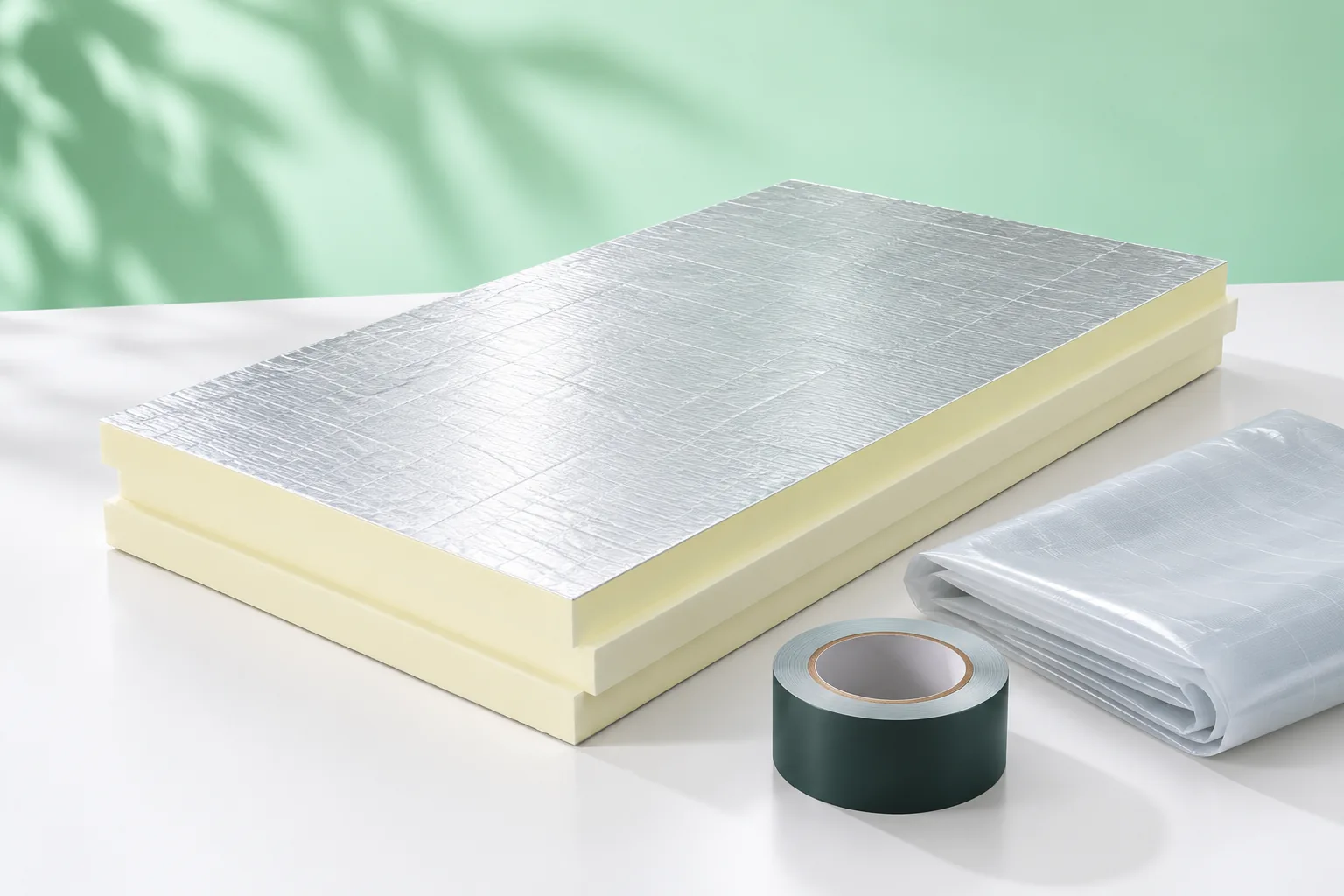
What is the purchased membrane supposed to protect?
Before purchase, it is worth indicating on the roof section where the material is to be laid. If it is under tile-effect metal roofing, it may be the underlay layer. If it lies on the side of the heated room, it usually has to control the ingress of water vapour and help maintain airtightness. These are different tasks.
On a flat roof, the term membrane may mean the final waterproofing exposed to the weather. It cannot be replaced by a lightweight film intended under an external covering. Therefore, asking for a ‘good roof film’ is too general. What is needed is the type of construction, the full layer build-up and how the interior is used.
How to understand the Sd value?
Sd describes the equivalent air layer thickness with the same resistance to water vapour diffusion. A lower value means easier passage of vapour through the material. However, it is not a universal scale of quality. A low Sd may be desirable under the covering, while greater resistance is needed in the layer on the interior side.
The value should be considered together with the whole roof. With a tight covering or particular humidity conditions, a calculation of the component’s performance may be necessary. A film should not be chosen solely because the packaging states a very high number of grams of vapour passing through a square metre in a given time. The results also depend on the test method and conditions.
What to check in an underlay membrane?
Resistance to water penetration, mechanical strength and temperature range are important. It must be established whether the material can be laid on full boarding and whether it may come into contact with insulation. Under a dark covering the temperature may be high, so the choice should take into account the conditions specified by the manufacturer.
Grammage is useful information, but it does not describe all properties. A heavier membrane does not always have better resistance to ageing or water. The declaration and the instructions must be checked. The permitted exposure time before laying the covering is also important. UV resistance does not mean that the film may be left as a permanent roof.

When is a gap needed?
In a typical arrangement with trapezoidal steel sheet, the space above the membrane allows the underside of the covering to be ventilated. It is formed by counter-battens, and its operation depends on an unobstructed inlet and outlet. A high vapour-permeability membrane does not remove the need for this space. The transmission of vapour through the material and the movement of air in the channel are different phenomena.
With full boarding and a layer of high diffusion resistance, an additional gap on the insulation side may be required. The necessity is determined by the roof assembly. All voids should not be filled with insulation without checking. An apparent improvement in thickness may in this way cut off the intended drying path of the structure.
How do you achieve airtightness from the inside?
A vapour control layer works properly when its laps, edges and penetrations are connected in accordance with the system. A loosely hung sheet with holes at cables does not provide predictable protection. Connections to the wall, roof window and chimney require particular attention. Adhesive materials must be compatible with the substrate.
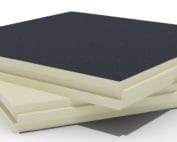
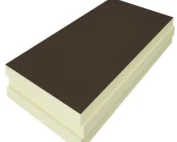
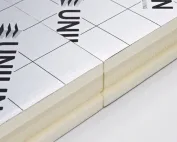
It is worth planning an installation space beneath the sealing layer. This makes it easier to route cables without further penetrations. With aluminium-faced PIR boards, it must be checked whether the given assembly can perform the designed sealing function. The mere presence of a film on the board does not guarantee the tightness of the entire surface and its perimeter.
Why are accessories part of the system?
Tape on laps, sealing under the counter-batten and the collar at a penetration perform different tasks. They cannot always be replaced by one universal adhesive. Adhesion, ageing and performance in moisture matter. The substrate must be prepared in accordance with the recommendation, sometimes using a suitable primer.
A good membrane adhered to dusty masonry may detach despite the high parameters of the material itself. The installation temperature is also important. A tight connection should accommodate slight movements of the structure rather than being constantly stressed. Details should be inspected before they are covered by insulation, covering or loft fit-out.
How do you order the right material?
The enquiry should include a description of the roof, the type of covering and the substrate. It is worth stating whether the loft will be heated and whether there is elevated humidity in the building. The seller should indicate the specific product and its application instructions. The category name alone is not sufficient to confirm compliance.
The specified accessories should also be purchased, and laps should be included in the material quantity. The roll area is not equal to the area of a tightly executed roof. It is good to keep labels and product documentation. They will make it easier to check the assembly if, during renovation after years, new layers need to be connected to existing ones.
7 branches. Materials closer to your project.