Roof coverings
Tile-effect metal roofing or clay tiles – which suits the roof?
In brief
The choice between metal roofing tiles and ceramic tiles should follow from the roof design and a full quotation, not from appearance or the price of a single element. Above all, check the actual weight of the covering per square metre, because ceramic is considerably heavier than typical metal sheeting, and comparing individual pieces can be misleading. For a renovation, verify the existing roof structure and supports; in a new build, match the structure to the chosen system. Also consider roof pitch, ventilation and the requirements for the underlay.
What does the weight of the material change?
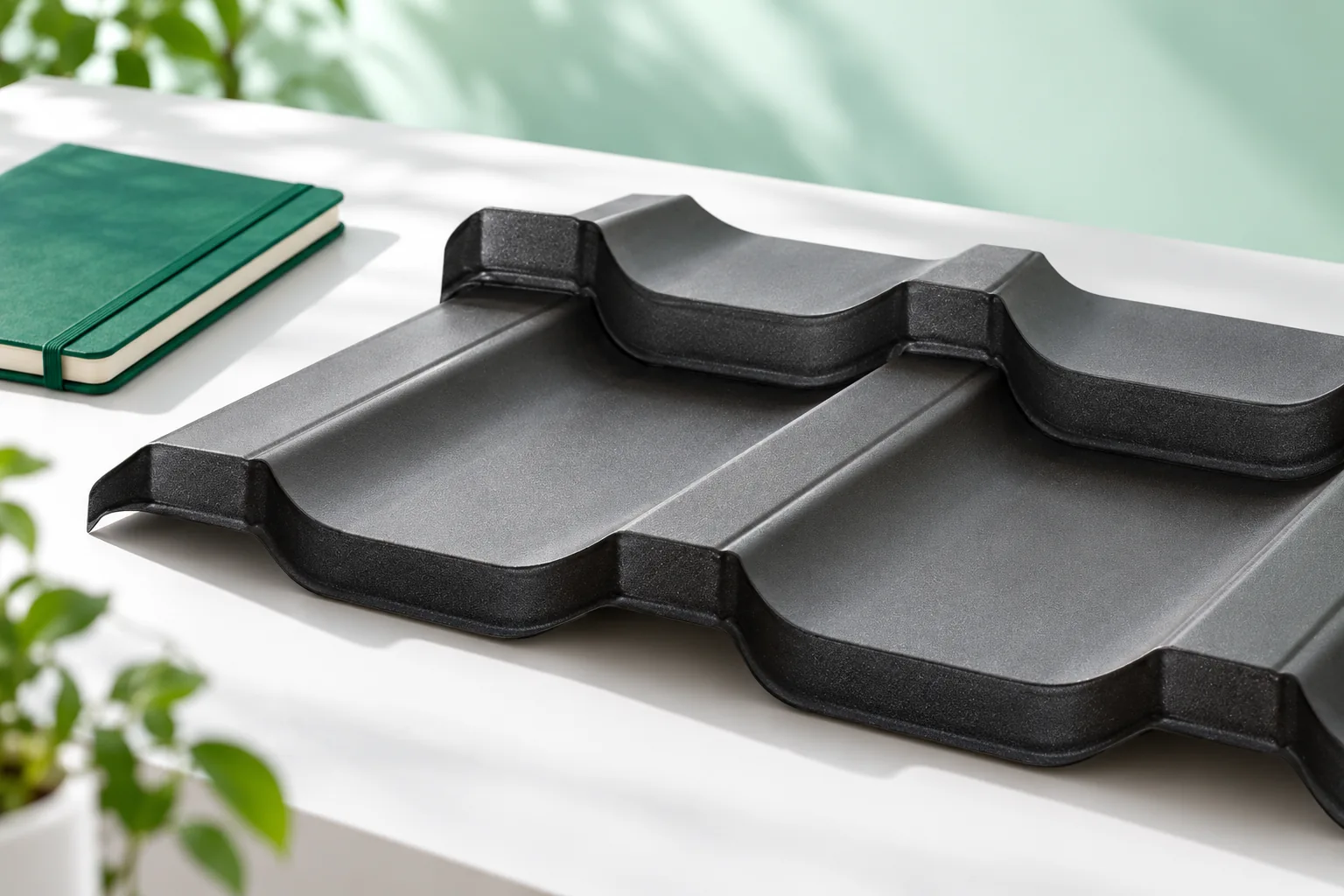
Clay tiles are considerably heavier than typical tile-effect metal roofing. The actual weight per square metre depends on the model and the number of tiles needed for coverage. For metal, also check the unit stated in the datasheet. Comparing the weight of individual elements is misleading because one sheet covers a different area than one tile.
In a new house, the structure can be designed for the chosen solution. During renovation, the existing roof structure and supports must be checked. A change from lightweight to heavy covering should not be based on an assessment of the appearance of the timber from the attic. Conversely, using metal does not eliminate the problem of damaged connections. In every variant, all loads count, including snow and wind.
How does the roof geometry affect installation?
On simple roof slopes, large tile-effect metal sheets can efficiently cover successive roof strips. Smaller modules make handling easier at obstructions. Clay tiles require laying many individual elements, which offers different possibilities for fitting and replacement. However, work efficiency also depends on the crew’s experience and access to individual locations.
Roof valleys, dormers and corners require cutting in both systems. It is worth comparing material schedules rather than assuming that one type always produces less waste. With clay tiles, edge elements and accessories matter. With metal, sheet cutting and the shape of flashings are additional factors. A small roof with a complex geometry can be labour-intensive regardless of the covering chosen. Before quoting, also mark the locations requiring service access. Steps, walkways and their fixings must match the chosen system, so it is worth including them in both variants from the start.
Does a traditional look require clay?
Clay tiles have their own character derived from the material, shape and finish. Tile-effect metal roofing can echo a traditional rhythm but is not the same product. Up close, differences are visible in the edges, joints and the way light is reflected. It is not worth making a decision solely on the basis of a photograph taken from a great distance.
If aesthetics matter greatly, look at samples and a similar completed project. Compare roofs of similar scale and pitch. A high, expansive slope shows the material differently from a low garage. Also check the ridge, eaves and chimney. It is often the details that determine the perception of the whole house more than the surface colour itself.

How to compare comfort and technical requirements?
Acoustics and thermal insulation should not be attributed solely to the top layer of the roof. The weight of the covering matters, but comfort depends on the entire assembly, including insulation and the attic build-up. If you care about quiet during rain, an assessment of the building envelope is needed. Simply stating that clay is heavier does not describe all sound transmission paths.
In both solutions, the roof pitch and the requirements for the underlay must be checked. Ventilation and the correct execution of penetrations and terminations are important. The permissible parameters of one model must not be transferred to an entire group of materials. The technical data sheet and installation instructions should correspond exactly to what will be installed.
What should a price comparison include?
Add the edge elements, ridge tiles, fixings, flashings and necessary accessories to the base price of the tiles. For the metal sheet, calculate the effective coverage, waste, fasteners and the complete set of trims. In both variants, include transport, scaffolding, substrate preparation and labour. A unit price per square metre does not give the full picture.
For a renovation, dismantling and any necessary repairs are added. For a new building, it is worth checking whether the comparison covers the same roof layers. If one cost estimate includes an additional covering and the other does not, the reason must be clarified. The difference may result from the system requirements or from an incomplete scope. Without such a breakdown, the comparison will be misleading.
How should future repairs be considered?
A single tile and a section of tile-effect metal roofing are replaced in different ways. The availability of a replacement, the location of the damage and the layout of the covering affect the scope of work. It is worth keeping the documents and the model designation. After years, a new element may differ in shade from the old ones, regardless of whether it is made of ceramic or steel.
Every roof requires inspection of the details and drainage. Metal additionally requires monitoring of the coating and edges, while clay requires monitoring of the condition of individual tiles and their position. Choose a system suited to the project, the appearance and the budget for the complete installation. Long durability is not guaranteed by the material name alone if the support, fixings or proper flashings have been omitted.
7 branches. Materials closer to your project.