Metal fence pickets and fences
A dark roof and metal pickets: keeping the frontage visually balanced
In brief
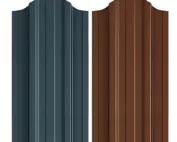
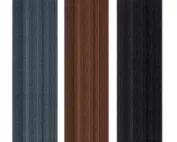
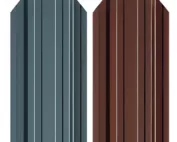
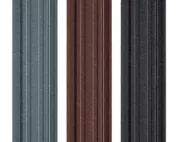
A dark roof is a strong element of the building form. If dark windows, a garage and a fence are added to it, the front can look very uniform. This is not always a problem. It is important that such an effect is intentional. Metal fence pickets allow rhythm and gaps to be introduced between dark surfaces. This makes it possible to reference the roof colour without creating a heavy wall from the street. However, the overall composition decides the result, not the choice of an anthracite coating alone. The roof colour does not have to be the only point of reference. Sheet-metal pickets can be matched to the windows and doors, the flashings or the garage door. It is worth choosing one dominant relationship. Trying to match the fence to several different shades at once often ends in an unclear compromise. It is better to define what is to be shared and what may consciously differ.
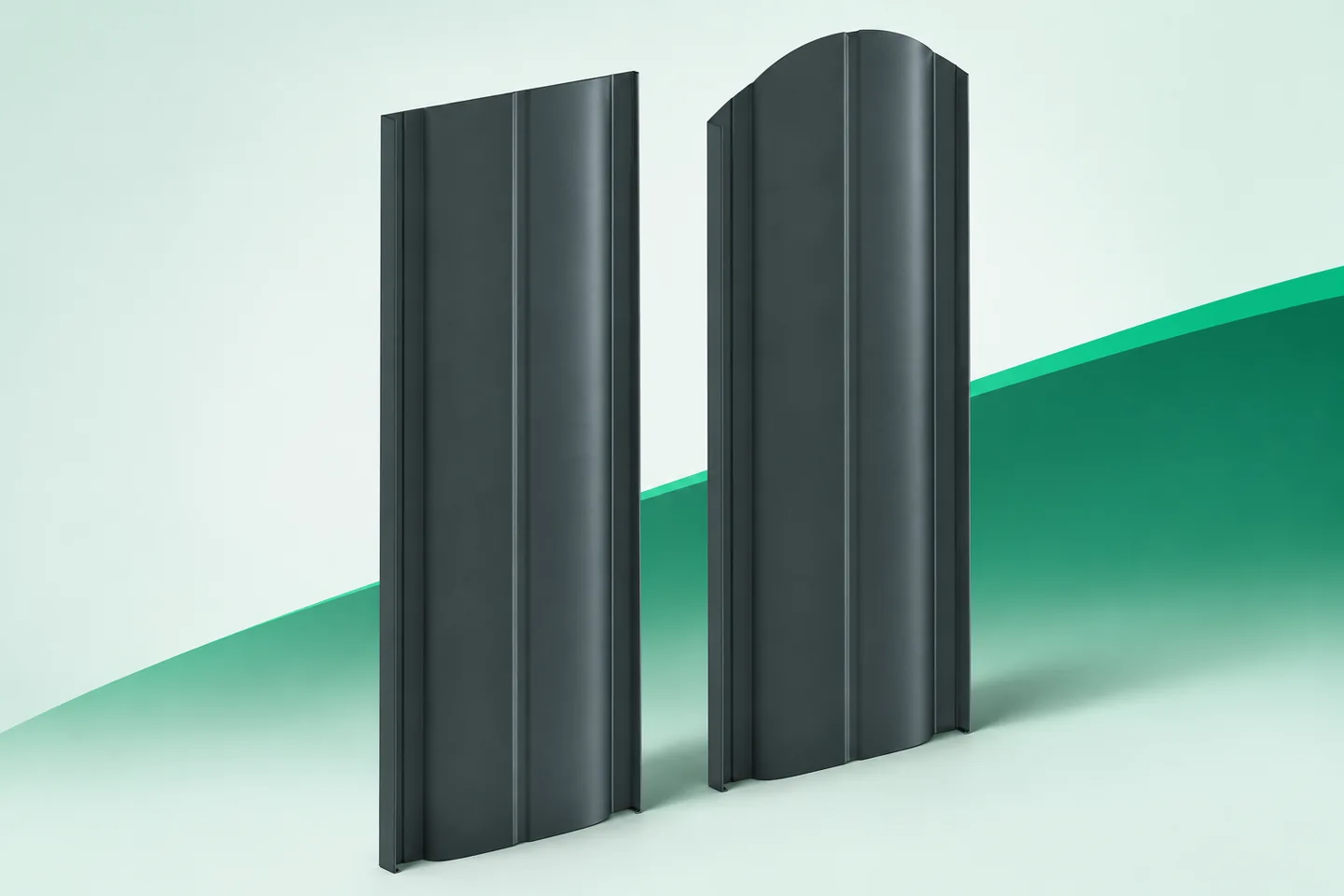
Choose the element the fence references
View the house from the place where you most often see the whole front. The roof is high and usually at a different angle to the light than the fence. An identical colour code will therefore not always give an identical appearance. The narrow pressings of the metal fence pickets also create shadows. In practice, the match of the overall tone and gloss is often more important than the apparent equality of colour on screen. Take a photo of the entire elevation and mark the planned extent of the dark infill on it. Such a simple sketch helps assess the share of the fence in the view of the house. However, it is not intended for faithfully comparing the shades of materials.
Break up the dark surface with gaps
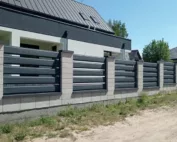
Individual metal fence pickets create a different effect than a full sheet. The gaps show the garden and break up a uniform surface. A larger clearance can visually lighten the front, but at the same time it limits the screening of the property. It is therefore worth determining the need for privacy before choosing the spacing. It should not be decided only after seeing the finished panel.
The width of the picket and the gap should be assessed together. A narrow profile with a small gap does not necessarily look lighter than a wider profile spaced more loosely. Prepare a drawing of the entire field, then a sample of several elements. View it also at an angle. Such a view shows the depth of the profile and can change the assessment of the openness of the fence.
Watch out for a high, dark base
If the roof and the infill are dark, a massive plinth in a similar colour further reinforces the front. It does not have to be abandoned, but it is worth checking the proportions. A light or neutral base can create a different effect. A low plinth leaves more space for the rhythm of the pickets. The decision is best assessed on the view of the house, not on separate material samples.
The total height of the fence includes the foundation, the clearance and the length of the visible picket. These values must be considered together. The lower edge of the sheet must not rest on the concrete or be buried in soil. The space at the base is of practical importance, not only aesthetic. It facilitates inspection of the surface and separation of the material from a damp environment.

Match the gloss level to the other surfaces
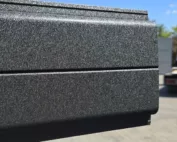
Matt sheet-metal pickets give a different perception than glossy ones. Gloss emphasises reflections and the variability of light. Matt reduces distinct reflections but does not automatically mean greater durability. Protection is determined by the type and quality of the coating system. The visual finish and performance parameters must be checked separately.
Compare a real sample next to the elevation and the garage door. View it vertically, because that is how it will perform on the fence. With dark colours, a minor difference in texture can be more pronounced in sunlight than in shade. Also check the back side. From the garden, not only the colour of the pickets is visible, but also the crossbars and connections.
Consider a calm contrast of materials
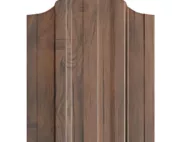
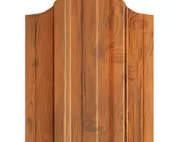
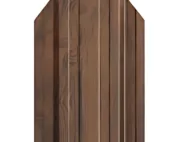
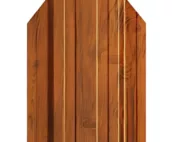
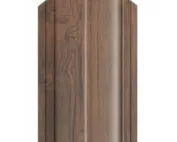
Not every house with a dark roof needs an identically dark infill. Sometimes brown or a chosen wood-effect finish works better. Such a choice must be set against the actual colour of the façade. Warm brick, cool render and timber create different backdrops. There is no single coating that will be best for all these materials.
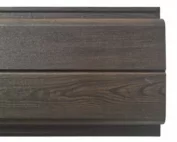
With a wood-effect finish, pay attention to the scale of the pattern and its direction. Metal fence pickets imitating wood do not thereby become wooden boards. They have a different geometry, edges and way of reflecting light. It is worth assessing a sample at a length showing more than a small fragment of the grain. This will help avoid surprises once the pattern is repeated across many elements.
Approve the set before ordering the whole front
The choice should cover colour, gloss, profile, end finish and spacing. Each of these features affects how the fence is perceived. If decisions are made separately, it is easy to end up with an effect that is heavier or more decorative than planned. It is well worth preparing a single description of the variant together with a sample view. This makes it easier to talk to the contractor and to check the delivery.
A dark roof and metal fence pickets can form a coherent, calm front. This does not require copying every colour in an identical way. More important are proportions, gaps and the relationship to the plinth. The final choice must still be combined with the right construction and the conditions of the material. Then the aesthetic decision leads to a fence that looks good both from the street and from inside the property.
7 branches. Materials closer to your project.