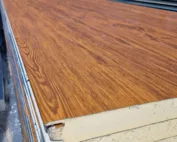
Costs and purchasing
How can you recognise a well-prepared supplier of panels and sheets?
Key points in brief
Warehouse size tells you little about how smoothly an order will go. A supplier should be able to identify the material, confirm the batch and say exactly what the delivery includes. Ask the same questions of a small depot as you would of a large distribution centre. For sandwich panels, look for the intended use, core, thickness, facings, coating and cover width. For trapezoidal steel sheet, check the profile, actual steel thickness, cover width and which face is intended to be exposed. Labels such as “insulated” or “for roofs” are too vague to check against the drawings.
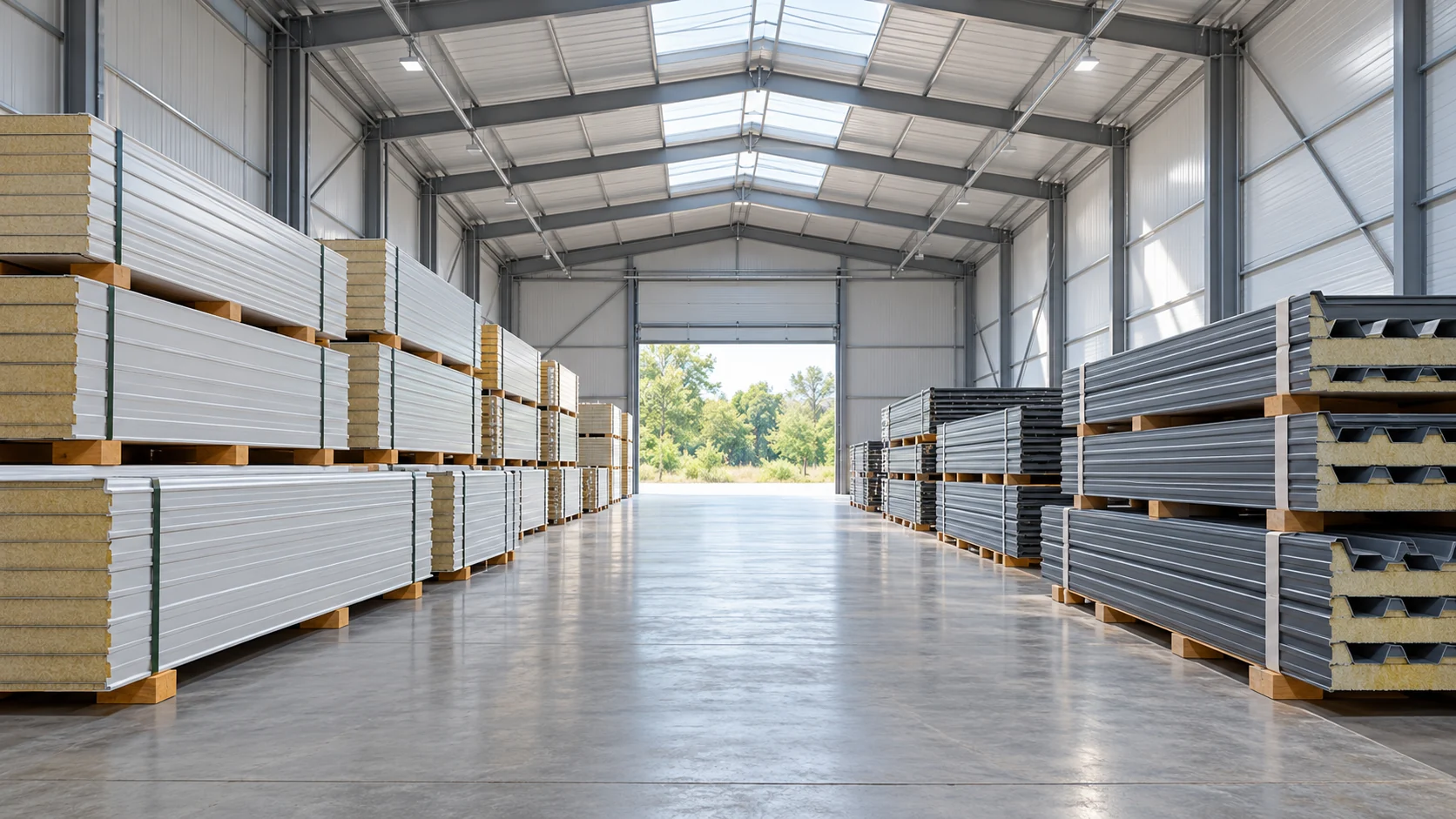
Can establish exactly what they are selling
The supplier should point to the correct documentation and not transfer parameters between unrelated products. The core class is not the class of the finished panel, and the lambda value is not the U-value of the whole wall. A reliable answer sometimes requires checking the data. An immediate promise without asking about the configuration is not a technical advantage.
Separates sales advice and design
The salesperson can help gather variants and documents, but the design of the structure and loads requires a proper assessment. If a universal support spacing is proposed without information about the building, it is worth asking for the basis. The length of the panel in stock does not determine what span it can safely cover.
Good sales contact makes it easier for the designer to talk to the technical department. It allows the colour variant, the type of support or the requirements for connections to be checked. It should not replace these agreements with the assurance that similar materials are often used. For the investor, this means fewer changes on site and clearer criteria for accepting the delivery.
Prepares a consistent schedule instead of a lump sum
The order should have separate items for walls, roof, flashings and fixings. Each requires a quantity and a unit. Some elements are billed in m², others in linear metres or pieces. A lump-sum price for the whole set without an itemised list makes it harder to check for shortages later and to compare an alternative.
For two construction stages, establish whether the batch for the later façade will have the same shade and profiling. The possibility of buying a similar colour does not guarantee an identical appearance. Also ask about the compatibility of the seams. Even a wide range of many panel types does not mean they can be mixed freely within one wall or roof slope.
Describes stock goods and second grade
The current list should state the pieces, lengths and condition of the batch. For outlet material, the reason for the reduced commercial grade is required. Photos should show the feature the buyer is accepting, not only an attractive section of the cladding. Establish which properties are confirmed and for which applications the material can be considered.
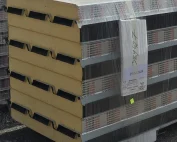
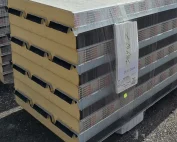
In the warehouse, pay attention to how the sheets are supported, protection from water and the possibility of inspecting the ends of the panels. You do not need to dismantle stacks yourself or step between unstable packs. Inspections are organised safely with staff. Visible order is helpful, but product assessment is still based on specific data and inspection.

Agrees the actual delivery arrangements
Confirmation should cover the address, date, load dimensions and method of unloading. Important is access for a long vehicle and a prepared place to set down the packs. Delivery “to site” does not always mean bringing the material into any location. It is worth establishing the scope of the service before the vehicle is dispatched.
If installation takes place in stages, the packing order can reduce unnecessary moving of panels. It is also necessary to agree a contact in case of delay. In a hypothetical workshop extension in Sierpc, lack of space on the yard may favour two deliveries. Their combined cost must be compared with storing the entire batch from the start, without assuming that one variant always wins.
Leaves a clear record of the agreements and how to report a problem
In the documents, keep the approved specification, prices and reservation rules. Establish the deadline for reporting visible discrepancies and how they are to be documented. The batch number and product identification help clarify the situation. A verbal assurance that “we’ll sort everything out” is less useful than a clearly described process.
A well-prepared purchase is not about obtaining the greatest number of assurances. It is about the ability to compare the promise with the delivery. Before choosing a supplier, check the completeness of the data, the answers to technical questions and the scope of extras. In this way you will assess whether the service matches the needs of the investment, regardless of the scale of the sales point and its advertising slogans.
Short answers
Is the centre with the largest warehouse the best choice?
This cannot be assessed from the size of the yard. More important is matching the batch to the project, product identification, completeness of extras and agreed logistics.
Should one company supply all types of panels?
This may simplify organisation, but it is not a goal in itself. Most important remains the compatibility of components and clear responsibility for each scope of the order.
7 branches. Materials closer to your project.