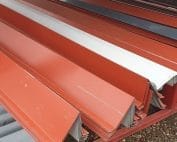
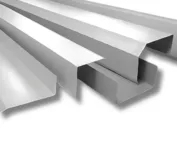
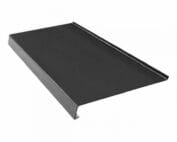
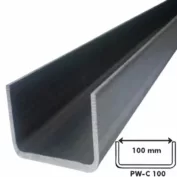
Flashings
Inspecting flashings on a steel building when several trades share the work
In brief
Roofs and walls made of sandwich panels are often erected in parallel with the installation of gutters, doors and services. Flashings connect the scope of these works. It is easy then to overlook a small element or to cover a joint before inspection. A well-planned handover covers successive stages, not just the finished façade. It allows checking what will no longer be visible once the works are complete. It is worth starting the review from the lower part of the walls. Starter profiles and plinth flashings are checked before subsequent layers are closed. The next groups cover corners, openings, eaves and the ridge. Such an order is clearer than a single list of elements without their location.
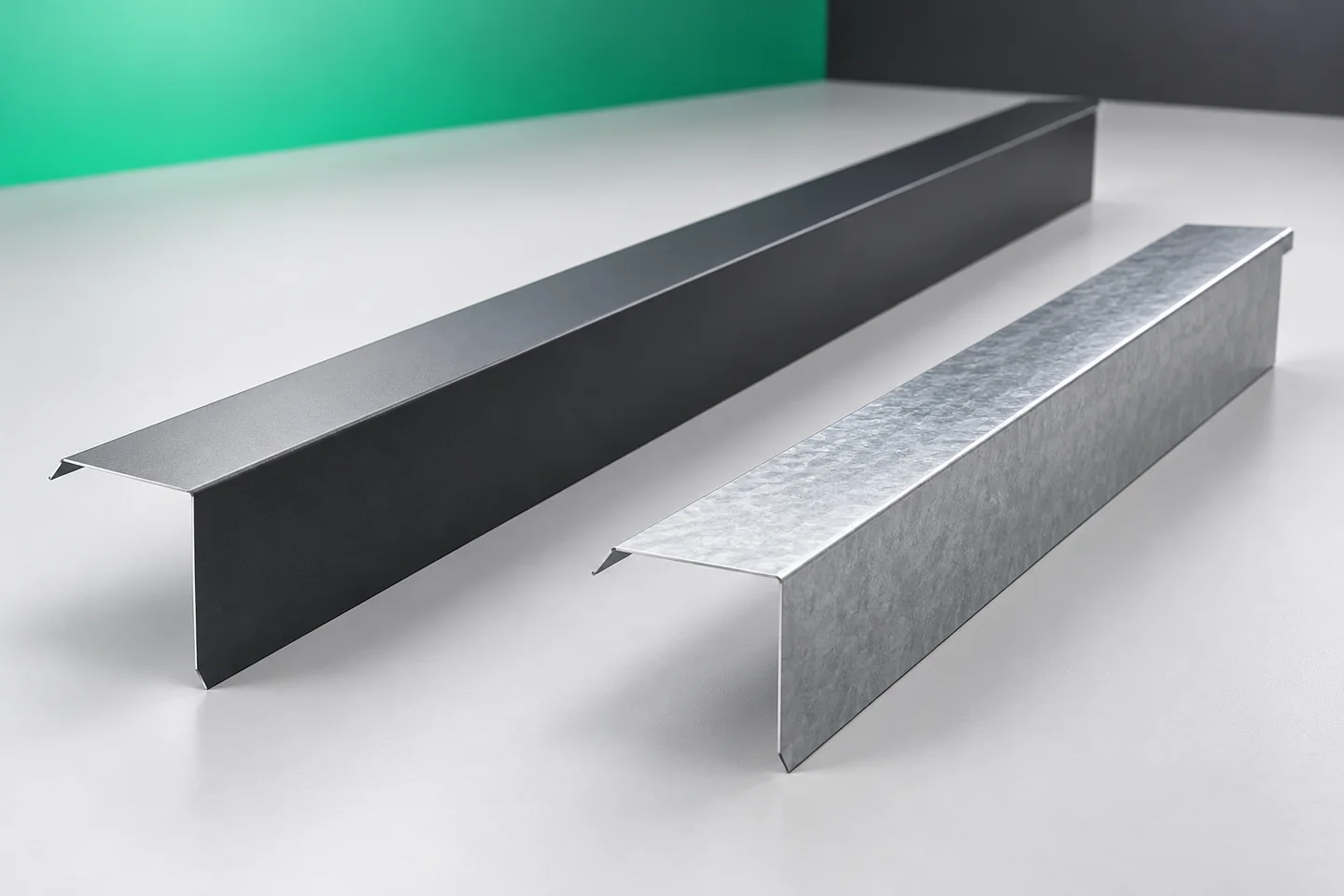
Divide the inspection by building locations
Ridge caps and verge flashings must be marked on the roof plan. Gutter aprons are assigned to specific eaves sections. Chimney flashings and non-standard sheet metal flashings should have separate items. During handover, the exact location of a concern can then be recorded instead of describing it in general terms.
Determine who prepares each joint
Where the roof meets the wall, the tasks of several contractors can overlap. It must be defined who prepares the substrate, carries out the sealing and installs the flashing. Without this, a finished element can cover up unfinished work by the previous team. Appearance alone will not reveal a missing layer.
It is worth agreeing when the junction is to be reported for inspection. This should happen while the relevant areas are still accessible. Do not wait until the end of the week if a cover is to be fitted the next day. A short inspection at the right time is more useful than an extensive list after covering.
Compare the material with the approved order
Before installation, the sheet markings, thickness and expected finish are checked. Galvanised, aluzinc and coated sheets should not be swapped without agreement. This also applies to elements concealed inside the detail. Lack of visibility does not change their performance requirements.
Long flashings should be inspected after unpacking. Transport bends can make it difficult to lay them correctly. On coloured surfaces, scratches and the match of shade and gloss are checked. Any differences are better clarified before the entire strip is fixed to the façade.
Check the connections before they are covered
At the ridge, the junction of the panels must be inspected before the final ridge tiles are laid. At the plinth, the position of the starter and seals is checked. At the eaves, the core ends and the water path are important. Each of these locations requires a different scope of inspection.
Photographs should show the position of the detail and its close-up. An image of a single fragment without orientation may later prove unreadable. It is worth linking the photo to a reference on the plan. The documentation should allow the location to be found, not merely prove that someone took photographs.

Assess the fixings and the shape of the flashing
The conformity of the fasteners and their seating must be checked. The thin sheet should not be accidentally dented at the fixing points. The line of the element between the screws must also be inspected. Excessive stress may indicate a problem with the substrate or the cross-section dimensions.
Barge flashings and parapet copings require inspection of the ends and corners. Several layers are often found at these locations. An additional screw does not always resolve a mismatch. If the geometry deviates from the drawing, the reason must be clarified before the section is accepted as complete.
Make sure the area is tidy after the work is finished
After cutting and drilling, swarf must be removed. It must not remain in the gutters, on the gutter aprons or in the recesses of the flashings. The removal of the transport film in accordance with the material requirements must also be checked. A film edge left behind may be difficult to remove after installation.
Cleaning should correspond to the type of coating. No random agents or sharp tools are used to remove dirt. If the surface has been damaged, the scope of repair must be determined specifically for that sheet. Covering a scratch with paint without assessment is not a complete acceptance.
Hand over clear documentation to the user
After completion of the works, it is worth leaving a schedule of the materials used and drawings of the changes made. This applies particularly to unusual flashings. For future repairs, this will enable the cross-section to be reproduced without guessing. Information on proper surface cleaning should also be kept.
Acceptance does not mean that the flashings no longer require inspections. The condition of the connections and drains must be monitored during use. Attention should be paid to places where dirt accumulates. Complete documentation helps to assess later changes without dismantling random sections of the cladding.
Questions and answers
Is it enough to accept the flashings after the entire hall is completed?
Such an inspection will not reveal all hidden layers. Stage inspections planned before closing important connections are also needed.
What should be recorded in a remark on the execution of flashings?
It is best to indicate the location, the type of element, the problem noticed and a reference to the drawing. The photo should make it possible to identify the place on the building.
7 branches. Materials closer to your project.