Roof coverings
How does a metallic coating protect steel sheet?
In brief
The metallic protective layer in coated steel sheet separates the steel core from its surroundings and, together with the other coatings, helps limit corrosion. When buying, it is most important to establish its type, since this determines the scope of protection rather than colour alone. The specification should distinguish information about the steel, the metallic layer and the organic coating. During installation, edges must be protected, filings removed and approved tools used. Zinc will not protect every scratch indefinitely, so correct detailing and subsequent care also matter.
What protects the steel beneath the colour layer?
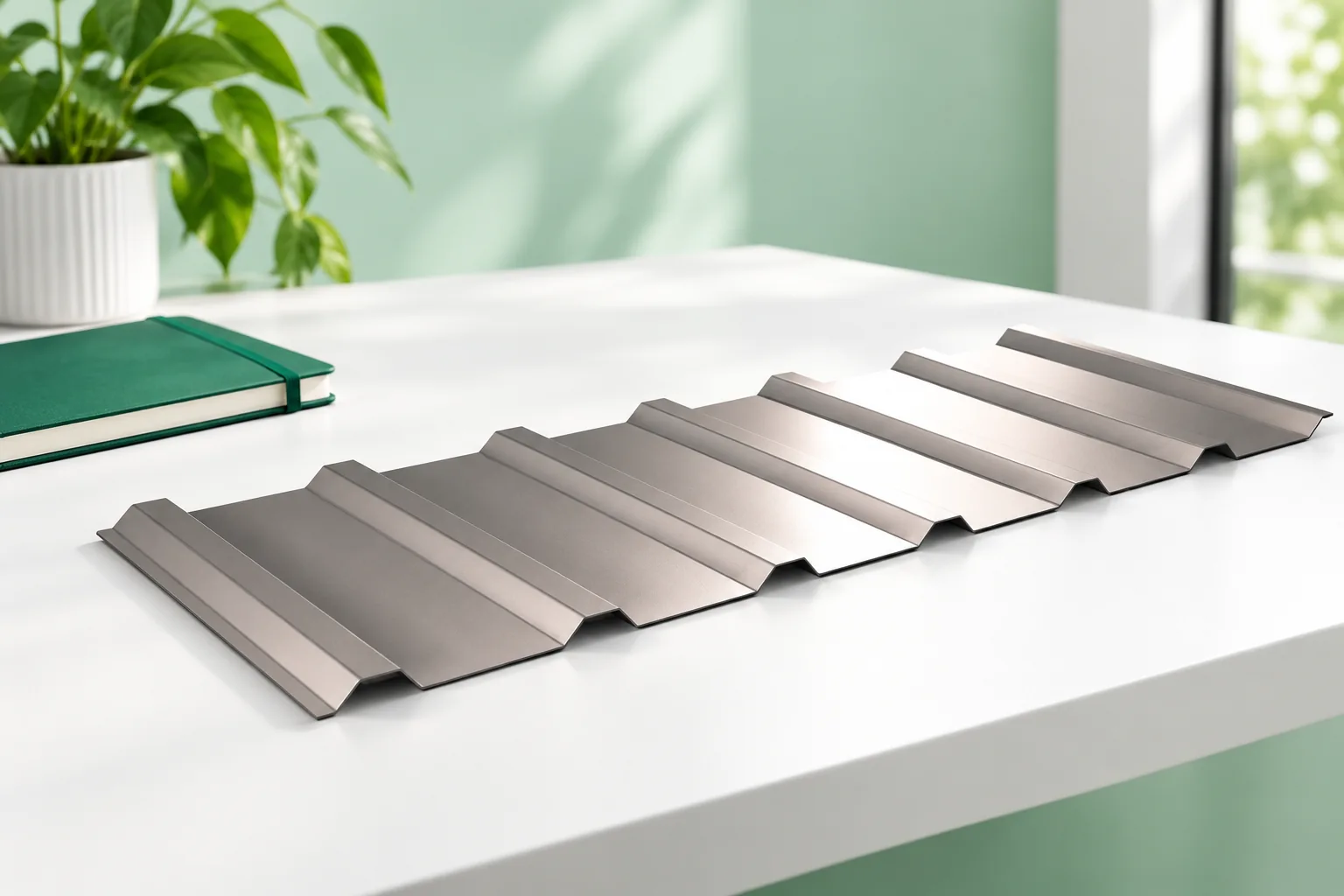
The steel core provides the mechanical properties of the sheet. On its surface there is a metallic protection suited to the given product. These may be various types of zinc or alloy coatings. Only on the prepared substrate are further layers formed, including the primer and organic finish. Their structure depends on the specific system.
Therefore, protection should not be assessed on the basis of colour alone. Two sheets in the same shade may have a different substrate and a different arrangement of protections. In the specification it is worth separating the type of steel, the metallic layer and the organic coating. Each of these pieces of information describes a different part of the product and helps explain differences in price.
Does the protection also work on minor damage?
Zinc may participate in the electrochemical protection of exposed steel in the vicinity of small damage. However, this does not mean an unlimited ability to protect every scratch or a large exposed surface. The action depends on the conditions and the arrangement of the material. It is not a reason to tolerate coating damage or to omit the recommended repairs.
At cut edges, the manufacturer’s instructions must be followed. The permitted method of protection may depend on the product and the environment. The entire sheet should not automatically be painted with an arbitrary preparation. A large touch-up may cause a colour difference and make it harder to assess the problem. First, the extent of the damage and the correct method of treatment must be established.
Why can an angle grinder impair the protection?
Abrasive cutting with high heat generation may impair the coatings near the edge. Hot metal particles may also settle on the remaining surface. Therefore, the instructions for coated sheets specify suitable shears, nibblers or other permitted tools. The choice of tool affects the condition of the material, even if the cut itself looks straightforward.
After cutting and drilling, swarf must be removed. Rusting particles may cause spot marks on the surface and promote further damage. This does not always mean a defect in the steel core. Acceptance of the covering should include the cleanliness of the roof slopes, roof valleys and gutters. Leaving installation residues is a mistake that is easy to avoid before the work is completed.

How does moisture affect packaged steel sheet?
Sheets stacked tightly in a pack experience different conditions from an installed covering. Water trapped between them may remain for a long time without the possibility of drying out. Temperature changes also favour the appearance of moisture. Factory packaging therefore does not mean consent to store the material for an arbitrary time in the open air.
Before delivery, a dry location and suitable support must be prepared. If the material becomes wet, further action must be based on the recommendations for the specific product. Leaving a wet pack unchecked can lead to surface bloom and damage. These phenomena should not be confused with the normal, intended appearance of the finished roof surface.
Does more metal always mean a better choice?
The parameters of the metallic coating matter, but different systems cannot be compared using a single number alone. Alloy composition, additional layers and scope of application may differ. A value expressed in grams per square metre does not describe the same thing as an organic coating thickness given in micrometres. These are separate pieces of information.
The selection should take the environment into account. A roof by the sea, a livestock building and a house in a quiet area place different demands. It must be checked whether the specific system is intended for these conditions and how the warranty describes them. Buying a product with an impressive coating name does not replace this verification. It is worth ensuring that the coating designation appears on the order and delivery documents. The general term “galvanised steel sheet” does not allow all the characteristics of the selected material to be reproduced.
How can the protection be helped to work for years?
Correct water-drainage details and the absence of long-term contamination are fundamental. Wet leaves, dust and deposits in the roof valleys can retain moisture. The areas around chimneys and installation outlets should also be checked. The environment at one point on the roof may be more demanding than on the remaining surface that is freely washed by rain.
Regular inspection allows a problem to be noticed while the repair is still small. Edges, fasteners and points of contact with other materials are checked. Cleaning should correspond to the coating instructions. An aggressive preparation used in good faith can damage the protective layer. The long-term effectiveness of the protection therefore also depends on the method of installation and the subsequent treatment of the roof.
7 branches. Materials closer to your project.