Roof coverings
From coating to maintenance: what affects the lifespan of tile-effect metal roofing?
In brief
The durability of a metal roofing tile depends on consistency across all stages — from material specification to later maintenance. Check whether the steel core and its protection match the product documentation, not just an attractive profile. A coating description alone is not enough if support, ventilation and flashings are overlooked. When choosing, separate appearance durability from corrosion resistance and do not treat the guarantee as a service-life forecast. Also consider the surrounding conditions, transport, cutting and installation, which can weaken the material before it is even laid.
What is the importance of the quality of the base material?
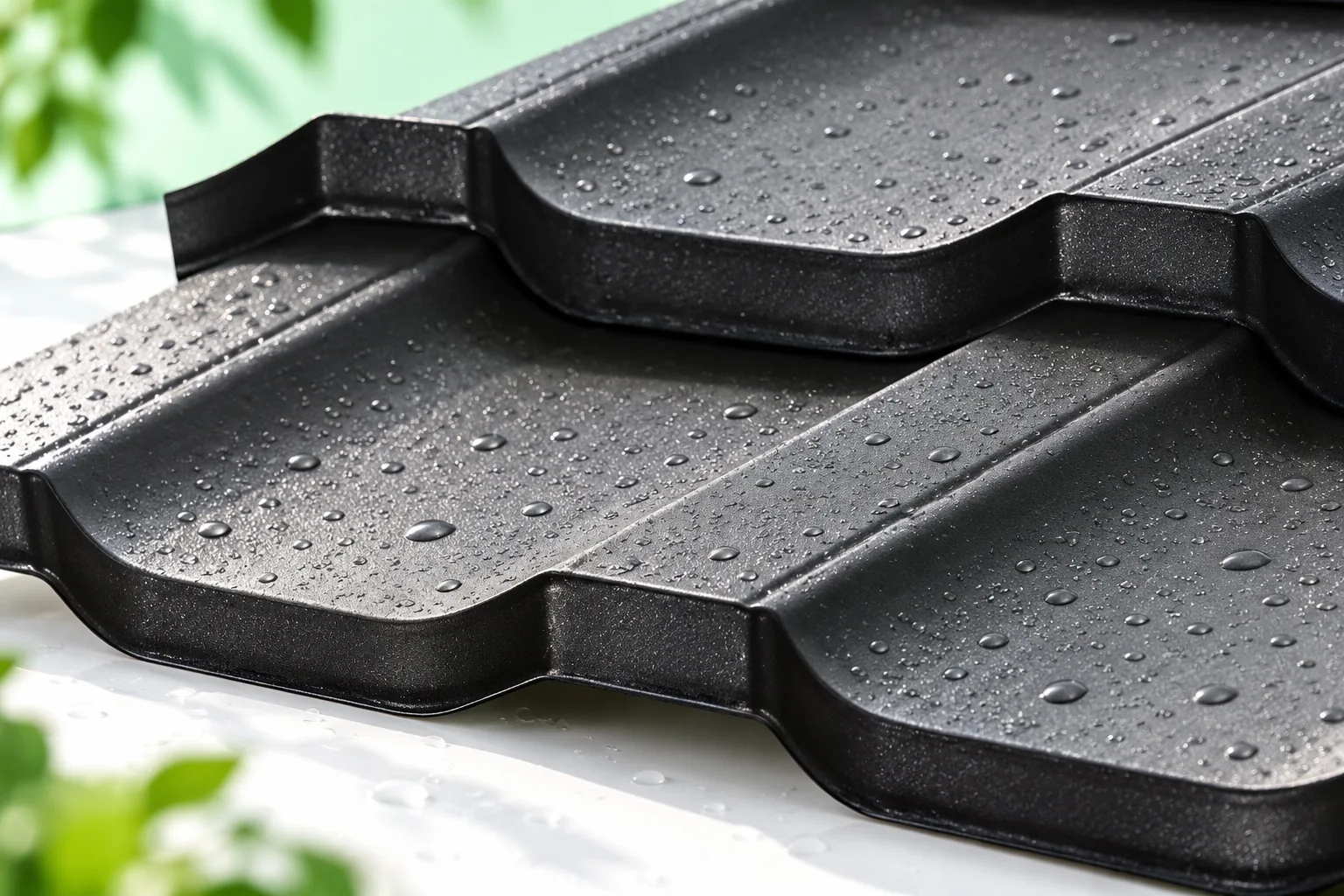
The steel core and its protection should match the product documentation. It is worth knowing the nominal thickness, the type of metallic coating and the coating system. An attractive profile alone does not confirm these characteristics. Price is not sufficient proof of quality either. The basis is an unambiguous specification and the ability to identify the delivered batch.
Thickness should not be chosen in isolation from geometry and support. More steel will not eliminate installation errors. Corrosion protection and shape retention are linked to other parameters. Selection should cover the whole product, not one number highlighted in the offer. It is worth keeping the product data sheet together with the purchase documents.
Does the coating suit the building’s surroundings?
The operating conditions of a roof can differ significantly between locations. Moisture, salinity and contamination affect the protective requirements. What happens beneath the covering also matters. The underside may be exposed to condensation or a more aggressive environment. Assessment should not be limited to rain falling from outside.
Check the scope of application and the warranty conditions. The coating name and the number of years are not enough if the document excludes the planned conditions. For a demanding project, it is worth obtaining confirmation of the selection. Choosing the right protection at the start is simpler than trying to correct the entire surface after several years of incorrect use.
What can weaken the material before installation?
Moisture between sheets, poor support and dragging over one another can damage the sheet metal even before installation. Adequate transport and dry storage must be ensured. Packaging does not provide unlimited protection. If the construction schedule changes, it is worth checking whether the storage method still complies with the instructions and the waiting time.
On delivery, the edges, coating and shade should be inspected. Deformation of the side lap can hinder a correct connection. A scratch may require proper repair. Doubts are better clarified before laying. After installation is complete, it is more difficult to distinguish transport damage, a workmanship error and a defect in the product itself.

How does installation affect long-term use?
The covering should lie on an even substructure with an appropriate spacing. Fasteners must suit the substrate and be tightened correctly. A poorly made hole or a deformed washer creates a potentially problematic point. One should not expect a large amount of sealant to compensate for incorrect joint geometry.
Cutting tools and prompt removal of swarf are important. An incorrect method can damage the protective layers, and metal particles left behind will rust on the surface. The eaves, roof valleys, chimney and ridge require separate inspection. These are where different components meet, and water must find the correct drainage path without blocking the necessary ventilation. After installing an antenna or device on the finished roof, the penetrations must be checked again. A new installation can change the way water drains and may require additional service access. Inspection therefore does not end with acceptance of the original covering.
How do moisture and dirt shorten service life?
Wet leaves and dust can trap water in places that should dry out. Contamination at installation outlets can behave differently from the rest of the roof. Rain therefore does not entirely replace maintenance. Not all sections are washed equally effectively. Roof valleys, laps and sheltered flashings are particularly worth checking.
From below, a correct moisture solution arising from the design of the building envelope is needed. Condensation does not always mean a leak from outside. If problems arise, the cause must be established instead of immediately sealing all gaps. Accidental closure of ventilation can make the situation worse. Insulation, airtightness from the inside and ventilation require joint assessment.
How to carry out inspections and understand the warranty?
The inspection should cover the surface, details and drainage. Intervals and the method of cleaning follow from the documentation, and after unusual events an additional check may be needed. It is worth keeping photos and records of the work carried out. They help to notice the development of a change and to choose the right moment for repair.
The warranty describes the scope of responsibility and the conditions, not the end date of the covering’s life. It may separately cover appearance and specific material damage. It also does not mean the user has no obligations. The greatest influence on the practical result comes from the consistency of all stages. A good product, careful installation and a quick response to minor problems together create a durable roof.
7 branches. Materials closer to your project.