Roofs and metal sheets
Where is T7 sheet worth using? Cover widths and limitations of the lowest profiles
Key points in brief
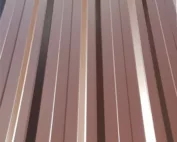
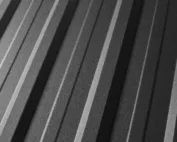
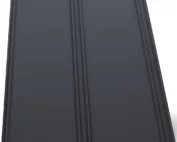
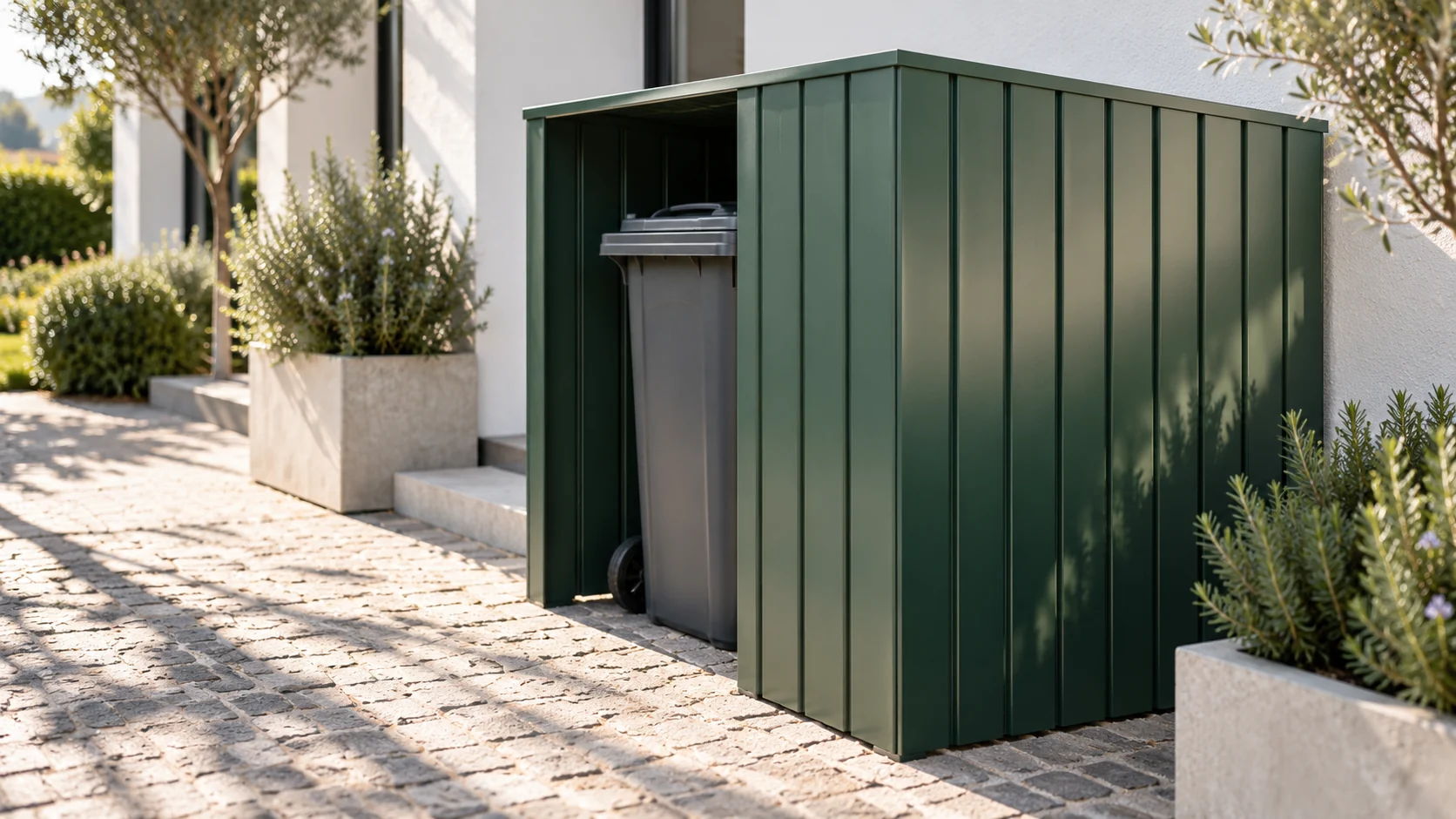
T7 is a good starting point for a conversation about lightweight cladding. The shallow profiling gives a calm surface, but it does not provide unlimited load-bearing capacity. This profile should be considered a specific façade product, with its own cover width and support requirements. Before buying, it is worth establishing whether it is to clad a wall, a gate, or a small structure. In a low trapezoidal profile, much of the sheet looks almost flat. The narrow profiles create delicate lines. This pattern may suit cladding for containers, a garden utility area, or a small façade. The name T7 refers to a family of profiles of low height, not to the material thickness.
What distinguishes a low profile from a taller trapezoidal profile?
A taller trapezoidal profile has a different cross-section and different structural properties. Load-bearing capacity should not, however, be judged solely by comparing two numbers in the names. Steel thickness, flange widths and support conditions also matter. Even a very low profile needs a correctly designed supporting frame.
What widths are found with a 7 mm profile?
An example wall variant with a height of 7 mm has a cover width of 1175 mm and an overall width of 1197 mm. Other variants in this group with different dimensions also exist. There is therefore no single universal sheet width for T7. The cross-section drawing should belong to the exact material being ordered.
The difference in dimensions covers the edges needed for the joint. The cover width is entered in the cladding plan. When checking the overall size of the bundle, the full width is taken into account. Confusing these values can leave a missing piece at the corner, even though the area of the purchased sheet apparently matches.
How to plan a simple cladding?
Assume a side of the structure 3.8 m wide. For a cover width of 1.175 m, three sheets give 3.525 m, so that is not enough. Four will provide 4.70 m before edge fitting. It is worth drawing out straight away whether the edge cuts will be symmetrical and where the laps will occur.
With opening leaves, each part is calculated separately. The entire gate cannot be treated as one continuous field. Movement clearances, edge finishes and space for the hinges are needed. The sheet layout should work with the frame rather than impose an arbitrary position on its elements.
Why can a long sheet not do without supports?
Production length describes the ability to manufacture and deliver an element. Span describes the distance over which the material works between supports. These are different pieces of information. A long sheet laid vertically may bear on several horizontal rails and require suitable fixings at each of them.
The spacing is selected according to the profile, thickness and load. On a lightweight screen, wind acting from both sides may be important. At a gate, the movement of the leaf is added. It must not be assumed that a low sheet weight means low forces in the hinges or anchors of the entire structure.

Is this profile suitable for a roof?
First, the intended use of the specific variant must be checked. Many low profiles are intended for wall cladding and screens. A roof requires a different approach to water drainage, load and laps. Mounting a sheet at a slight angle is not enough.
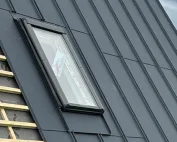
If you need a roof over a storage shed, compare roof variants with the appropriate parameters. The T7 profile on the wall can work together with a higher trapezoidal profile on the roof slope. It is not necessary to maintain the same rib height throughout the entire building. What matters more is the correct function of each surface.
How can oil-canning and visible fixings be reduced?
A low profile reveals irregularities in the substructure under side light. The supports should form an even plane. The screws are set according to the adopted system, without forcing the shape of the sheet. Excessive pressure can leave local depressions that are particularly visible on dark coatings.
With a small screen, the division into fields also matters. Shorter, logically planned sections may look better than one long strip forced to fit. The colour of the heads and flashings is selected according to the intended effect. First, however, the fixing requirements must be met, and only then should the visual rhythm be arranged.
What protects the lower edge of the cladding?
The sheet should not be in constant contact with wet soil, waste or standing mud. The termination must allow drainage and cleaning in accordance with the detail. When enclosing containers, it is worth leaving access to places where leaves accumulate. The coating is selected according to the service environment.
After cutting, remove the swarf and assess the condition of the edges. Do not leave the pack on the ground without protection. In lightweight construction, such details more often determine durability than the choice of profile itself. Convenient access for inspection makes it easier to maintain a tidy surface over subsequent seasons.
Short answers
Do all T7 sheets have compatible locks?
No. The designation does not guarantee an identical cross-section. When joining, the edge shape and the pitch of the ribs must be compared.
Can a low trapezoidal profile replace the supporting structure of a canopy?
No. The sheet is its infill or cladding. The frame, supports and anchors must be selected for the loads of the entire structure.
7 branches. Materials closer to your project.