Facades and fences
Six advantages of metal fence pickets to consider before buying
In brief
Metal pickets are worth considering when you want a visually light fence without the need to oil or impregnate wood. Before buying, however, check not only the coating and finish but also the condition of existing posts and rails and the method of installation, as these determine durability. Pay attention to the spacing of the pickets, which affects visibility and privacy, and to whether a ready-made set will allow an even rhythm of bays on uneven ground. It is also worth assessing how the inner side looks and whether a single element can be replaced later.
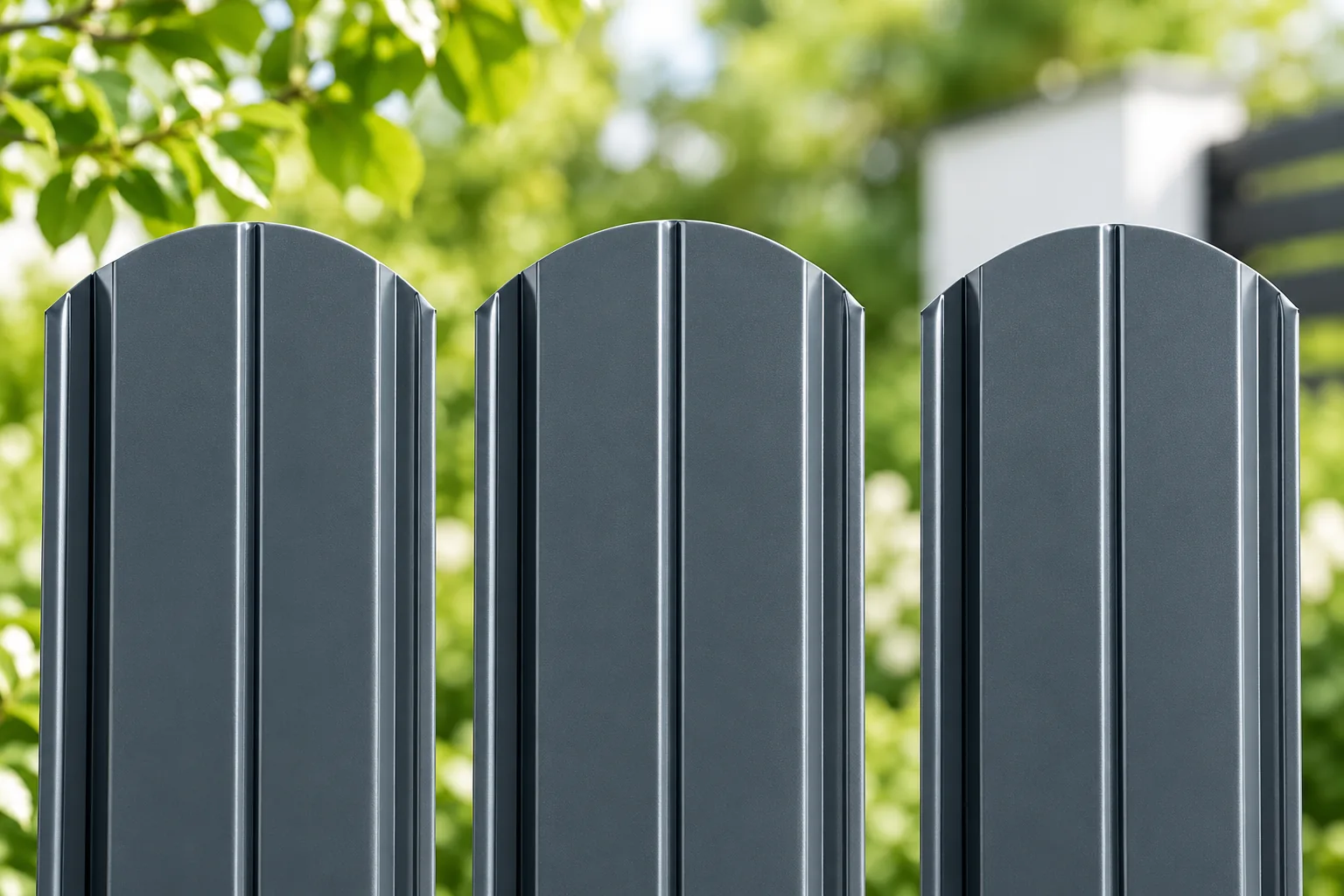
Less work on periodic care
A steel slat does not require the oiling or impregnation typical of wood. Its surface is protected by a system of protective layers applied during production. This is a practical advantage for a long fence, where renovating every board would take many hours. It does not mean, however, that the fence can be left without inspection for its entire service life.
After winter, it is worth inspecting the lower edges, the areas around the screws and places exposed to impacts. Mud, salt and deposits must be removed using a method permitted for the given coating. A soft brush will usually be safer than a rough sponge. A scratch down to the metal requires assessment and proper touch-up, not covering a large section of the slat with an arbitrary paint.
Adjustable degree of screening for the plot
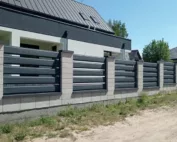
The spacing of the slats affects the appearance of the fence and the visibility of the garden from the street. Narrower gaps provide more screening. Wider ones make the bay look lighter and make it easier to see the surroundings through it. Before ordering, it is worth laying out a few elements as a trial. Up close, the same gap can look completely different than from the other side of the road.
Dense infill should not be treated as a way to turn any bay into a full wall. Reducing the gaps changes how the wind acts on the fence. Posts, foundations and fixings must correspond to the planned structure. The arrangement on both sides of the crossbars also requires checking. Greater privacy does not exempt you from assessing the load-bearing capacity of the entire fence.
Adaptation to straight and varied sections
Individual elements give freedom in planning the bays between existing posts. A repeatable rhythm can be established and the edge gaps distributed evenly. This helps especially when the distances between posts are not uniform. It is important that the measurement refers to the actual clear width of the bay after taking into account the brackets and crossbars.
On sloping ground, the way the top line of the fence is run must be decided in advance. The bays can form steps or follow the designed layout of the plot. Not every ready-made set allows arbitrary tilting. The adjustment of slat lengths must be agreed before production, so as not to replace planning with numerous cuts on site. It is worth recording the width of the edge gaps at the posts straight away. An even division of the bay looks better than a full rhythm ending with one very narrow gap.

Choice of appearance for both sides of the fence
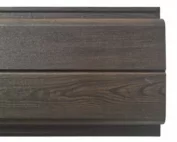
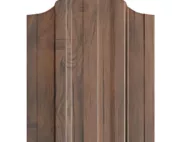
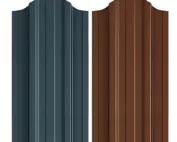
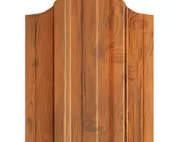
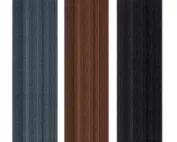
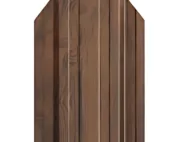
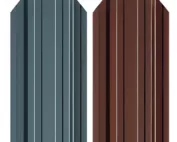
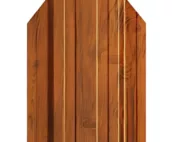
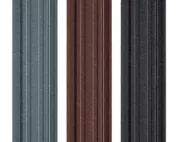
Slats are available in solid colours and with decorative finishes. Various shapes of the top edge are also available. This makes it possible to choose a calm fence for a modern house or a more traditional bay design. A sample should be viewed next to the window, gate and façade in natural light.
It is also necessary to check the inner face. Elements decorated on one side and on both sides do not look the same from the garden. This matters for a terrace, where the fence is viewed every day from a short distance. The colour number alone does not determine an identical shade and gloss across all parts. It is best to compare actual samples of the slat, post and gate.
Possibility of replacing a single element
If a single slat is damaged, in many configurations it can be replaced without dismantling the entire bay. The scope of work depends on the fixing method and access to the fasteners. This is convenient for a fence exposed to impacts during garden work. It is worth keeping the order specification so that the dimensions of the element can be reproduced later.
After a few years, however, a new slat may differ from the old ones in shade. This is caused by the natural ageing of the coating and differences between production batches. A sensible solution is often to buy a small reserve from the first delivery. The elements must not be stored wet or sealed tightly under foil. The reserve must be stored in accordance with the instructions.
Easy comparison of the cost of a complete bay
With slats, the quantity of material for each section can be calculated clearly. However, the cost of the infill is joined by the crossbars, posts, fixings, caps and substructure. The price of a single piece is not enough to compare two systems. A wider element may reduce the number of slats, but change the proportions of the bay and the required spacings.
A free quote should cover the same height, length and degree of screening. Also check the coating of both sides and the type of fasteners. Only such a set shows the actual cost. If the old posts remain, their corrosion and stability must be assessed. Saving on the structure only makes sense if it is suitable for further safe use.
7 branches. Materials closer to your project.