Roof and energy
When does a solar roof work well with a farm cold store?
In brief
A cold store can consume a lot of energy during sunny weather, which favours making use of the PV roof’s output. This does not, however, mean that the load fully matches the operation of the cells. Refrigeration equipment also runs at night, and storage requirements are constant. An integrated roof is therefore worth considering as part of a larger plan for the facility. It allows a new covering to be combined with an on-site energy source, without separate panels above the roof slope. On warm days the cooling demand can be high. In the same period the roof can produce a considerable amount of energy. This is a favourable starting point for analysing self-consumption, that is, using the electricity on site. The assessment must, however, be based on measurements or a reliable operating plan, and not on the mere association of summer with sunshine.
Why is cooling an interesting load?
The type of product, the set temperature, the frequency of door openings and the load after accepting a delivery all matter. A cold store operating unevenly may need a lot of energy also outside the hours of high production. It is worth analysing several typical days and then comparing them with the pattern of the whole season.
The analysis should include the days when a fresh batch of goods is received. These may require different cooling operation than a quiet storage period.
Does a PV roof improve the insulation of a cold store?
The cells do not replace thermal insulation. A tight and well-designed envelope still matters greatly for energy consumption. A BIPV roof can be the outer part of the building envelope, but the correct layer arrangement must be provided beneath it. Thermal bridges and the ingress of humid air into cold places must also be limited.
When retrofitting, it is first worth establishing the condition of the insulation and the causes of excessive equipment load. Generating electricity does not remove the effects of leaky doors or damp insulation. Combining repair of the envelope with new roofing may be sensible if the scope of work is described jointly by the relevant designers.
When does a steel roof with cells have an organisational advantage?
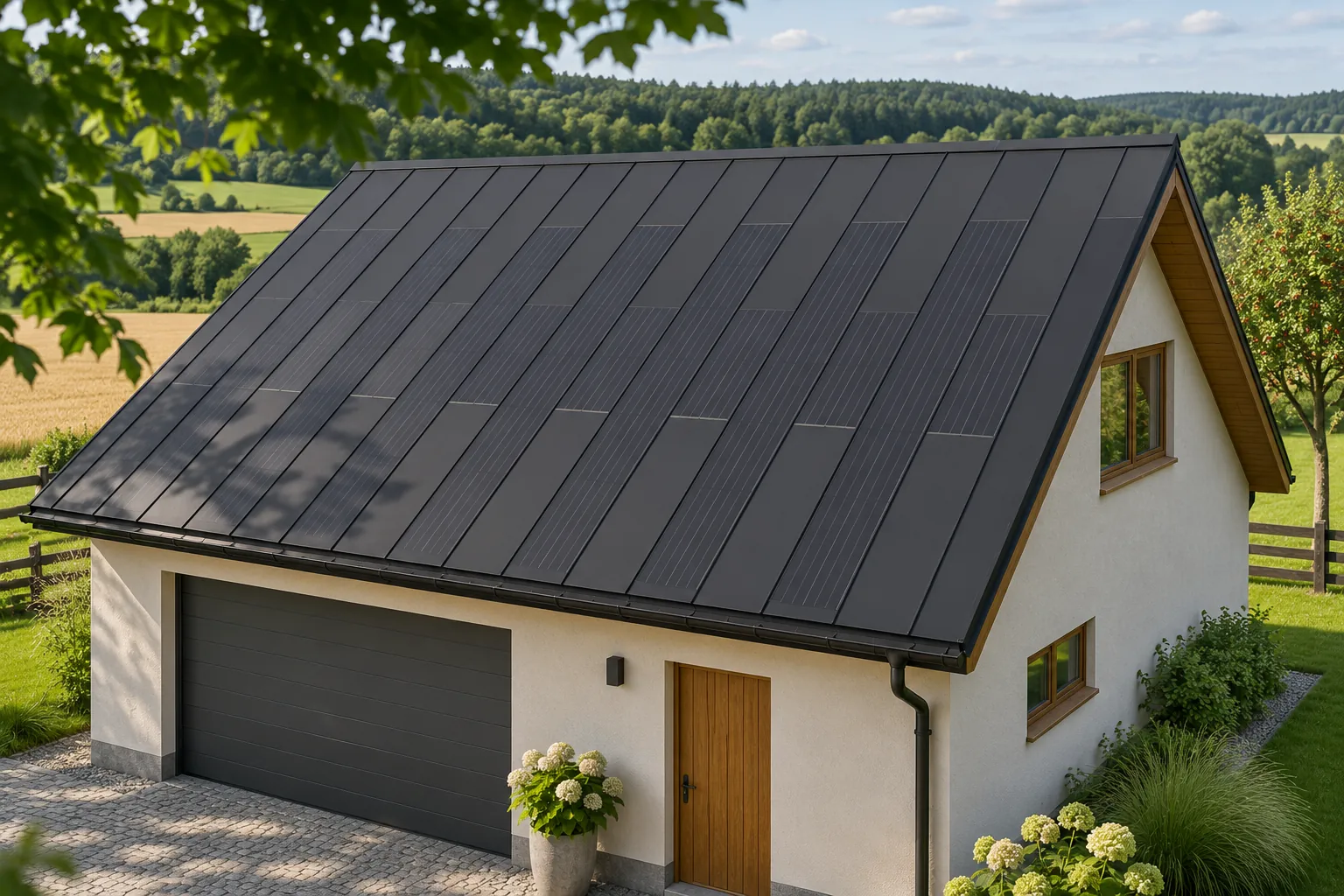
When constructing a new building or planning to replace the roofing, the active areas, cables and flashings can be arranged straight away. There is no need to adapt an additional PV structure to randomly left spaces. The roof slope retains a regular rhythm, and energy production becomes part of a planned pitched roof.
The benefit does not lie in omitting the layers needed for the cold store. It concerns the integration of the roofing and photovoltaic functions in the selected system. If the building has a flat roof or a substrate other than that envisaged in the documentation, a different variant must be considered. One solution should not be forced merely to maintain an attractive appearance.
How do you avoid a mistake when sizing capacity?
A high compressor output does not equal its constant draw around the clock. Data on actual consumption and operating cycles are needed. In a new building, the assumptions of the refrigeration design should be used and then verified by measurements after commissioning. Such an analysis allows different areas of active roofing to be compared.
Installation limits and the conditions for exporting surplus energy must also be taken into account. Filling every available surface with cells does not necessarily bring the best results. Passive panels allow a consistent roof to be maintained where additional generation is not justified. The decision on energy storage must be calculated separately.
Will the cold store be safe during a power failure?
A standard PV installation does not guarantee that cooling will be maintained during a grid failure. If temperature continuity is important, a separate backup power design is needed. It should take into account equipment start-up, backup duration and the permissible interruption. Installing a storage unit alone does not settle these issues.
The roof generates energy depending on conditions, so it cannot be the sole basis of an emergency plan. The owner should establish a procedure and a way of alerting to a problem. This is part of cold-store management. Photovoltaics can support the daily balance, but a promise of full security requires a much broader solution.
How should the offer be assessed as a whole?
For comparison, the cost of the roof together with passive elements, flashings, electrical installation and necessary construction work is needed. Alongside it, a variant of conventional covering with separate photovoltaics should be placed. In both cases, the same requirements for the cold-store envelope and a similar assumed generation must be adopted.
It is also worth planning the inverter location and the possibility of servicing without disturbing the storage zone. A clear division of responsibilities facilitates later notifications. A well-chosen BIPV roof combines aesthetics with an energy function. The economic outcome, however, is determined by the actual operation of the cold store, the quality of the building envelope and the completeness of execution.
Manufacturers and brands of solar roofs include Wienerberger Wevolt, GAF Energy, SolRoof, Solarstone, BIPVco, ML System, Electrotile, Tesla, MDM NT (MyRoof) and SunRoof.
7 branches. Materials closer to your project.

- SEROCK — Dzierżenin 34 E
- BŁONIE — ul. Sochaczewska 138A
- RADOM — ul. Grobickiego 8
- ŁÓDŹ — Natolin 8
- OLSZTYN — Barczewo, ul. Prosta 9
- WROCŁAW — ul. Jerzmanowska 10C
- GORZÓW WLKP. — ul. Zielona 33/34