Roof coverings
Where to look for corrosion on metal roofing and how to prevent it
In brief
Protecting a metal roof from corrosion starts with the choice of coating, which should be matched to the local environment before the sheets reach the site. Check the type of metallic layer and organic coating, and assess the suitability of the outer and inner faces separately, particularly with a damp or aggressive interior. Colour alone is not enough. Also confirm that the profile and thickness suit the structure and that the protection suits the surrounding conditions. Long-term durability then depends on correct installation, water drainage and control of condensation.
What should be chosen before the material reaches the site?
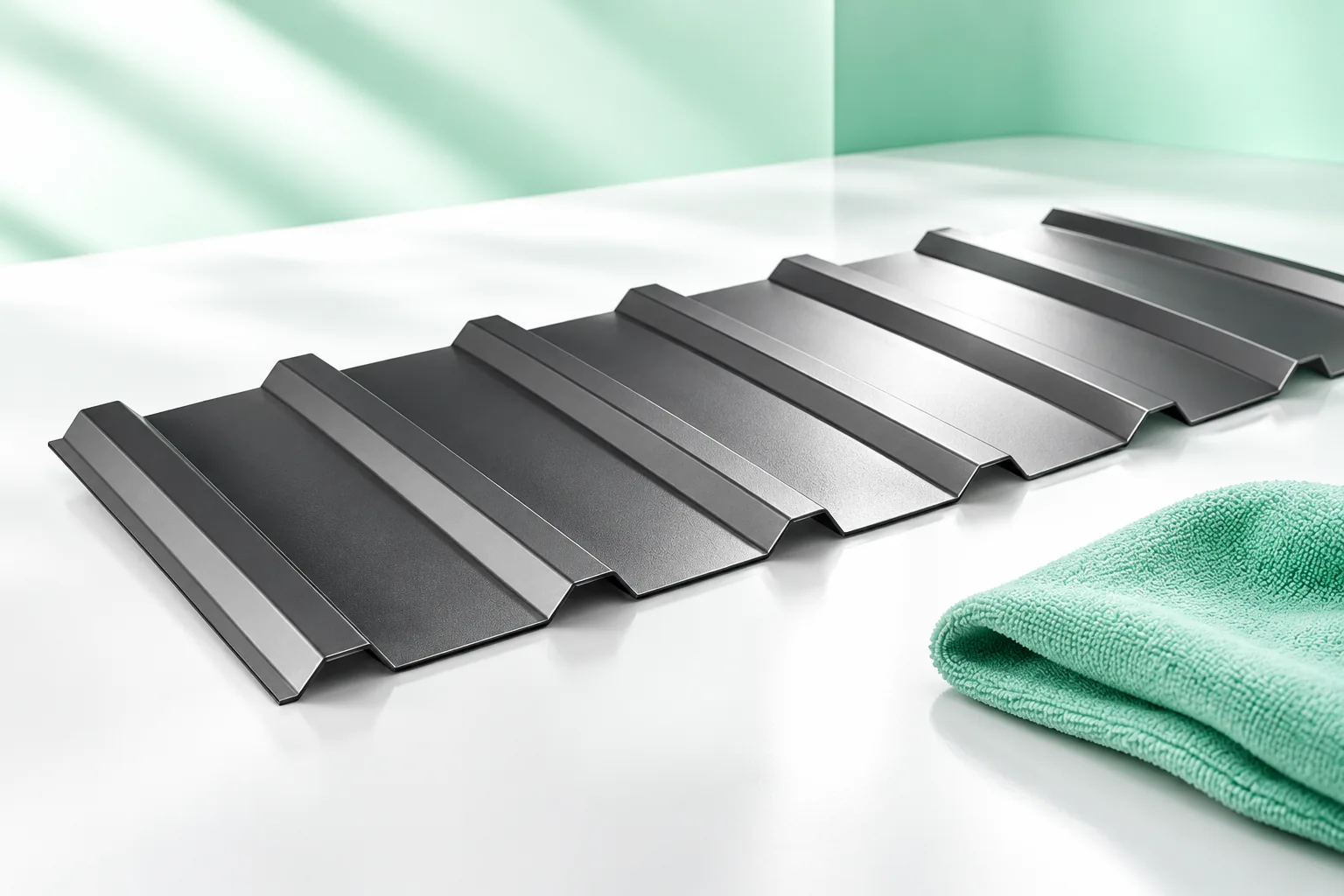
The profile and thickness must match the structure, and the protection must suit the environmental conditions. It is worth knowing the type of metallic layer and organic coating. The outer and underside surfaces may have different finishes. In humid or aggressive interiors, their suitability must be checked separately. Selecting solely by colour overlooks an important part of the protection.
Also ask about compatible flashings, sealants and fasteners. Different materials joined in one place do not always form a correct assembly. Direct contact and water runoff from adjacent surfaces can be significant. A random component should not be used simply because it fits dimensionally. For unusual connections, it is worth confirming compatibility in the documentation or with the system supplier.
How to prevent damage during delivery and storage?
Sheets should be supported, secured against movement and handled in accordance with the instructions. Dragging one over another can scratch the coating, especially when dirt lies between them. Edges and lap areas require care. Crushing of the profile can later make a tight connection difficult, even if the surface damage is minor.
Do not leave a wet pack without an appropriate response. Moisture between sheets does not have the same drying conditions as on an open roof. Separation and drying according to the manufacturer’s recommendations may be necessary. Also check the permitted storage time. Transport packaging does not provide unlimited protection against condensation or prolonged storage on site.
Why are the cutting method and cleaning so important?
Coated steel sheet is cut with tools permitted in the instructions. An abrasive disc can cause strong heating of the edges and scatter hot particles. This damages the surface protection. After cutting and drilling, swarf must be removed with a soft tool. It is worth checking not only the flat areas but also the profiling, valley flashings and gutters.
A stray steel particle can corrode on the surface and form rust spots. This does not necessarily mean corrosion of the entire sheet straight away. However, it requires assessment and proper cleaning. Edges and minor scratches are protected in accordance with the recommendations for the specific product. It should not be assumed either that every edge must be painted with any paint, or that it is fully resistant without checking the instructions.

How to limit prolonged moisture retention?
Water should have a correct drainage path across the roof surface, through the valley flashings and into the drainage system. Leaves, dust and construction debris can obstruct it. Areas near obstacles and sheltered flashings are particularly worth checking. An incorrect lap can trap moisture where the connection should dry quickly. The ad-hoc addition of sealant does not always remove the cause.
From below, the construction of the building envelope and the vapour solution matter. Condensation requires diagnosis, especially where it occurs persistently. Blocking the ventilation gap can worsen conditions. Insulation, airtightness from the interior and airflow should form a consistent system. A protective coating helps protect the material, but does not replace a correct moisture solution in the roof.
How should inspections and cleaning be carried out?
Inspection intervals result from the product documentation and conditions of use. Additional inspections may be needed after mechanical damage or work on the roof. The surface, fasteners, laps, flashings and drainage patency are checked. Access must be organised without accidentally stepping on unsupported sections. If necessary, a properly prepared team is used.
Contamination is removed using suitable methods and agents. An excessively strong jet, aggressive chemicals or a rough tool can damage the coating or the joint. Before using an agent, its compatibility with the instructions must be checked. It is worth documenting places requiring attention. Photographs from successive inspections help assess whether a change remains minor or develops despite cleaning.
When does a repair require more than touch-up work?
Minor surface damage and corrosion covering a larger area are different situations. First, the extent and cause must be established. Painting a wet or soiled spot may only conceal the symptom. If the problem results from incorrect flashing or continuous dampness, that detail must be corrected. In the case of serious damage, replacement of the element may be necessary.
The scope of the repair should correspond to the condition of the material and the recommendations of its system. Keep records of the agent used and the work performed. After the repair, monitor the place during subsequent inspections. Corrosion protection is not a single universal paint. The best result comes from a combination of proper protection, dry and correct installation, and a response before a minor change becomes extensive.
7 branches. Materials closer to your project.