Gutters and flashings
Square or half-round gutters for a house – how to choose the section
In brief
Begin by checking whether the chosen system delivers the required performance and can be correctly fitted to the specific eaves, and only then compare appearance. The profile shape alone does not determine how much water is carried away, so compare complete solutions with parameters suited to the same roof. Also assess the eaves details, availability of corners and later servicing. On a complex building form, check whether components for non-standard angles are available. Once both variants meet the requirements, an aesthetic choice is justified.
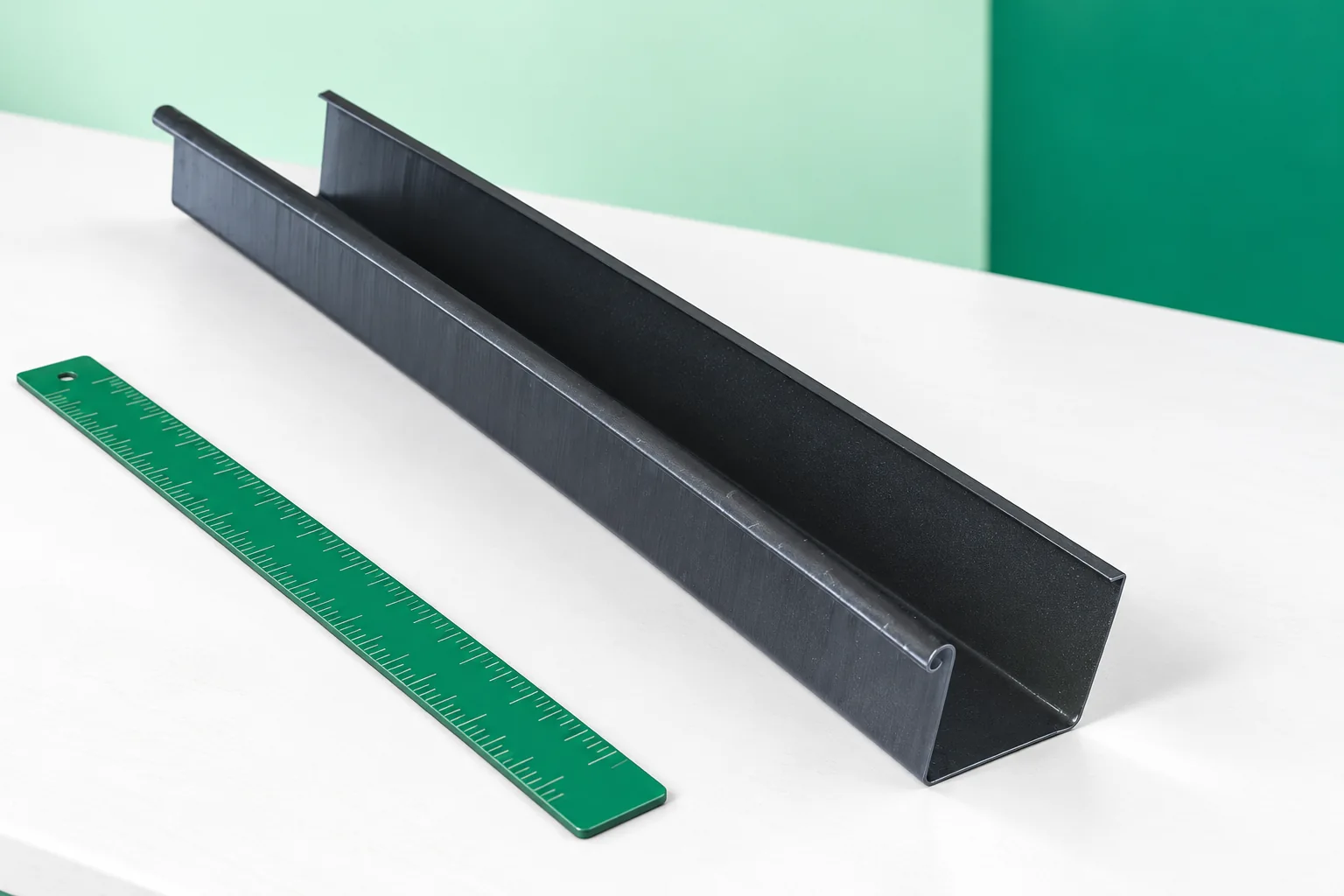
How do both shapes affect the appearance of the house?
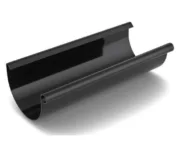
A half-round gutter forms a gentle line at the eaves and suits many traditional and contemporary building forms. A square profile emphasises the horizontal edge more strongly. It can harmonise with a plain façade and geometric details. It is also worth assessing the shape of the downpipes, as they are visible over the full height of the wall.
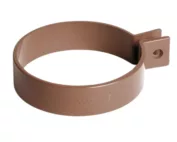
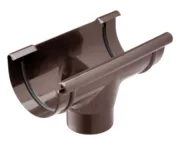
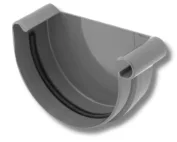
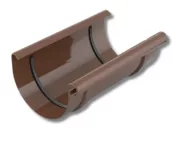
Do not choose on the basis of a section of gutter alone. Connectors, corners and brackets also affect the result. In some systems the fixings are less visible. This is a feature of a specific system, not of every square gutter. Ask for a view of the complete eaves connection and a real colour sample.
Does a square cross-section mean greater performance?
This cannot be determined from the shape name alone. Internal dimensions, the outlet, the pipe and the arrangement of components all matter. The manufacturer’s data for a given catchment area must be compared. A wide front may look capacious, but it does not on its own describe the entire water flow.
When selecting, the position of the outlet and the length of the run are important. Water flowing to a pipe at the end has a different path than with an outlet in the middle. The calculation rules should correspond to the specific system. A single catalogue value should not be transferred to any arrangement of corners and pipes in the building.
How to match the gutter to the eaves?
The gutter must capture water from the roofing and work together with the flashing. Its position depends on the projection of the sheet metal, the gutter apron and the method of fixing. When changing the profile, the old brackets and details may not fit. The entire eaves should be checked before purchase, rather than assuming that only the gutter profile will be replaced.
Snow sliding from the roof slope must also be taken into account. The suspension height must not result solely from the desired façade line. The detail should correspond to the instructions for the roofing and drainage. If the solutions conflict, they must be agreed before installation, not corrected by randomly bending components.

What about corners and unusual building forms?
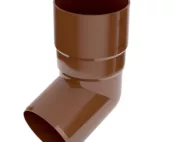
A roof with numerous bends needs appropriate corners and connections. Check the availability of components for specific angles and the rules for their installation. A simple system on a regular house may require additional solutions for a complex façade. This affects price and delivery time more than the gutter shape itself. For corners other than right angles, check the availability of components with the required angle.
Do not combine parts from different systems simply because their dimensions are similar. The seal, edge profile and the way the joint works may differ. Before purchase, it is worth obtaining a complete schedule. A missing component during installation often leads to improvisation in a place that should remain watertight.
Which variant is easier to maintain?
Access for cleaning depends on the entire detail, not just the cross-section. Covers and concealed fixings can change how it is maintained. You need to know how to remove leaves and check the joints. The gutter remains a component requiring inspection, even if it looks like a single decorative trim in the visualisation.
In both shapes, outlets and downpipes must be kept clear. Local water pooling requires checking the fall and the support. It is not worth assuming that one profile is inherently maintenance-free. Surrounding trees, the length of runs and how the building is used can matter more than the cross-section shape itself.
How to compare cost?
Calculate the complete system including brackets, connectors, outlets, bends and pipe clips. Add installation and any changes to flashings. The price per metre of gutter may be only part of the order. On a complex building form, the number of accessories can significantly change the comparison result.
It is worth considering the availability of parts for later repair. A system with convenient component supply may be easier to maintain. This does not mean choosing only the most widespread shape. It is about consciously checking the range and service conditions before appearance decides the purchase of the entire set.
How to make the final decision?
First confirm the capacity and the possibility of correct installation at the given eaves. Then compare the appearance, colour and cost of the complete system. If both variants meet the requirements, the aesthetic choice is justified. There is no need to look for a universal winner that would suit every house.
At acceptance, check the flow, the joints and the position of the gutter relative to the roofing. Keep the system identification and the instructions. This ensures that future repairs involve compatible parts. The shape of a well-chosen gutter should organise the building form, and its performance should remain predictable during normal use and heavy rainfall.
7 branches. Materials closer to your project.