Flashings
Verge flashings at the edge of a sandwich panel roof
In brief
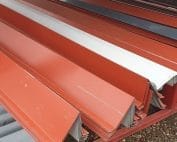
Barge flashings tidy the gable line and shield the end of the covering. In a roof made of sandwich panels, however, a distinction must be made between the protective flashing and the elements supporting the panel. A thin strip of sheet metal will not solve a structural error. A good detail shows at the same time the panel edge, the position of the support, the fixing and the way the junction with the wall is closed. Only on this basis can the right barge flashing be chosen. Catalogues list gable flashings and flashings for the upper edge of a mono-pitch roof. Variants with and without a projecting eaves overhang are also found. The differences are not limited to the length of the leg. The points of contact with the panel and the wall change, as do the directions in which water is led.
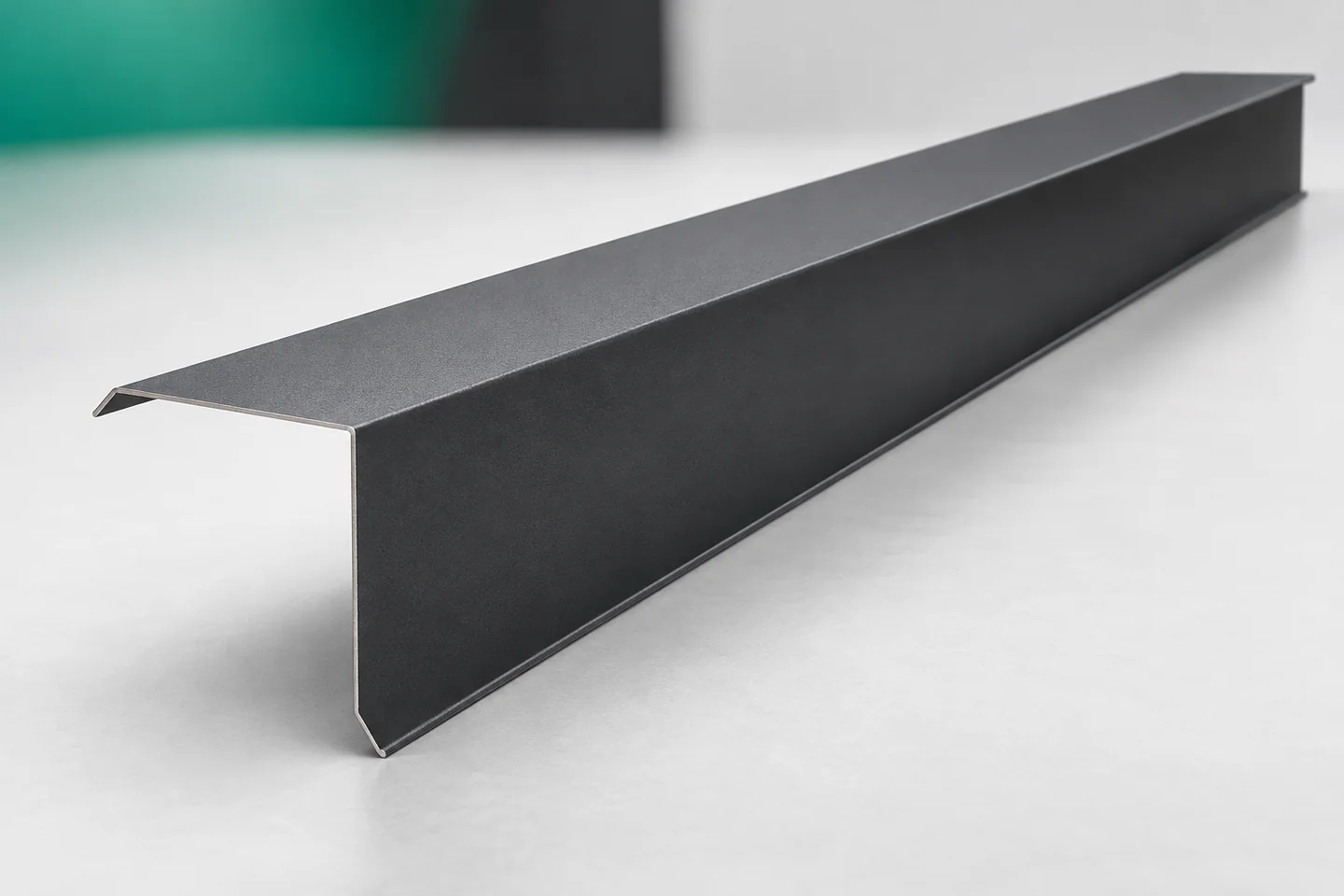
The position of the flashing changes its cross-section
Before ordering, the specific roof edge must be named. A photo or section drawing with the outer side marked helps. The information alone that a barge flashing is needed for a sandwich panel leaves too many possibilities. The wrong variant often only becomes apparent when it is offered up to the finished cladding.
The panel thickness is only part of the dimension
The height of the side leg depends on the construction of the edge. The core thickness, the profile of the facing and the position of the components beneath the flashing must be taken into account. It is not enough to measure the panel at its thinnest point. These details should be visible on the installation drawing.
The upper leg of the barge flashing must work with the ribs of the covering. Its width is not chosen solely according to the desired appearance of the gable. The intended laps and fixings count. Changing one dimension may require adjusting the adjacent component, especially with an unusual roof edge.
Supporting the panel remains a separate task
Barge flashings should not take on the role of support simply because they cover the edge of the panel. The bearing and fixing of the panel result from the structural design. This also applies to sections projecting beyond the wall. The flashing must be matched to a correctly executed edge.
If there is no room for the fasteners on site, the detail must be verified. Moving the screws to any position may change the behaviour of the connection. Damage to the core should also not be concealed by the barge flashing without assessing it. A neat cover is not confirmation that the panel is adequately supported.
Water should return to the correct side
The roof edge is exposed to rain falling at an angle. The purpose of the flashing is to limit water access to the end of the covering and direct it in the intended direction. Edge folds, the position of laps and the relationship to the roof profile are therefore important.
The barge flashings connect at the top with the ridge tiles and lower down with the eaves zone. Both ends must be checked separately. The gutter aprons must not be closed in a way that impedes drainage. At the ridge, on the other hand, no open gap exposing the interior of the joint should remain.

The seal and screw work together with the sheet
The correct type of sealant depends on the given system. The substrate on which the material is to hold and the conditions of its application are important. Sealant should not be treated as a way of accommodating an arbitrarily large dimensional error. Correct fit of the barge flashing must first be achieved.
Fasteners are selected according to the layers being fixed and the substrate. Their seating must be checked, particularly with thin sheet metal. An excessively compressed washer is not a sign of greater installation reliability. It is worth inspecting the entire fixing line before the installer moves on to the next section of the roof.
The coating matches the operating conditions
Barge flashings can be made from galvanised, aluzinc and colour-coated sheet metal. The choice requires checking the availability of the specific material and section. On buildings with coloured cladding, the gloss level is also important. The difference in surface finish is often clearly visible along a long gable strip.
During cutting, the edge and adjacent surfaces must be protected from damage. Shears suitable for sheet metal are used. Hot cutting with an abrasive disc can impair the metal’s protection. Careful handling is also important for starter profiles and chimney flashings, which often arrive on site in the same delivery.
The inspection covers the ends and connections
Acceptance is best started at the ends of the barge flashing. It must be checked whether the flashing conflicts with drainage and whether its edge remains without the intended fixing. The joints between sections are then assessed. A recurring lap error may occur along the entire length of the gable.
Non-standard sheet metal flashings should be compared with the approved drawing. This applies in particular to corners and transition points between different roof heights. An additional photograph before the joint is covered will allow its construction to be assessed later. The finished surface should have a straight line without forced bends.
Questions and answers
Can a barge flashing replace a panel support?
This protective function should not be assigned to the flashing. The support and fixing of the panel must comply with the structural design.
Does one profile suit every gable?
No. The panel thickness, the type of covering, the presence of an eaves overhang and the position of the wall relative to the roof edge all matter.
7 branches. Materials closer to your project.