Panels for agricultural buildings
Will glass-fibre laminate make a livestock building easier to maintain?
Key points in brief
Glass-fibre reinforced laminate cladding is considered for buildings exposed to moisture and aggressive environments. Its advantages only become apparent in a complete solution, however. Where frequent washing takes place, joints, flashings and the cleaning method are equally important. A panel’s resistant surface does not make the whole building immune to operational errors. Before choosing cladding, write down what the interior will be cleaned with and how. The names of the preparations are needed in the technical documentation, along with concentrations, water temperature and contact time. Separately record whether the agents will be rinsed off and whether the room can dry after washing.
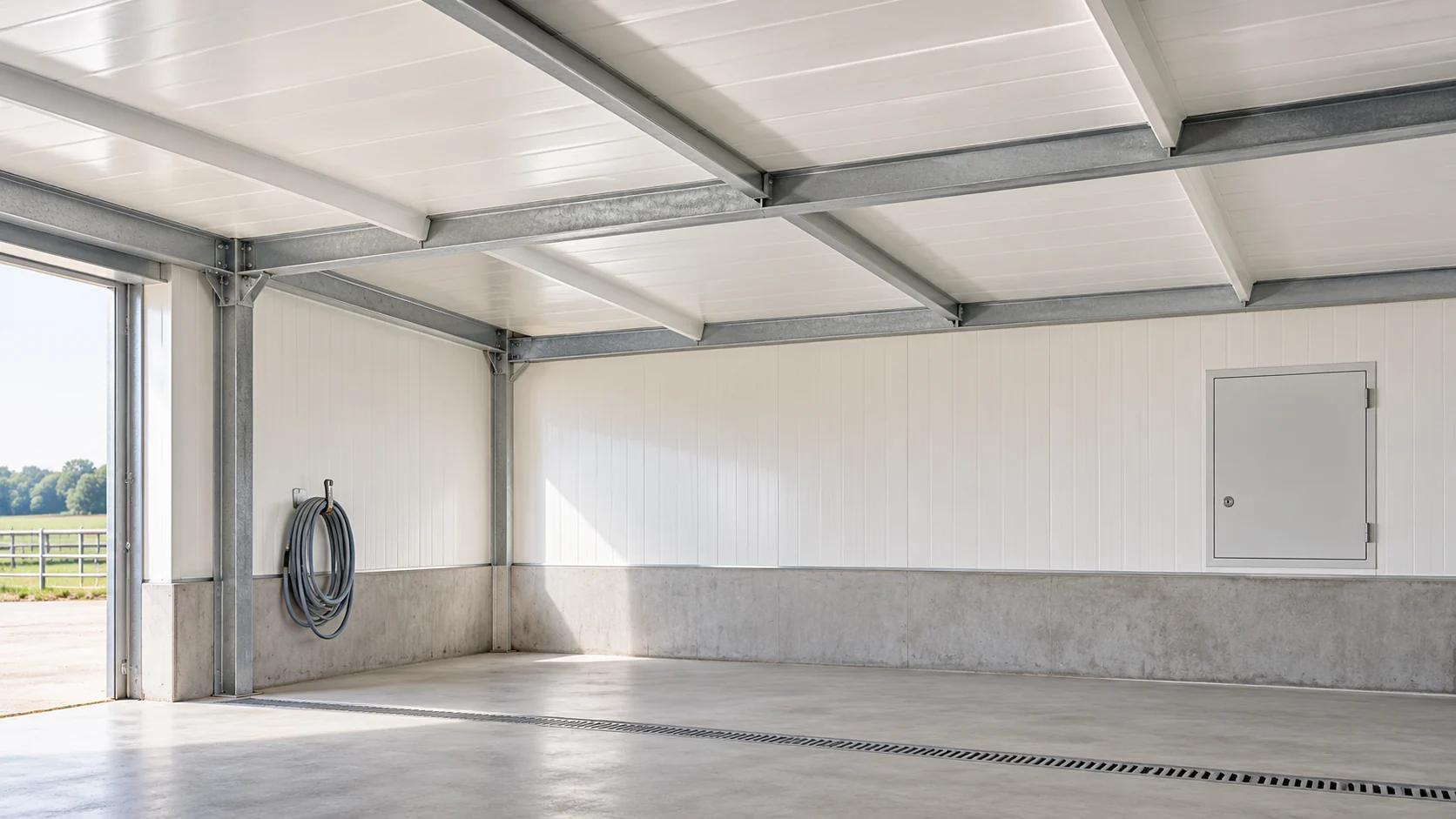
Start with a realistic cleaning plan
Such a description allows the material’s suitability for daily work to be assessed. A general claim of ‘chemical resistance’ does not cover every combination of substance and temperature. A change of agent during use should also be verified, especially when the new preparation is stronger or remains on the surface longer.
Resistance to ammonia is not resistance to everything
Laminate may provide enhanced protection in the environment of livestock buildings. The scope of application of a specific lining must still be confirmed. Other factors may act simultaneously: moisture, deposits, temperature, disinfectants and mechanical cleaning.
It is worth requesting an assessment for the entire set of conditions. One should not conclude that a material resistant to one gas will be insensitive to any acid or base. The side of the panel is also important: the outer and inner lining may have completely different protective properties.
A joint can be a weaker point than the middle of the panel
Pressurised water reaches joints, corners and fixing points. If the sealant does not match the lining or the cleaning agent, the joint may lose its tightness more quickly. Similarly, a flashing made of steel with an unsuitable coating may corrode even though the laminate beside it remains in good condition.
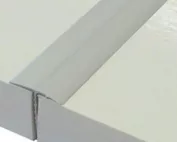
Therefore the entire detail must be included in the specification. Exposed core edges, wall terminations and service penetrations must be closed in accordance with the system. It is not enough to choose a resistant panel and select the remaining components at random based on the available colour.
Select the pressure together with the nozzle and distance
The maximum pressure quoted for a single product is not a universal instruction for cleaning all laminates. A narrow jet from a short distance may behave differently from a wide jet at the same device setting. Contacts and repair areas should be treated with particular care.
The parameters should correspond to the instructions for the product used and the complete system. It is worth training the people operating the pressure washer and recording the permitted procedure. This way, the choice of material will not be undermined by an accidental change in working method after a few months.

Ensure that inspection is possible after cleaning is completed
After cleaning, damage to the coating, an open joint or a place where water lingers longer is easier to spot. Access to corners and installation penetrations should be possible without dismantling half the equipment. Drains must allow water to be removed in accordance with the purpose of the room.
A damaged edge should not be left until the next major renovation. The repair method must be agreed for the material. An unsuitable compound may look good for a few weeks and then debond under the action of moisture or preparations. Repair is part of the system’s durability.
Distinguish the ceiling lining from the accessible platform
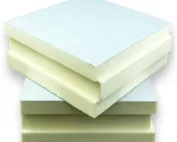
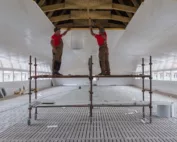
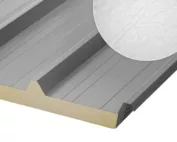
A lightweight insulation board with laminate can be part of a ceiling under an existing roof. A roof sandwich panel has a different task. Neither of these descriptions alone confirms that the surface is suitable for walking on or for suspending heavy equipment.
For installations above the ceiling, separate access and support for the equipment must be provided. It is also worth planning for the replacement of individual elements. Saving on service access can later lead to damage to the cladding that chemical resistance cannot compensate for.
Assess the cost including downtime and maintenance
In a building used cyclically, the time needed for cleaning, drying and repairs matters. When comparing claddings, consider not only the purchase cost but also compliance with the working procedure. However, longer durability in years cannot be promised without knowledge of the environment and the maintenance method.
Good documentation includes a description of the layers used, cleaning instructions and a record of inspections. When the operating technology or preparations change, it is worth returning to the assessment of materials. A board selected for former conditions has no automatic guarantee of correct performance in new ones.
Short answers
Does laminate completely eliminate corrosion in the facility?
No. Metal fasteners, flashings, the structure and often the external cladding remain in the building. All these elements require protection suited to their own operating conditions.
Is the information that the surface is washable sufficient?
No. You need to know the approved agents, temperature, pressure and the method of cleaning. Washability does not confirm resistance to every disinfection procedure.
7 branches. Materials closer to your project.