Facades and fences
Are metal fence pickets a good choice for your property?
In brief
Metal pickets work well when you want to adjust the gaps and reduce the work typical of timber. Before deciding, establish how much privacy you need, what the ground is like and whether the existing posts are suitable for reuse. Also check visibility at the gate and wicket, and the gap from the ground if the fence is to contain animals. Bear in mind that denser infill changes wind behaviour, and old posts need their condition and dimensions assessed. The look of a single picket alone does not determine fence quality.
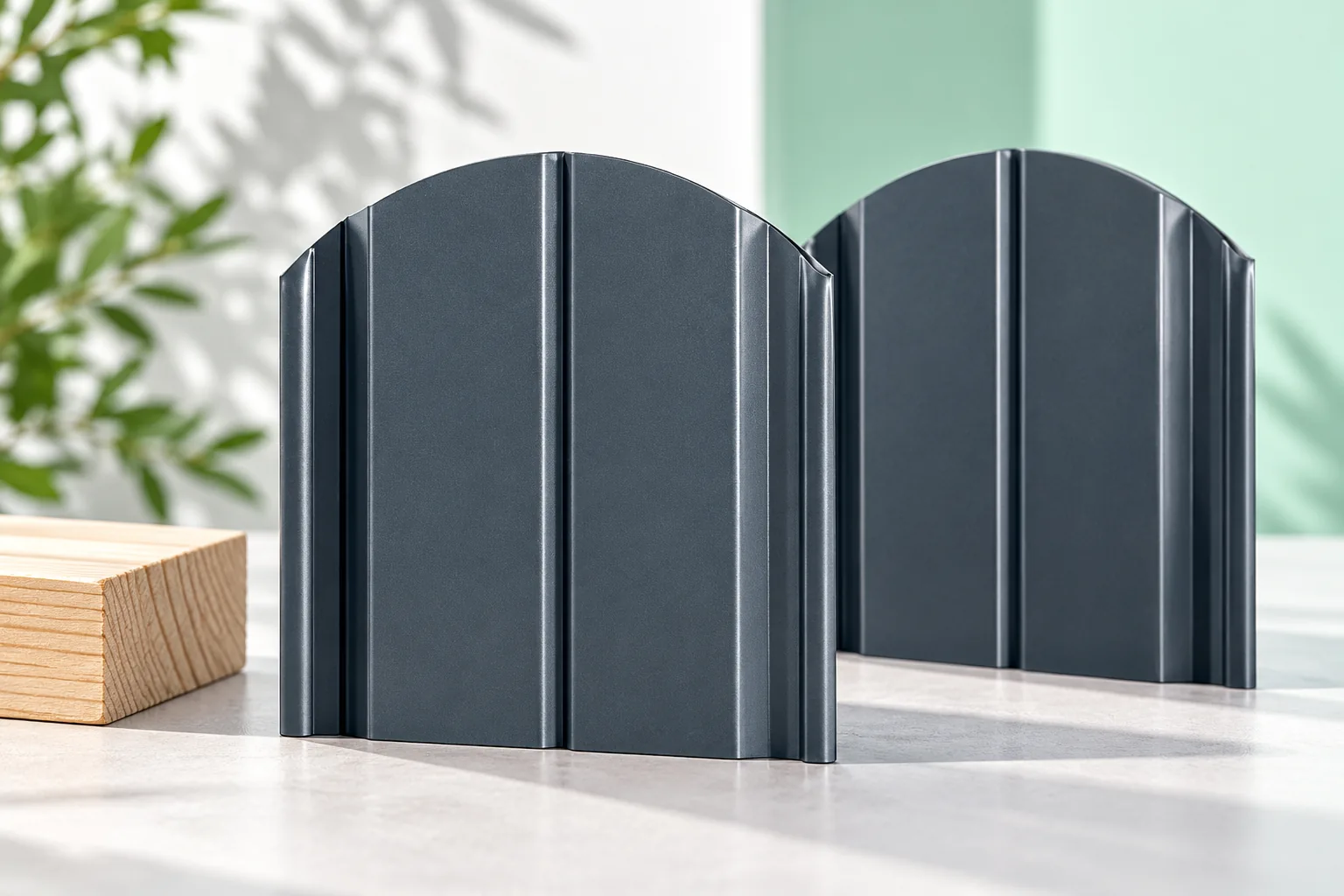
What function should the fence fulfil?
Different requirements apply to a fence facing the street than to a light boundary with a neighbour’s garden. The front of the property may need greater screening, while the remaining sides are primarily about organising space. Slats allow you to vary the rhythm and gaps, but it is worth establishing these needs before calculating materials. That makes it easier to avoid buying too many components.
Also check visibility at the gate and pedestrian gate. Very dense infill can restrict observation of the surroundings. If the fence is to contain animals, the gap from the ground and the edge gaps also matter. It is not enough to assess the middle of the bay. The entire layout should match how the property is used.
Is the existing structure suitable for the new infill?
Old posts and rails can only be reused after assessing their condition and dimensions. Corrosion, an unstable foundation or a poor connection will not disappear after new slats are screwed on. It is also necessary to check whether the substrate is suitable for the chosen fasteners. The mere ability to drill a hole does not confirm correct fixing.
The density of the infill changes how the wind acts. If there was previously mesh there, an almost solid bay may place different demands on the structure. The height and length of the sections and the exposure of the plot must be taken into account. It is not worth saving on assessing the posts if the aim is many years of use from the new fence.
How should widths and spacings be planned?
First measure the clear width of each bay. Then determine the slat width, the number of elements and the planned gap. Gaps at the posts must also be taken into account. In practice, an even rhythm looks better than a few standard gaps and one random, very narrow one at the end. It is worth drawing at least one full section.
If the bays have different lengths, they do not have to contain an identical number of slats. Visual consistency and correct fixing are more important. Before ordering, check how the layout works at the pedestrian gate and gate. Their construction may restrict the positioning of elements. Laying out the entire front will help avoid inconsistent gaps on adjacent sections. At the pedestrian gate, also allow for the space needed for the leaf to move and access to the lock. An aesthetic slat rhythm should not hinder operation of the handle or restrict the intended working gaps.

What should be checked in the material finish?
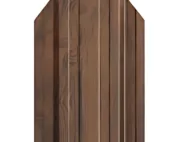
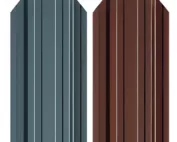
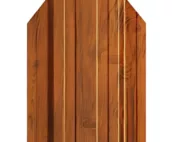
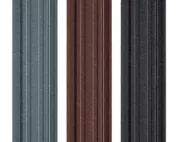
The type of protection, the colour and the finish on both sides are important. A slat decorated on one side only may look different from the garden. On a terrace, it is worth checking this on an actual sample. Elements with a similar colour name may differ in gloss and texture, so the colour of the posts and gate is best compared before purchase.
The coating should match the ambient conditions. Along a busy road, the lower part of the fence may come into contact with dirt and salt. Near plants, soil residues and damp leaves must be removed. Do not choose a material solely by the length of the warranty without checking what conditions it covers and what maintenance it requires.
What does aftercare for the fence look like?
A metal fence does not require the typical renewal of wood, but it should be inspected periodically. The fasteners, the condition of the coating and the areas near the ground are checked. Contamination is removed with soft tools and agents approved for the finish. Strong scrubbing or accidental chemicals can worsen the surface instead of refreshing it.
During garden work, it is worth protecting the lower edges against impacts. If damage down to the metal occurs, an appropriate repair should be applied. In many systems a single slat can be replaced, but after years a new element may have a different shade. Keeping the product designation and a small stock makes later work easier.
How do you decide whether this is a better choice than the alternatives?
Compare slats with other solutions for the same height and degree of screening. Mesh, panel, wood and solid sheet metal give a different appearance and different servicing requirements. The calculation should include posts, rails, foundations, fixings and installation. The price of the infill is not the cost of the whole fence.
Slats make particular sense when you value the ability to adjust the rhythm and replace individual parts. If full screening is needed, check whether the chosen system actually provides it and whether the structure is matched to it. A decision based on these conditions will be more reliable than a choice made solely from a small photo of a finished bay.
7 branches. Materials closer to your project.